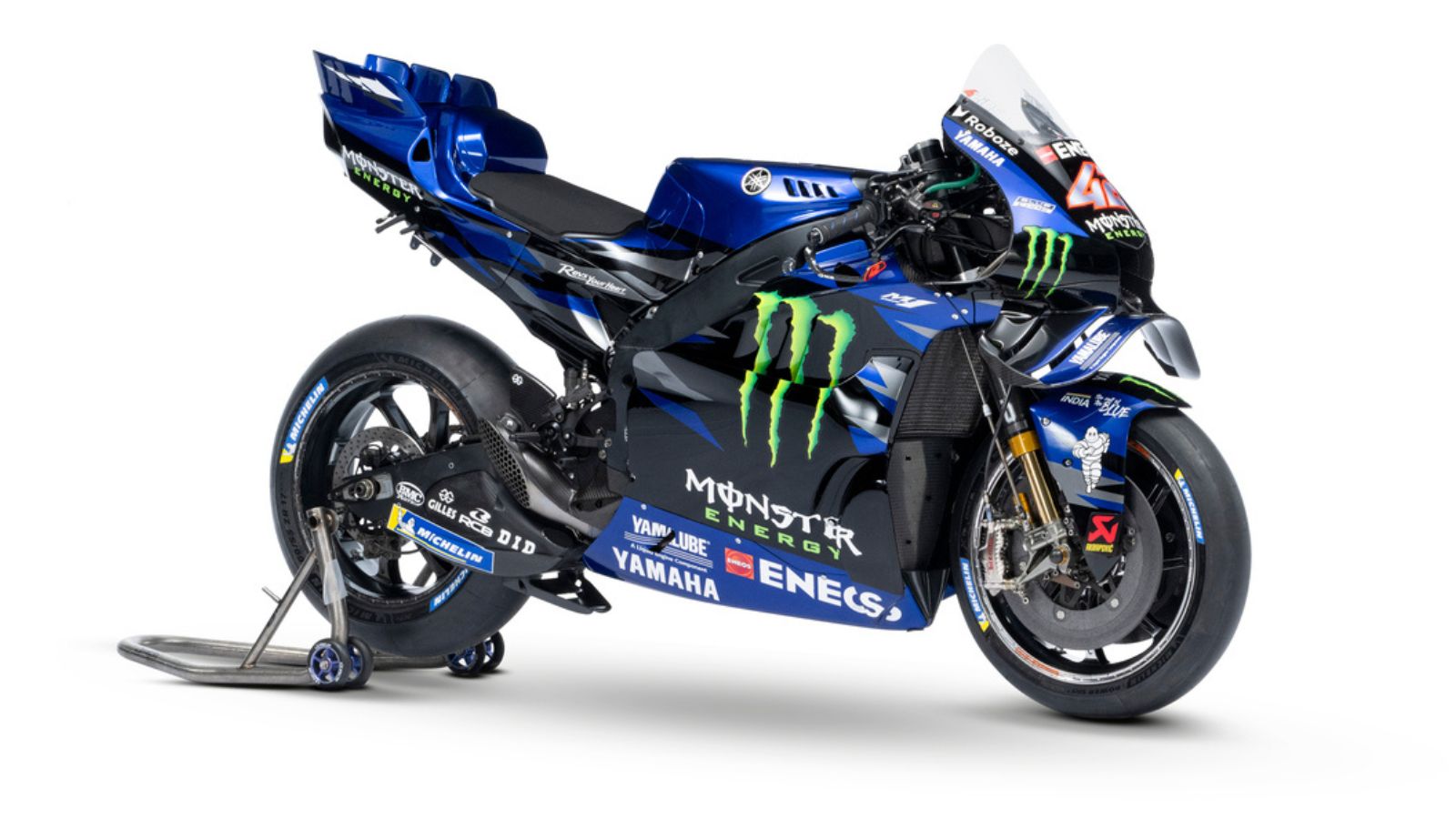
Yamaha has long been defined by its commitment to the inline-four engine in MotoGP. The crossplane crankshaft inline-four, introduced with the YZF-M1, revolutionized engine feel and became synonymous with Yamaha’s smooth, predictable power delivery. But in recent seasons, the competition Ducati, Aprilia, Honda, and KTM—has all gravitated towards V4 engines. With Yamaha struggling to keep pace, serious discussions are underway about whether to finally make the switch. This decision could reshape the future of the team.
The Strengths of the Crossplane Inline-Four
Yamaha’s inline-four has historically been praised for its rideability. The crossplane crank design delivers smooth, tractable power that makes it easier for riders to modulate throttle input mid-corner. This has been a defining characteristic of Yamaha’s MotoGP bikes, making them easier to manage in tight, flowing sections of a circuit.
Another advantage is its natural balance. Unlike a V4, an inline-four doesn’t require additional counterbalancing, which contributes to a more predictable engine character and smoother acceleration. This has traditionally given Yamaha an edge in maintaining corner speed, allowing riders to carry more momentum through turns without needing to rely on explosive power out of slow corners.
Additionally, inline-four engines are typically less complex than V4s. They require fewer moving parts, are easier to maintain, and offer a more compact, lower-weight package. Historically, this has given Yamaha a reliability advantage, with fewer mechanical failures compared to some V4-powered competitors.
Why the V4 Has Taken Over MotoGP
Despite the benefits of the inline-four, MotoGP has shifted towards V4 powerplants. Ducati pioneered the resurgence of V4 dominance, and other manufacturers have followed. The biggest reason? Power.
A V4 engine inherently allows for a more aggressive power delivery. It generates more outright horsepower thanks to its ability to rev higher while maintaining reliability. This gives an undeniable advantage on long straights, where Yamaha has consistently struggled in recent years.
Another key benefit is its compact design. A V4 engine allows for a tighter and more centralized mass distribution, improving stability under braking and making the bike more responsive during aggressive direction changes. This has been one of Ducati’s greatest strengths, giving their bikes an edge in handling despite their aggressive power output.
Additionally, the firing order of a V4 can be tuned to mimic the characteristics of a twin-cylinder engine, creating a smoother torque curve while retaining the high-rpm performance that MotoGP demands. The result is a bike that accelerates harder, stops better, and transitions more quickly between corners.
Why Yamaha Is Considering the Switch
The biggest factor forcing Yamaha’s hand is simple: results. The last few seasons have seen the inline-four Yamaha lose ground on tracks with long straights and heavy acceleration zones. The M1 remains one of the best bikes in terms of corner speed, but MotoGP is no longer a championship won purely through high-speed cornering ability. Top-end power and acceleration are just as critical, and that’s where Yamaha is suffering.
Another issue is aerodynamics. The modern MotoGP aero war has fundamentally changed how bikes perform on track. Downforce-producing fairings and ride-height devices have amplified the advantages of powerful V4 engines, making the Yamaha’s inline-four setup feel increasingly outdated. In an era where mechanical grip is augmented by aerodynamics, the sheer acceleration and stability of a V4 provide undeniable advantages.
Rider feedback has also played a role. Yamaha’s current riders have consistently voiced frustration about their lack of straight-line speed, and even former champions have hinted that an engine change is overdue. The argument is no longer just about handling—MotoGP has evolved, and Yamaha needs to evolve with it.
The Challenges of Switching to a V4
While a V4 offers undeniable advantages, making the transition is no small task. Yamaha has spent decades refining their inline-four philosophy, meaning a switch would require a complete redesign of the bike. From chassis to electronics, the M1 would need to be reworked from the ground up to accommodate the characteristics of a V4.
Additionally, Yamaha has always built bikes with a focus on usability. A V4’s aggressive nature could require a fundamental shift in their design philosophy. The challenge is not just in building a fast bike but in ensuring that Yamaha’s long-standing strengths—rideability and predictability—are not sacrificed in the process.
Final Thoughts: Is the Inline-Four Era Over?
Yamaha has reached a crossroads. The inline-four crossplane crank engine has served them well, offering smooth power delivery and exceptional cornering ability. But in today’s MotoGP, those advantages are no longer enough. The competition has evolved, and the dominance of V4-powered bikes suggests that Yamaha may need to follow suit to remain competitive.
Whether Yamaha ultimately makes the switch remains to be seen, but one thing is clear—sticking with the inline-four may no longer be an option if they want to fight for championships. The question now is not whether Yamaha can build a great V4, but whether they can do so without losing the very characteristics that have defined their MotoGP DNA for so long.