Some performance cars become popular. A very small number become legends. The BMW E30 M3 belongs firmly in the second category. Built during the golden age of touring car racing, it was never intended to be a luxury performance coupe or a comfortable grand tourer. The E30 M3 was designed with one clear objective: dominate the racetrack. Everything about its engineering, design, and development served that single purpose.
Born From Motorsport Requirements
The story of the E30 M3 begins with motorsport rules rather than marketing ambition. During the mid 1980s, manufacturers competing in touring car championships needed to build road going versions of their race cars to qualify for competition. This process, known as homologation, required a certain number of production vehicles to be sold to the public.
BMW saw the opportunity and engineered the M3 specifically to compete in touring car racing. It was not simply a modified 3 Series. Many of the body panels, suspension components, and mechanical parts were unique to the M3, designed to improve aerodynamic performance and track capability.
Radical Engineering for the Era
Under the hood sat one of the most famous engines BMW ever produced, the high revving S14 four cylinder. Derived from BMW’s racing engines, the 2.3 litre unit produced around 192 horsepower in early road cars. While that figure may seem modest today, the engine’s character was anything but ordinary.
The S14 loved revs, pulling strongly toward its redline with a sharp mechanical intensity that made the car feel alive. Its lightweight design also helped maintain the E30’s balanced handling, keeping the front end responsive and eager to change direction.
A Body Designed for Racing
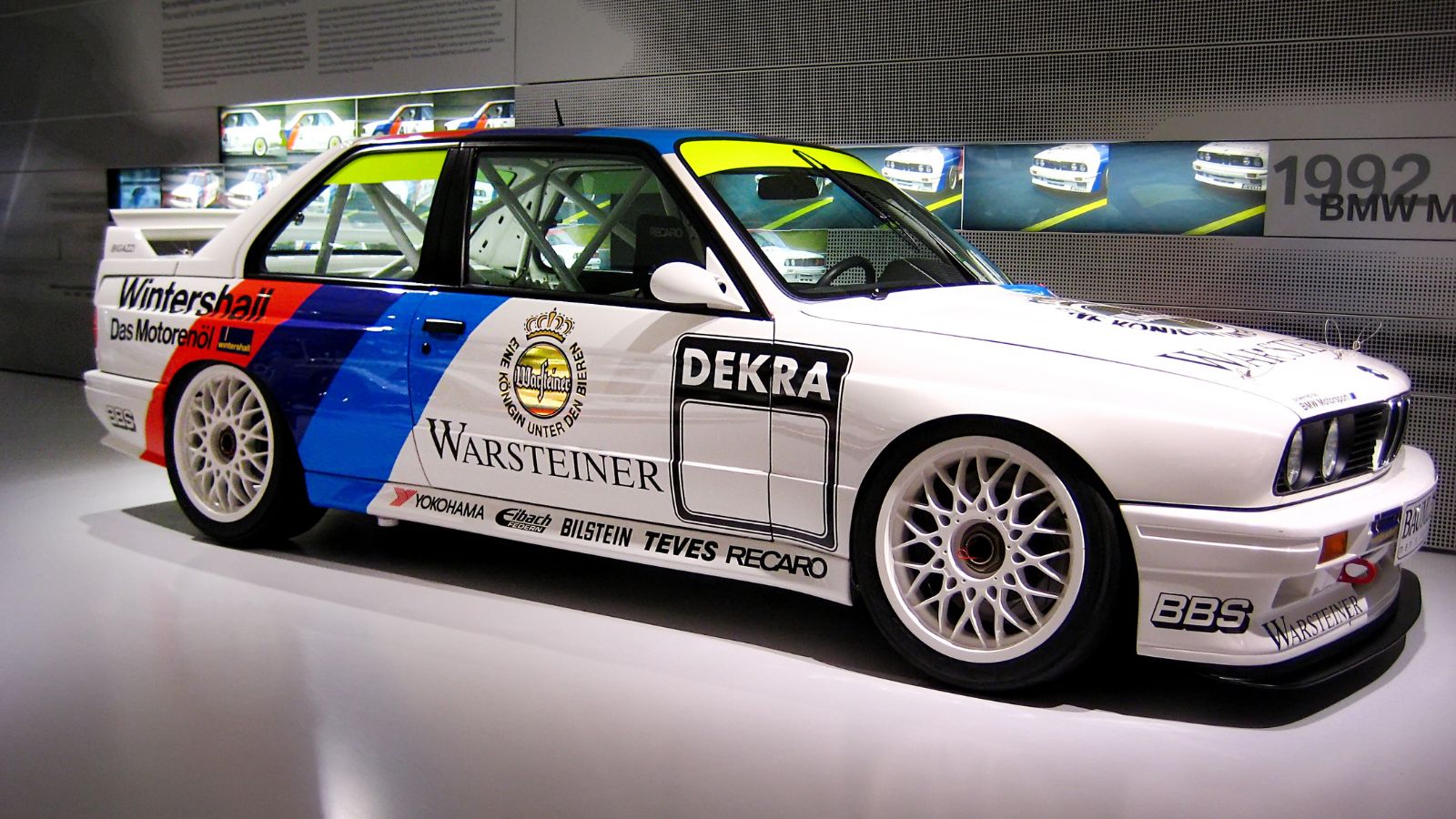
Visually, the E30 M3 looked dramatically different from the standard 3 Series. The widened fenders, boxy arches, and aggressive stance were not styling exercises. They were carefully engineered aerodynamic improvements.
The flared bodywork allowed for wider wheels and tires, increasing grip. The unique rear window angle improved airflow toward the rear spoiler. Even the trunk lid and C pillars were modified to optimize aerodynamic stability at high speeds. Every detail existed because it made the car faster on a racetrack.
Built to Dominate Touring Car Racing
The E30 M3 quickly proved its worth in competition. It became one of the most successful touring cars ever built, competing in major series around the world. The car excelled in championships such as the Deutsche Tourenwagen Meisterschaft and the British Touring Car Championship.
Its most famous victories included winning the 24 Hours of Nürburgring and multiple touring car championships across Europe. In an era filled with fierce competition, the M3 consistently demonstrated superior balance, agility, and durability.
Handling That Defined the M3 Legacy
What truly set the E30 M3 apart was its driving experience. Rather than overwhelming drivers with brute horsepower, the car relied on precision and balance. The steering was communicative, the chassis responsive, and the overall weight distribution nearly ideal.
Drivers could carry speed through corners with confidence, knowing the car would respond instantly to subtle inputs. This made the M3 incredibly rewarding for skilled drivers, both on the road and on the track.
A Legacy That Still Influences BMW Today
The E30 M3 established a blueprint that continues to shape BMW’s performance philosophy decades later. Its combination of motorsport DNA, precise engineering, and driver focused design created a benchmark for sports sedans and coupes.
Today the E30 M3 is celebrated not just as a classic performance car but as a symbol of an era when racing technology flowed directly into road vehicles. Its success on the track and its thrilling driving dynamics ensured its place in automotive history.
Few cars represent the connection between motorsport and road driving as purely as the BMW E30 M3. It was built to win races, and in doing so it created one of the most iconic performance machines the automotive world has ever seen.