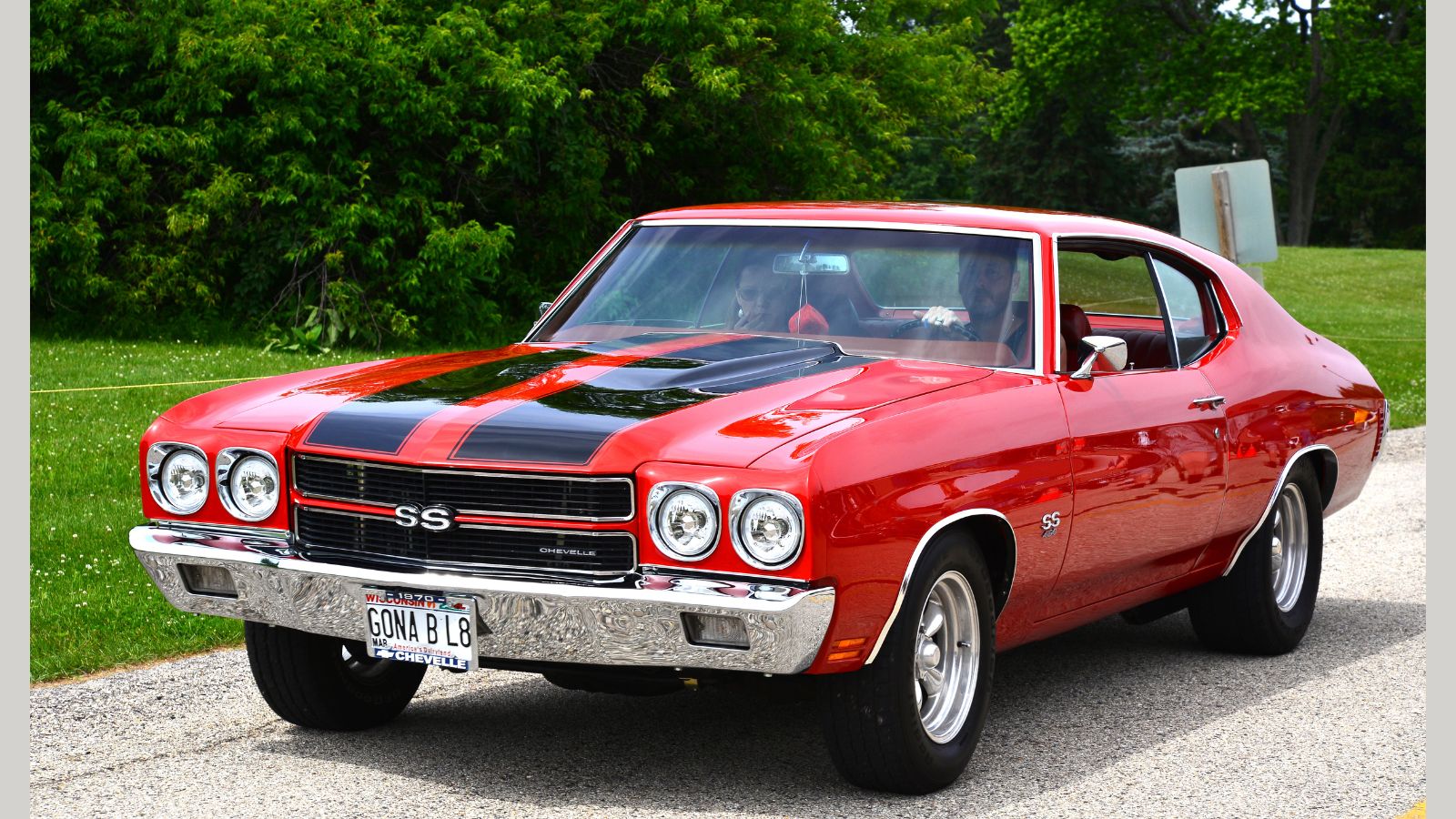
I for one am in love with American Muscle cars of the 60’s and 70’s. They shaped my automotive view of the word and made me dream. We all know that American muscle cars from the 1960s and 1970s are icons of power, noise, and attitude. With their long hoods, thunderous V8s, and wide shouldered bodywork, they became symbols of freedom and rebellion. From the Pontiac GTO and Dodge Charger to the Chevrolet Chevelle SS and my personal love, the Ford Mustang, these were machines that spoke directly to working class Americans looking for excitement at an accessible price.
But while they roared proudly through American suburbs and drag strips, an important question remains: Were these truly driver’s cars? Could they deliver the balance, connection, and finesse that define a car built for driving pleasure rather than just spectacle?
To answer that, we must go beyond nostalgia and into the engineering, performance dynamics, and how these machines compared to their European contemporaries, particularly the British and Italian sporting sedans and coupes of the same era.
Defined Muscle
Muscle cars were never designed to be exotic or exclusive. Their greatness came from being accessible. These were mass produced, V8 powered coupes and sedans, built on shared platforms and sold at prices most Americans could afford. The formula was simple: take a midsize car, bolt in the biggest engine available, strip out frills, and let the throttle do the talking.
They were built to own the quarter mile, to make a statement at the traffic light, and to deliver straight line thrills that far exceeded anything else at their price point. Whether you had a 396 Chevelle or a 440 Road Runner, you could outrun most cars on the road in a straight line.
Handling, however, was another matter.
Under the Brawn
Most muscle cars of the era shared humble roots with economy sedans and wagons. They featured body on frame construction, leaf sprung solid rear axles, and soft suspension geometry designed for comfort rather than composure. The rear end often danced unpredictably over mid corner bumps, and dive and squat under braking and acceleration were common.
The steering systems typically used recirculating ball mechanisms, which while durable, lacked the immediacy and feel of the rack and pinion systems used in many European cars. Steering inputs felt vague, slow to respond, and disconnected from the road. Combine that with massive front end weight from iron block V8s and you had cars that were exciting in a straight line, but clumsy and unpredictable when asked to change direction quickly.
Weight distribution was often heavily front biased. Many muscle cars carried a 60 to 40 or worse front to rear ratio, leading to understeer and difficulty maintaining balanced grip during high speed cornering. This imbalance made them less confidence inspiring when pushed hard on twisting roads.
Europe’s Sporting Focus
At the same time, across the Atlantic, manufacturers were producing smaller, lighter, and more sophisticated vehicles. European roads, narrower, older, and filled with tight bends and elevation changes, demanded agility and balance.
Cars like the BMW 2002, Lotus Elan, Alfa Romeo Giulia, and Triumph TR6 offered precision handling, intuitive steering, and real driver involvement. Many had fully independent suspension setups, well engineered chassis dynamics, and better weight distribution. Their power figures were modest compared to American muscle, but they could maintain higher average speeds on curving roads due to superior chassis behavior and responsiveness.
Even luxury saloons like the Jaguar XJ6 came with independent rear suspension and steering that provided a much more composed driving experience than most American V8 coupes.
Road Design and Market Demand
One reason for these diverging design philosophies comes down to infrastructure. The United States, after World War II, built the Interstate Highway System, vast, wide open roads designed for long distance travel. Suburbs sprawled outward, fuel was cheap, and space was abundant. In this environment, a big, soft riding car with plenty of torque made perfect sense.
By contrast, Europe’s infrastructure was shaped by centuries of compact city planning and topography. Roads were narrow, winding, and sometimes unpaved. High fuel costs and limited parking meant smaller cars were not just more efficient, they were necessary. The result was a generation of cars designed for agility, efficiency, and control.
This split explains a lot about the driving experience. A Dodge Super Bee may have looked impressive parked outside a diner in Texas, but on the back roads of Tuscany, it would struggle against a nimble Alfa Romeo GT.
Muscle on the Track: When America Went Racing Abroad
Despite their reputation for poor cornering, some American muscle cars did manage to prove themselves in international motorsport but not without serious development.
Ford in particular was determined to take its Mustangs racing. The Boss 302, built for the Trans Am series, was a small block Mustang with serious suspension work, stiffer chassis components, and lighter weight. It competed directly against Camaros, Javelins, and imported saloons, and it was a real driver’s machine when properly set up.
The Chevrolet Camaro Z28 was another strong performer, both in American Trans Am racing and in selected European events. These race prepped versions had upgraded brakes, tuned suspension, roll cages, and significantly reduced weight. While the base car might not have been suited to Spa or the Nürburgring, the factory developed variants showed that with the right attention, muscle cars could hold their own.
In Group 2 touring car competition, homologated versions of the Mustang and Camaro found moderate success. These cars were transformed by private teams or factory backed efforts with stronger anti roll bars, reworked steering geometry, and custom dampers. Some even received independent rear suspension conversions.
Could these parts be retrofitted to a street car? Technically, yes. Many components used in competition were derived from available performance packages such as Ford’s Drag Pack, GM’s COPO program, and Chrysler’s Track Pak which included gear ratios, heavy duty cooling, and upgraded suspension options. But in reality, few owners went to those lengths. Cost, mechanical expertise, and daily usability often made such conversions impractical.
In Can Am racing, although the vehicles were purpose built prototypes, the engines used, particularly from Chevrolet, were developed from muscle car V8s. The same pushrod architecture and big cube displacement used in a Camaro SS also powered McLaren’s dominating Can Am machines. That speaks volumes about the potential of American V8 engineering, even if the chassis it came in often needed more attention.
What Makes a Driver’s Car?
A true driver’s car communicates. It responds predictably. It rewards smooth inputs and punishes clumsiness. European sporting cars of the time embodied this philosophy. They invited you to explore their limits with confidence. Steering feel, brake feedback, throttle response, all worked in harmony.
Most muscle cars were not built with this kind of cohesion. They were brash, fast, and occasionally frightening at the limit. But they delivered a different kind of thrill, one based on torque, theatre, and unfiltered power.
Driving a 426 Hemi Charger is not about finesse. It is about managing weight transfer, modulating wheelspin, and feeling the car move underneath you like a living thing. You work hard for your speed. And for some drivers, that challenge is every bit as rewarding.
Final Thoughts: A Tale of Two Worlds
So, were muscle cars from the 1960s and 70s really driver’s cars?
Not in the classic European sense. They lacked the balance, sophistication, and responsiveness that defined cars like the Lotus Elan or BMW 2002. Most were compromised by heavy front ends, basic suspension, and steering systems that dulled driver involvement.
But they were absolutely a different kind of driver’s car. They offered raw sensation, visceral engagement, and accessible power. They were for drivers who wanted to feel something loud, proud, and untamed. For cruising across state lines or laying down rubber at a traffic light, nothing else came close.
When properly developed, they could race and win. But for most owners, their joy came not from apex hunting, but from simple, honest muscle.
In the end, both the American muscle car and the European sports saloon told their own story, one about culture, engineering, and the roads they were built to master. Each still resonates, not just as a machine, but as a symbol of what driving meant to different people in different parts of the world.