A Platform Built for Speed
The Suzuki GSXR 750 holds a special place in the sportbike world. It has long bridged the gap between lightweight 600s and full blown liter bikes. With its sharp handling, responsive chassis, and usable power, it has always been a favorite among riders who want real-world performance and track-ready potential. It strikes a balance that few bikes manage, offering plenty of performance without overwhelming the rider. This makes it a fantastic foundation for a track day machine. Honestly if your looking for a Track Bike you’ll do well to consider a late model Suzook 750!
The Call to Wrench
It started like most good garage stories do, with a message from a buddy and a plan made over coffee. He had a Suzuki GSXR 750 that had seen a good amount of road use but was ready for a new life. He wanted to convert it into a full on track bike and needed a hand. We had an evening, a cold garage, a few tools, and enough experience between us to get it done.
The idea was not to build a showpiece but to make the bike safe, track legal, and functional. We approached the process with efficiency and a bit of good humor, knowing time was short but doable.
Stripping It Down
The first step was removing the stock bodywork. Mirrors, indicators, license plate bracket, lights, and fairings all came off and were stored away. The GSXR already had a decent frame and suspension setup, so there was no need to mess with geometry or brakes. The priority was weight savings and race readiness.
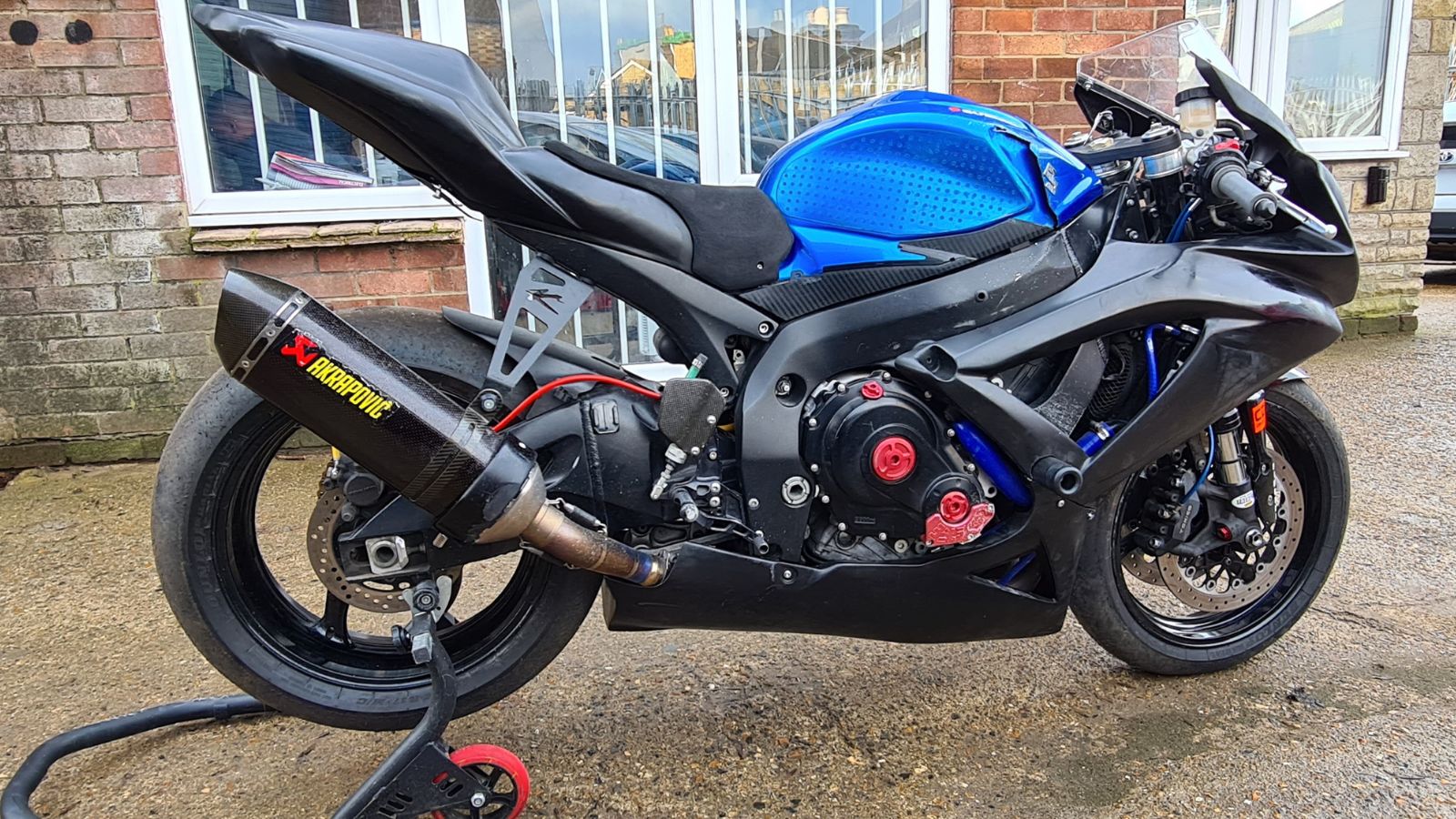
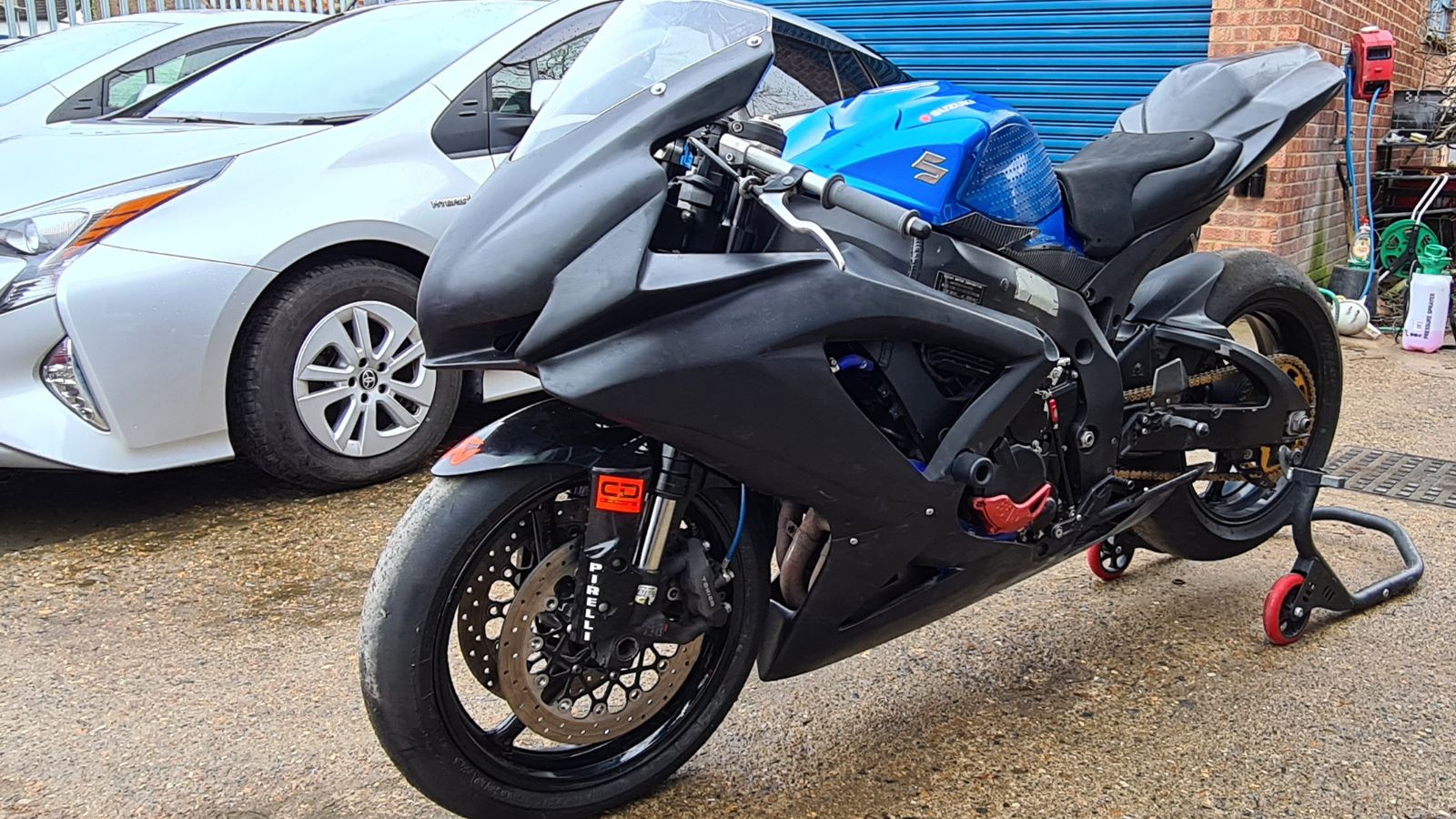
We replaced the street plastics with a fiberglass race fairing kit. It was predrilled and surprisingly easy to fit. With a bit of fine tuning around the mounting points, the whole setup came together without drama. The race fairings instantly changed the look of the bike. It now had that aggressive track stance that road bikes just do not deliver.
Getting Practical
We swapped in a racing seat unit, ditched the pillion pegs, and installed a safety wired oil filter and drain bolt. A catch can setup followed for fluids, as per track day regulations. The lights and switchgear were disconnected and taped off cleanly. We used a race style throttle tube for quicker response and gave the levers a final adjustment.
Then came the real transformation. We replaced the standard handlebars with adjustable clip on bars, allowing for a lower and more aggressive rider position. The foot controls were upgraded to rear set footpegs, which offered better ground clearance and improved rider feel.
To help the bike breathe and sound the part, we installed a free flowing airfilter and carbonfiber Akrapovic exhaust. The difference in tone and throttle response was immediate, however we know a trip to the dyno is a must to make the most of the airfilter and exhaust modification. We also upgraded the brake pads to track focused compounds that could handle repeated heavy braking without fade. Finally, we removed the road tires and fitted a set of track day ready slicks that would offer all the grip needed for the upcoming sessions.
Tires were properly set for track pressures, the chain tension was dialed in, fluids checked, and we made sure all bolts were torqued properly. Nothing flashy. Just solid, smart prep.
Final Touches and First Impressions
We added a front brake lever guard, gave it a once over with a flashlight, and then rolled it off the stands. What sat before us was no longer a road bike. It was a lean, track focused machine that looked the part and was ready for its first session.
Helping my friend build his GSXR 750 into a track bike in one night reminded me how effective teamwork can be in the garage. You do not need a race team or a trailer full of tools. Just some planning, some hustle, and a shared love for the ride.
That night ended with the sound of the engine firing up in its new skin. It echoed off the walls like a warning shot to every apex it would hunt next weekend.
And just like that, a road warrior was reborn as a track weapon. Also if we wanted we could reverse all the changes to bring back the street bike!