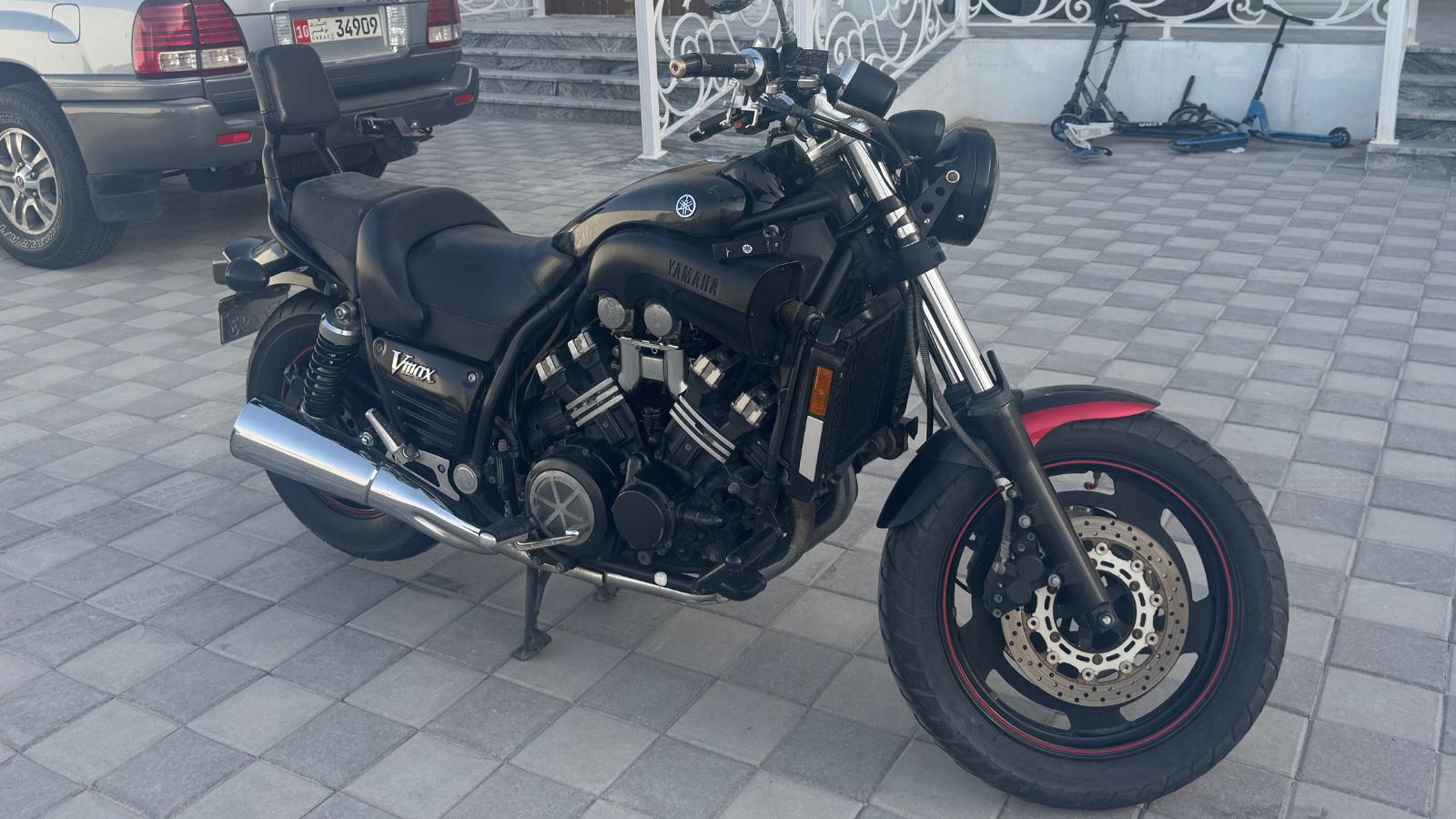
The Yamaha VMAX 1200 was the original muscle bike, way before the Ducati’s Diavel or Triumph’s Rocket 3 there was the VMAX and by 2005, the Yamaha VMAX 1200 had already cemented its place in motorcycling folklore for the last 20 years. First introduced in the mid 1980s, the VMAX was not merely a motorcycle; it was a cultural statement. Built unapologetically for straight line dominance, it was Japan’s answer to American muscle and one of the first true power cruisers to earn a global following. The 2005 model marked one of the final iterations of this iconic machine, keeping the original ethos alive while subtly refining what had already become legend.
The VMAX was never just about numbers or statistics. It was about attitude, presence, and sheer mechanical drama. For many, the experience of riding a VMAX was unforgettable. It stood for a certain kind of motorcycling that was bold, brash, and uncompromising. In a world moving towards efficiency and refinement, the VMAX reminded everyone of the thrill that raw power could deliver.
V4 Heart, Cruiser Soul
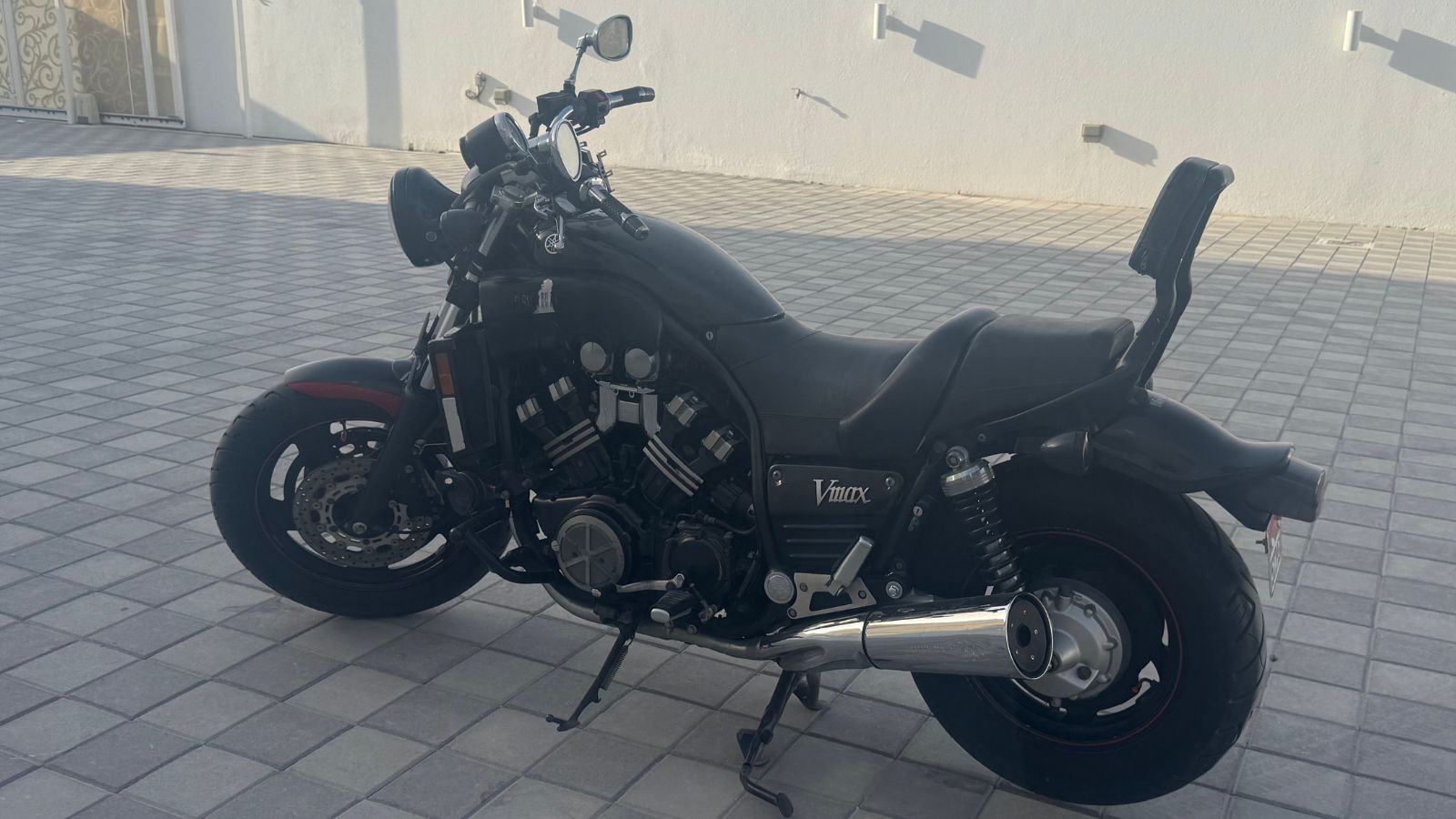
At the core of the VMAX was its mighty 1198cc liquid cooled V4 engine. This powerplant was unlike anything else in the cruiser class. Borrowing DNA from Yamaha’s touring and sportbike lineage, the V4 configuration provided a smooth yet ferocious power delivery. With around 140 horsepower on tap, it could demolish quarter miles in the low 11 second range, often humbling supposedly faster sportbikes off the line. The shaft drive kept things maintenance friendly, while the wide rear tire and long wheelbase helped maintain stability during those blistering launches.
The unique layout of the V4 meant that it had an unmistakable engine note. It growled and snarled in a way that few bikes ever could. The deep bass of the exhaust mixed with the mechanical whirr of the motor created a soundtrack that became an addiction for many. It was an engine that encouraged you to twist the throttle and hear the symphony.
Styling with Attitude
The VMAX’s appearance was as unmistakable as its performance. The muscular tank, twin scoops, and stubby tailpiece gave it a stance that dared you to take it lightly. It wasn’t pretty in a conventional sense, but it was brutally handsome. Every angle screamed intent, and every ride reaffirmed that this bike was designed not for posing, but for performance. Riders either loved it or feared it, sometimes both.
There were few motorcycles that looked quite like a VMAX. Its proportions were almost cartoonish, but in the best way. The oversized elements and exposed mechanicals made it clear that this was a machine built for impact. It did not hide its purpose and made no apologies for it.
Built for a Purpose
What made the VMAX special wasn’t just the numbers, but the way it delivered them. There were no electronic rider aids, no ride by wire systems, and certainly no traction control. It was you, the throttle, and a whole lot of V4 thunder. It required respect and rewarded confidence. Corner carving wasn’t its forte, but few bikes could match the raw adrenaline it offered in a straight line.
That purity of experience was what made it so beloved by enthusiasts. There was a certain charm to the fact that you had to manage the power with skill and feel. It demanded that you pay attention and stay engaged. It made you a better rider by virtue of the fact that it did not forgive mistakes easily.
Last of a Breed
By 2005, the motorcycle world had begun shifting toward high tech performance, compact sportbikes, and electronically enhanced everything. The VMAX stood apart, almost defiantly old school. It appealed to riders who valued character over lap times and torque over telemetry. This model year represented one of the final chapters for the first generation VMAX before Yamaha introduced the more powerful 1700cc version in 2009.
It was a farewell to a certain kind of motorcycling. The VMAX was never intended to blend in or conform. It stood tall in a market that was becoming increasingly homogenized. For those who wanted something with soul, something mechanical and honest, the VMAX was one of the last great options.
A Personal Rescue and Renovation
My own story with the VMAX took an unexpected turn when I came across a relatively low mileage example that had been picked up by a young rider as his first big bike. He had clearly underestimated what he was dealing with. The VMAX is not a motorcycle for beginners. Its brute power, heavy weight, and unique handling characteristics can be overwhelming for even seasoned riders. Unsurprisingly, he was terrified of it. It sat mostly unused, and after a short conversation and a fair offer, it became mine.
I have since embarked on a systematic renovation of the bike. First on the list are all the essential fluids and consumables: new oil and filters to breathe life back into the engine. The braking system is being completely overhauled with rebuilt calipers, new brake master cylinder, fresh discs, and pads. The clutch system will receive the same treatment with new master and slave cylinders. The front forks will be rebuilt with progressive springs and heavier oil to improve absorption and control, while the rear end will benefit from a new pair of YSS shocks. Fresh tires will complete the rolling package, and finally, a deep clean and detail will restore its visual presence.
This project is not just about bringing a bike back to life. It’s about preserving a piece of motorcycling history and returning a legend to the road where it belongs.
Icon Status Earned
Few bikes have enjoyed such an enduring reputation. The 2005 Yamaha VMAX was not a jack of all trades; it was a master of one. It offered brute performance, a distinctive soundtrack, and a cult following that persists to this day. For those who experienced it, the VMAX wasn’t just a motorcycle, it was an experience, a mechanical rebellion against conformity.
To ride one was to be part of something unique. It attracted a certain type of motorcyclist, one who rode not for efficiency but for the thrill of the ride. Even today, the VMAX community remains strong, with riders and collectors preserving and celebrating this icon.
And that is why, even years later, it remains one of the most iconic machines ever to wear the Yamaha badge.