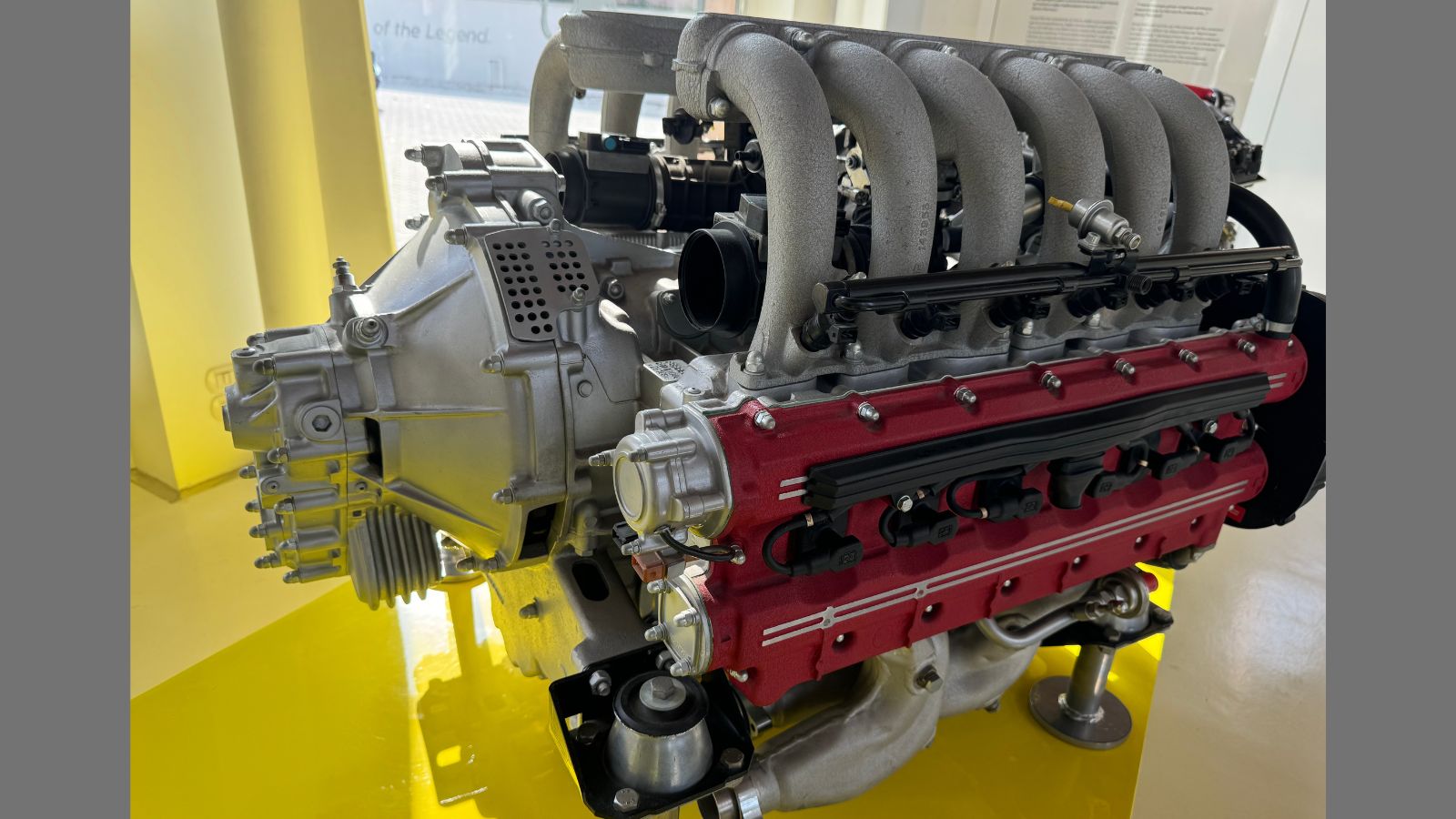
The heart of the Ferrari Testarossa (or Redhead in english) was its unique and imposing flat 12 cylinder engine, an evolution of a layout Ferrari had previously used in its Berlinetta Boxer models. First appearing in the Testarossa in 1984, the engine was both a mechanical statement and a solution to performance and packaging challenges Ferrari faced in the early 1980s. It would go on to define one of Ferrari’s most iconic cars.
Flat 12 or Boxer?
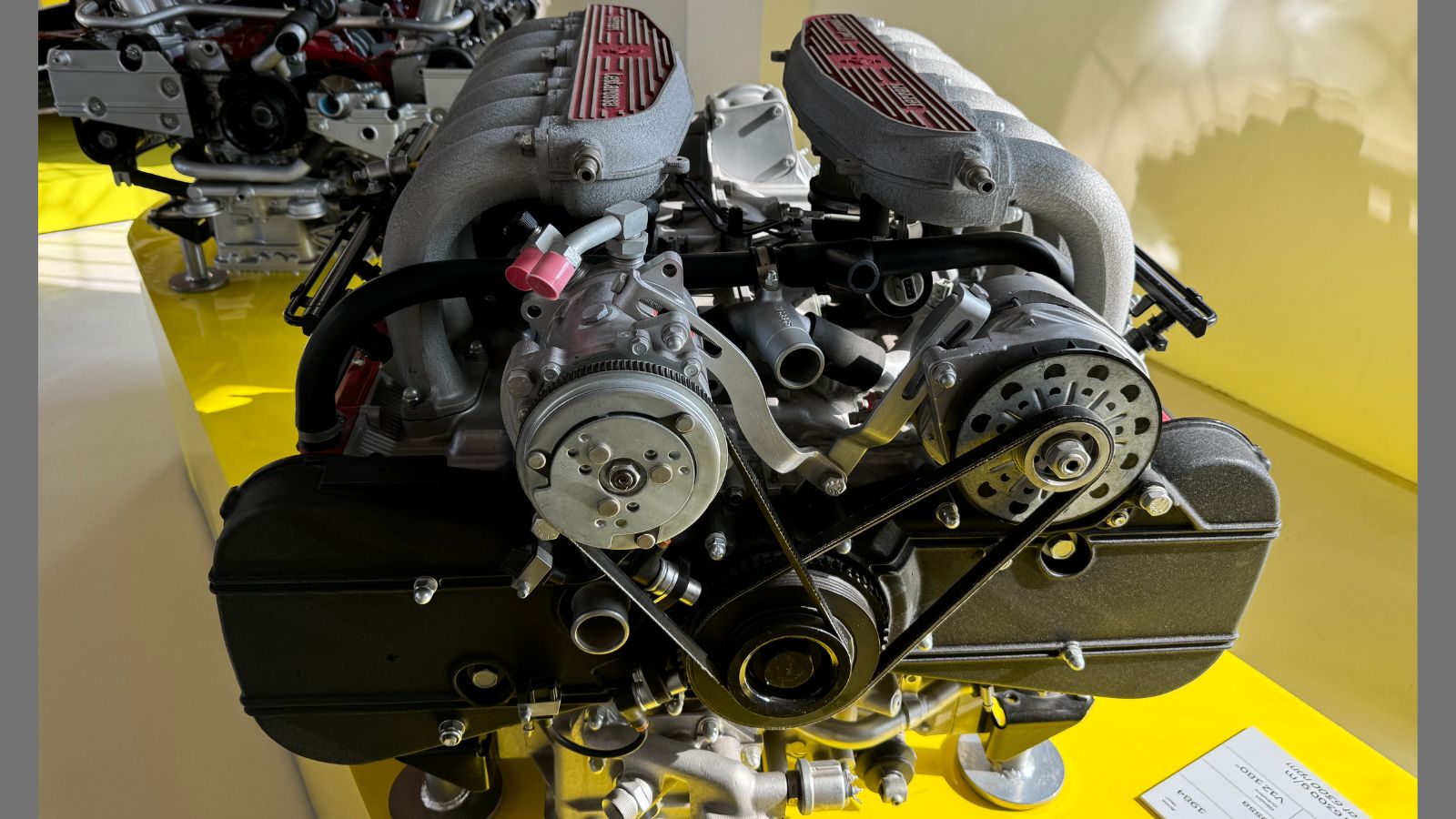
The engine in the Testarossa is often referred to as a “flat 12,” but it is technically a 180 degree V12 rather than a true boxer engine. In a traditional boxer layout, each opposing piston has its own crankpin, and the pistons move in opposite directions. In the Testarossa’s flat 12, the engine uses shared crankpins, meaning pairs of pistons move together in and out simultaneously. This difference in design places the engine firmly in the 180 degree V12 category, not a true boxer.
Designed for Performance and Presence
Another interesting characteristic of the flat 12 is its firing order, which contributes to the engine’s smoothness and unique exhaust note. Ferrari tuned the firing intervals to deliver optimal balance and sound. In terms of engine dynamics, the flat 12 offered excellent primary balance due to its opposing cylinder arrangement. However, unlike a true boxer, its shared crankpins meant secondary balance was not quite as perfect, though still refined by Ferrari standards. The layout’s inherent mechanical symmetry helped reduce vibrations significantly, aiding in the smooth delivery of power at high speeds.
This 4.9 liter naturally aspirated engine was designed by Ferrari’s legendary engineer Mauro Forghieri and further refined under the guidance of the engineers at Maranello. Producing around 390 horsepower in its original form, it allowed the Testarossa to reach top speeds exceeding 180 miles per hour. The engine’s architecture allowed for a very low center of gravity and smooth power delivery, with a redline at 6800 rpm.
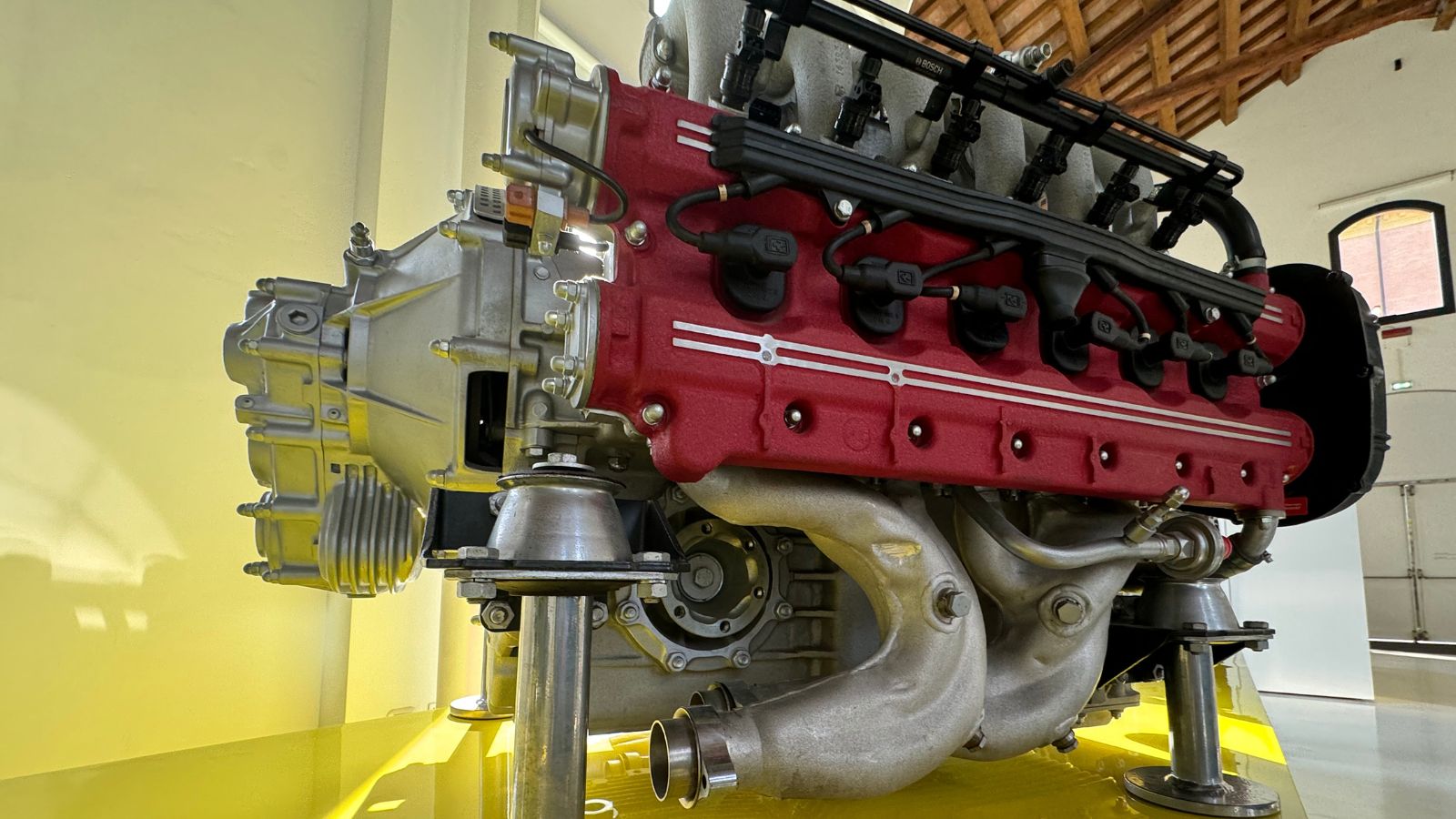
The engine featured four valves per cylinder and was fed by a Bosch K Jetronic fuel injection system in its early variants, which contributed to its reliable and responsive throttle characteristics. Later versions like the 512 TR and F512 M saw improvements in power output and refinement.
Transverse Gearbox: A Smart Solution
One of the most distinctive engineering choices was the placement of the gearbox. In the Testarossa, the gearbox was mounted underneath the engine, making the entire powertrain shorter in length. This was an evolution of the layout seen in the earlier 512 BB models. Placing the gearbox beneath the engine helped keep the center of gravity low and the wheelbase relatively short, improving handling dynamics and weight distribution.
Additionally, this design contributed to the car’s famously wide rear end, which was necessary to house both the large flat 12 and its cooling radiators placed on either side of the engine bay. The width was not just aesthetic drama but functional packaging, directly tied to the performance intent of the car.
Engineering with Character
The flat 12 in the Testarossa was not just about numbers. It was about the experience. The broad torque band, the mechanical noise, and the effortless way it delivered power were all part of the appeal. Unlike the high strung V8s or the shrieking V12s found in other Ferraris, the flat 12 delivered its performance with a smooth, muscular authority.
It also helped differentiate Ferrari from other exotic car makers at the time. While Lamborghini was leaning on its V12s with upright cylinder banks, Ferrari’s choice of a flat engine not only created a distinct character but also allowed for packaging and aerodynamic advantages.
A Lasting Legacy
Though the flat 12 engine layout would eventually give way to more compact and efficient V12s in Ferrari’s lineup, it remains one of the most memorable and dramatic powerplants the company ever built. The Testarossa, with its unmistakable silhouette and side strakes, owed much of its presence to the wide, flat engine beneath its rear deck.
More than just a piece of engineering, the flat 12 was a statement of intent, bold, unconventional, and uncompromising. It helped make the Testarossa a cultural icon and a symbol of 1980s performance excess that still turns heads and wins hearts today.