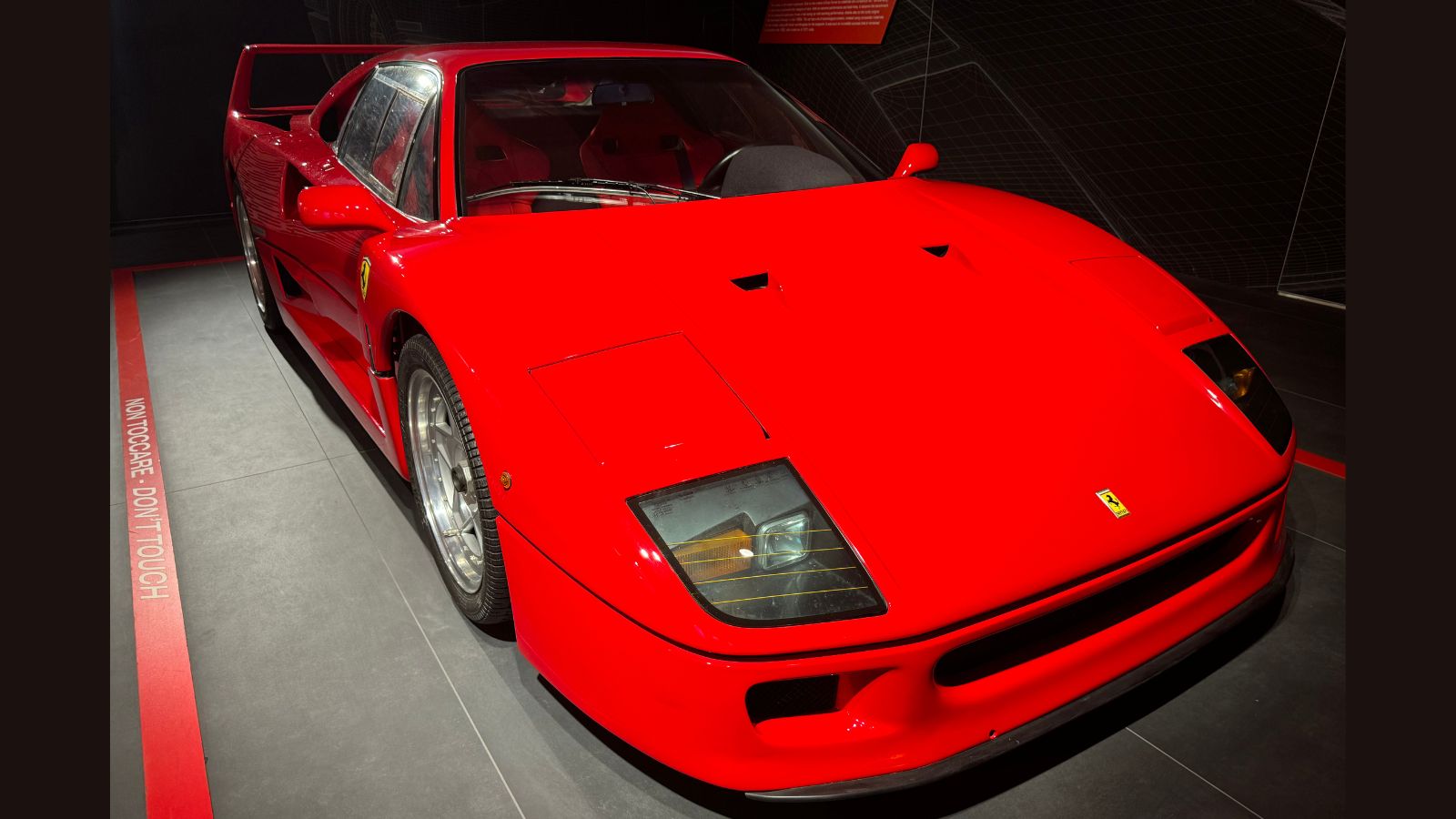
The Ferrari F40 is more than just a supercar. It is a legend that has stood the test of time in the hearts of enthusiasts and collectors worldwide. Released in 1987 to commemorate Ferrari’s 40th anniversary, the F40 was the final car personally approved by Enzo Ferrari himself. It was conceived as the ultimate expression of Ferrari’s engineering prowess, a no-compromise machine that would push the boundaries of performance, design, and raw driving emotion.
The F40 emerged during an era of technological transition, when computers and electronic aids were just beginning to influence automotive design. Ferrari chose to go in the opposite direction. The F40 was an analog weapon. No power steering, no ABS, no traction control. Just a screaming 2.9 liter twin turbocharged V8 sending 471 horsepower to the rear wheels through a five speed manual gearbox. It was fast, raw, and brutally honest.
Engineering Excellence and Stripped Down Design
What made the F40 so special was not just its power but how that power was delivered. The twin turbo V8 was housed in a chassis built for lightness. Carbon fiber, Kevlar, and aluminum were used extensively in the body panels and tub to keep weight down to just over 2,400 pounds. This obsession with minimalism gave the F40 a power to weight ratio that made it one of the fastest cars of its time.
Inside, the car was spartan. Bare carbon fiber lined the cabin. Lexan windows replaced glass. There were no carpets, no radio, and simple pull straps replaced interior door handles. It was all function over form, a race car for the road. Even the popup headlights and massive rear wing served aerodynamic purposes more than style.
A Force in Competition
Though it was designed primarily as a road car, the F40 also saw success in motorsport. The F40 LM and F40 GTE variants were developed for competition, featuring larger turbos, improved aerodynamics, and race prepped suspensions. These versions competed in events such as the IMSA GT Championship and the BPR Global GT Series.
The F40 LM was particularly successful in the early 1990s, often battling and beating dedicated race cars from more modern platforms. Its performance in competition helped reinforce the image of the F40 as a machine built for more than just showrooms and collectors’ garages. It was a thoroughbred Ferrari, born on the track and bred for battle.
A Design That Captivates
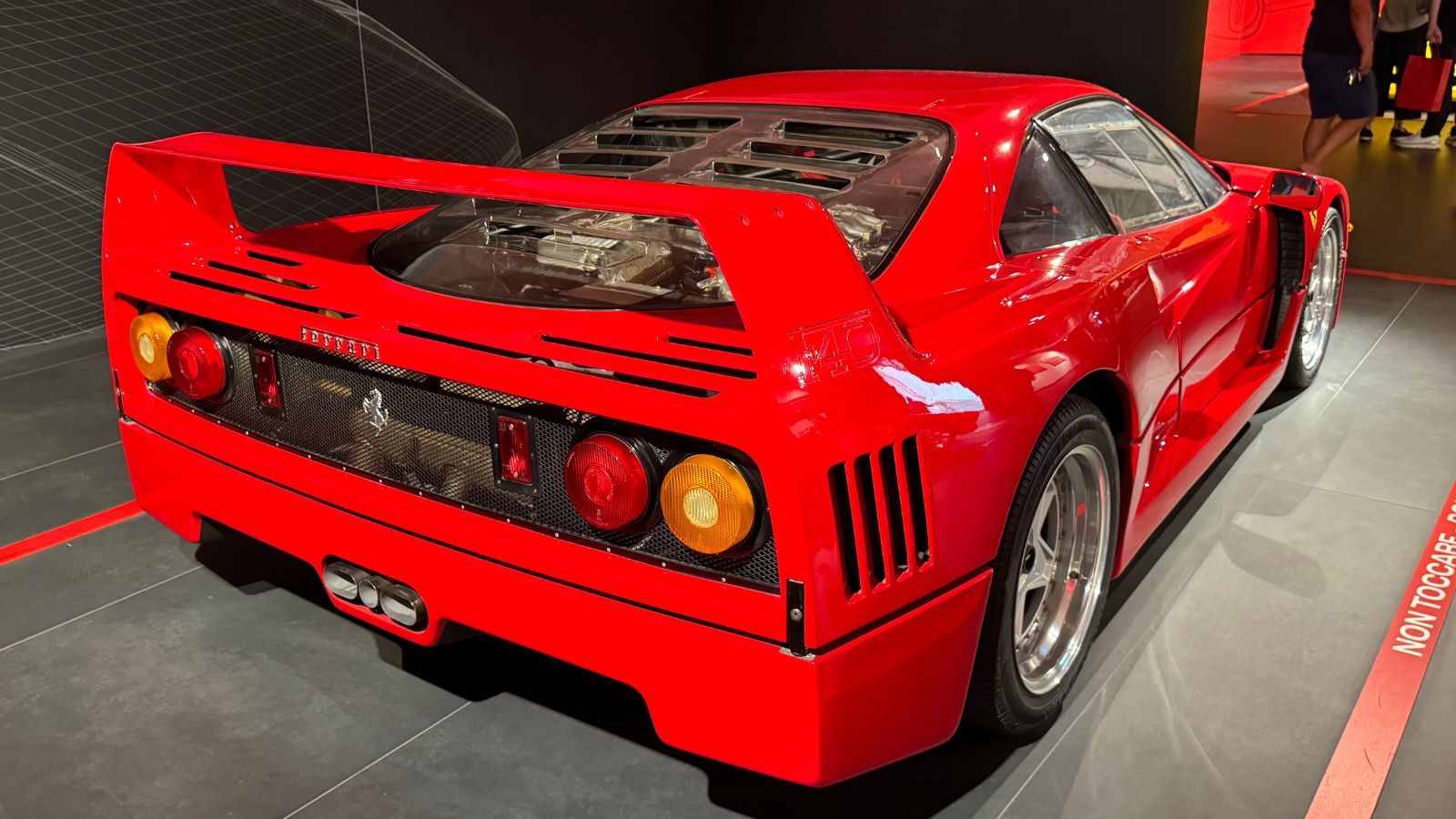
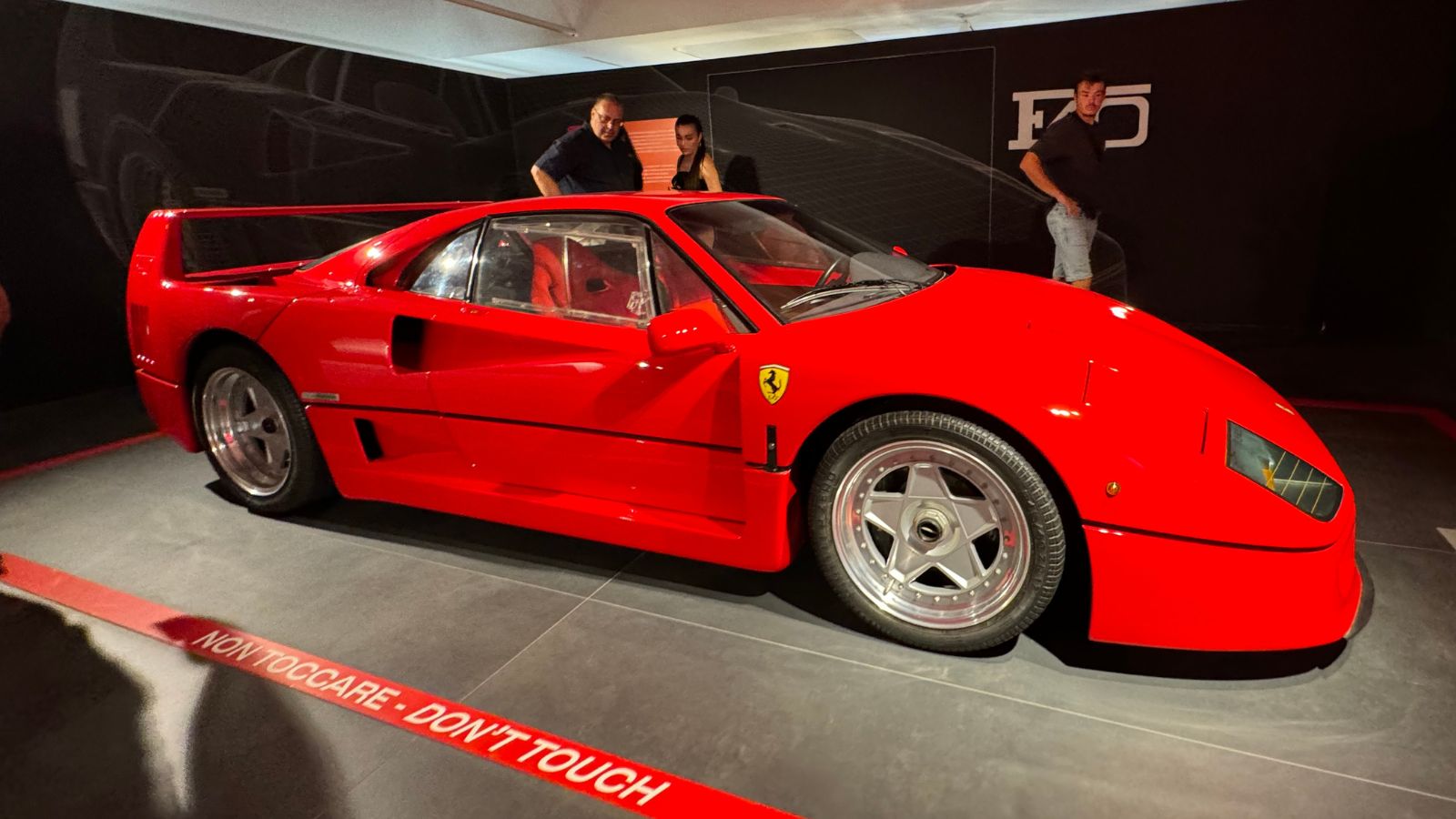
Visually, the F40 is an icon. Its wedge shaped silhouette, massive rear wing, and NACA ducts exude aggression and purpose. The entire design speaks of speed and intention. While its aesthetics are often described as functional beauty, the F40’s appearance has become an enduring symbol of supercar excellence.
The red paint, of course, is Ferrari through and through. Most F40s were delivered in Rosso Corsa, further tying the car to the Scuderia’s racing heritage. Its stance, proportions, and presence ensure that even decades after its release, it can draw crowds and steal hearts like few others.
Encountering the Legend in the Steel
I remember the day I came face to face with a real Ferrari F40. It was at the Ferrari Museum in Modena, a place already steeped in history and reverence for the brand. But nothing prepared me for the moment I saw the F40 in the flesh.
There it stood, low, wide, and defiant. The air around it felt still, like a shrine. People spoke in hushed tones. Its Rosso Corsa bodywork seemed to glow under the museum lights, each angle revealing sharp lines and purposeful curves. This wasn’t just a car, it was a sculpture forged in the fires of passion and speed.
Standing before it, I was struck by the same awe I had felt the first time I saw a Lamborghini Countach or a Porsche 911 Turbo. These were the machines of posters, of childhood dreams, of unreachable greatness. And here I was, inches away, almost able to hear the mechanical snarl of the twin turbo V8 just from the silence.
It was a spiritual experience, one that made the legacy of the F40 real in a way no magazine or video ever could. You feel its soul when you’re with it. You understand why it moves people. It’s not just admiration. It’s reverence.
Why It Will Always Be a Legend
The Ferrari F40 remains a benchmark because it represents a philosophy that is nearly extinct in today’s automotive world. It was built with purity, focus, and passion, traits that are often sacrificed in favor of comfort, regulation, and electronic assistance in modern supercars.
For many petrol heads, the F40 is the ultimate Ferrari. Not the fastest by today’s standards, not the most technologically advanced, but undeniably the most emotionally engaging. It is a car that demands respect and rewards bravery, a machine that connects man and machine with nothing in between.
Legacy and Influence Across Generations
More than three decades since its launch, the F40 continues to influence not just Ferrari but the broader supercar world. Its rawness and clarity of purpose have become aspirational benchmarks. Car makers often reference the F40 when speaking about bringing emotion back into driving. The simplicity, the drama, and the thrill it offers remain unmatched.
Collectors consider the F40 a must have, not only because of its heritage but because of the visceral driving experience it offers. It is the embodiment of an era, a time when drivers were fully responsible for taming the beast. It has no gimmicks, only glory. It is this purity that keeps the F40’s legend alive and thriving.
Even younger generations, raised on hypercars filled with touchscreens and driving aids, find themselves drawn to the F40. Its honesty cuts through the noise of modern automotive trends. It speaks directly to those who value driving as a physical, emotional, and deeply personal act.
The Spirit of Ferrari
The F40 was never just about speed. It was about soul. It was about Enzo Ferrari’s vision of what a performance car should be, loud, fast, beautiful, and uncompromising. It captured a moment in time when passion led engineering, and that is why it continues to be revered today.
Whether on a concours lawn, blasting down an empty road, or sitting in a climate controlled garage, the Ferrari F40 remains a touchstone for what a true supercar can be. It is not just a legend, it is the standard by which all legends are measured.