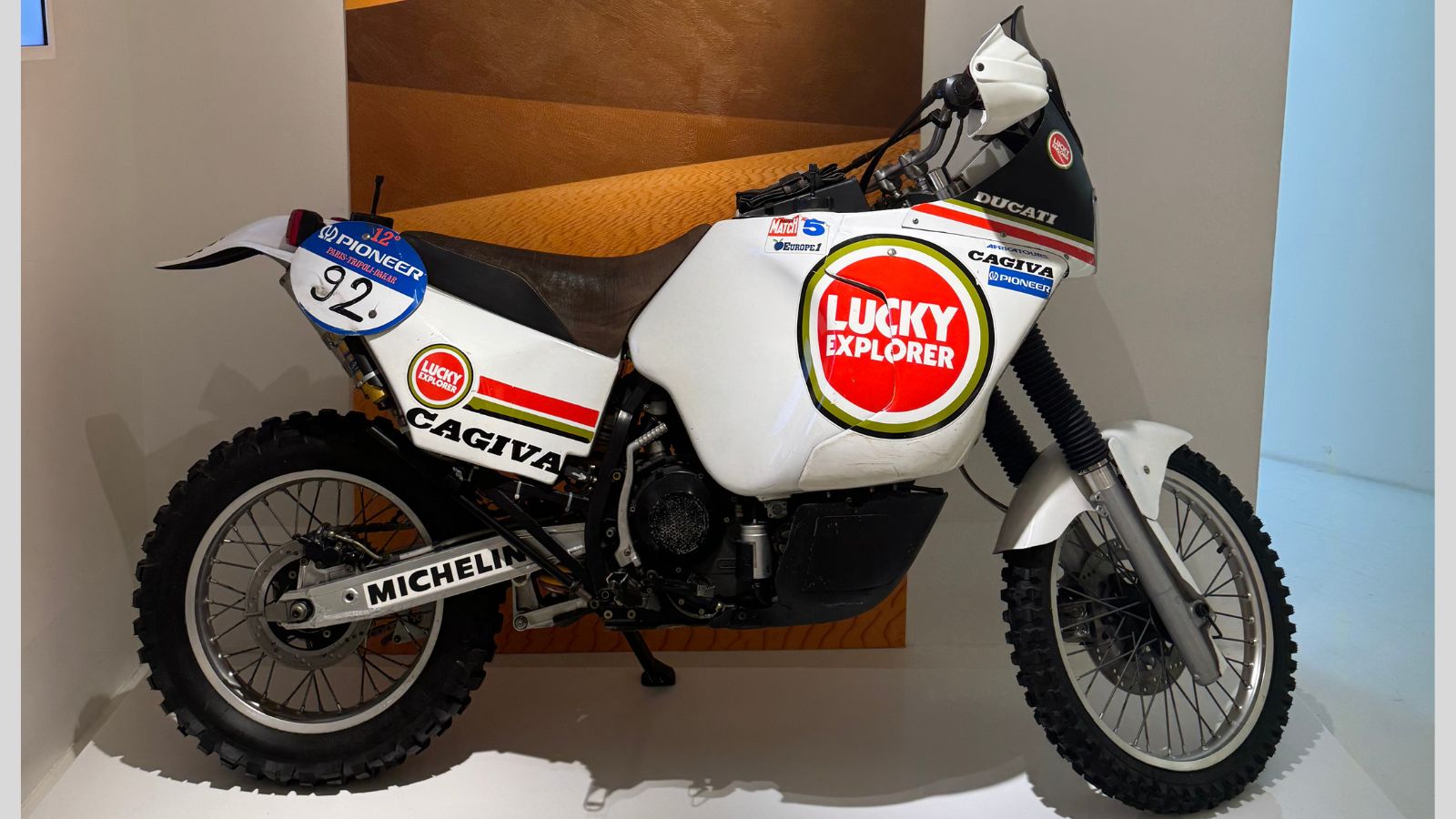
In the pantheon of rally raid motorcycles, few machines have earned their place as definitively as the Cagiva Elefant. Built to conquer the grueling Paris Dakar Rally, the Elefant became a symbol of Italian tenacity, bold engineering, and high performance collaboration. At its heart beat a Ducati Desmodromic V twin engine, giving the bike not only the soul of a racer but the mechanical credibility to endure and succeed in one of the world’s most brutal races.
The Elefant was a beast made for war. It wasn’t pretty in the way Italian motorcycles are traditionally known to be. Instead, it was muscular, squared off, and purposeful. But there was a certain charm in its utilitarian aesthetica look that communicated endurance, not excess. When it came to performance, the Elefant did not disappoint. With its long travel suspension, robust trellis frame, and ample fuel capacity, it was designed to go the distance across every kind of terrain imaginable.
What the Elefant Meant for Italian Engineering
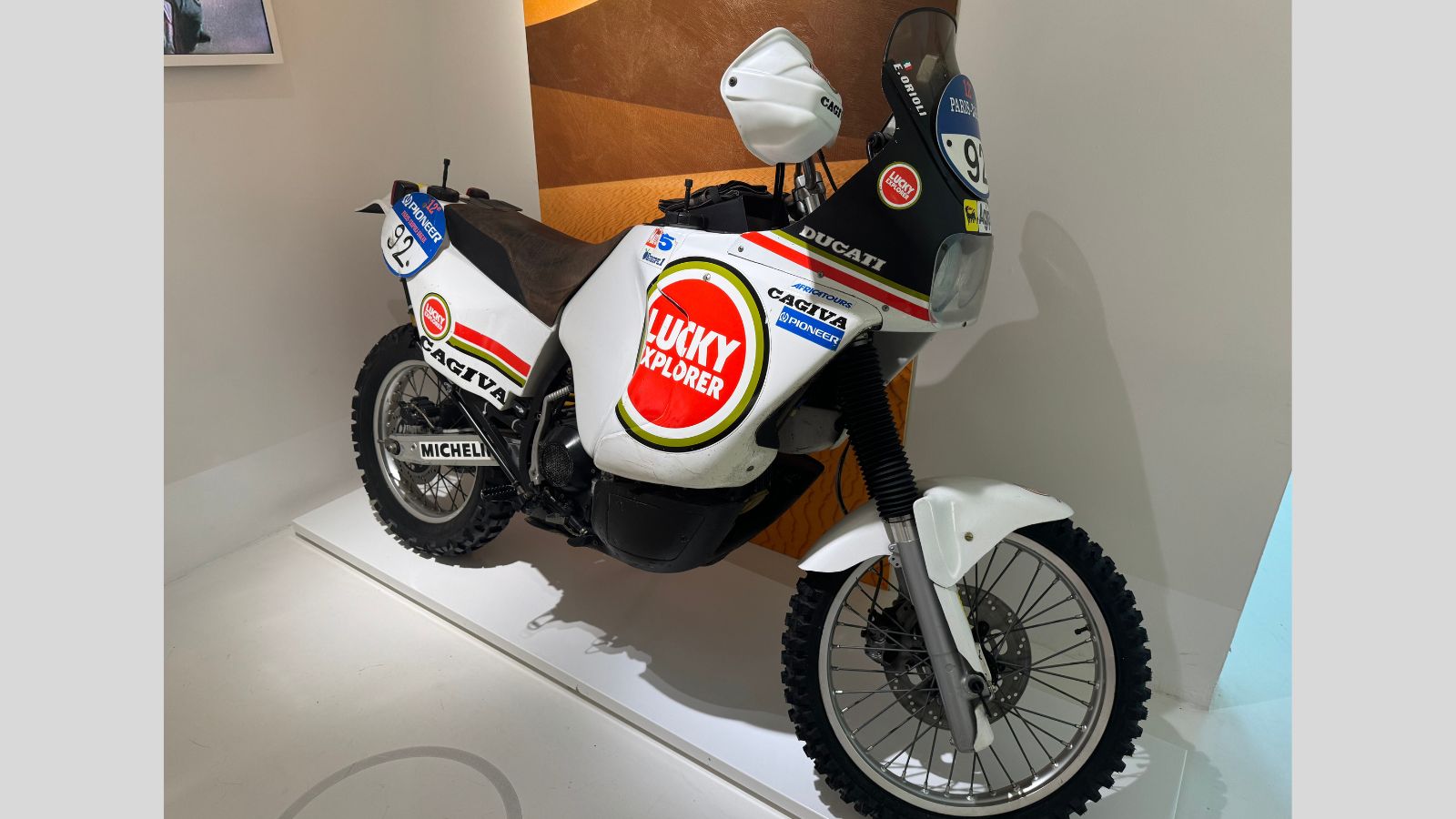
The Elefant was more than just a motorcycle; it was a technical showcase of what Italian ingenuity could achieve when performance and endurance were fused together. Italy had long been known for its style and speed, but the Elefant added resilience to that reputation. It proved that Italian machines weren’t just beautiful they were tough. From the ergonomics to the suspension travel, from the fuel capacity to the rugged frame, everything was designed with Dakar in mind. This bike could take a beating and still scream across the desert at full tilt.
The Elefant also demonstrated Italy’s capacity for serious competition on a global stage. At a time when Japanese dominance in off road racing was the norm, the Elefant challenged expectations and stereotypes. It showed that Italian design could be functional as well as artistic, that endurance and elegance were not mutually exclusive.
A Turning Point for Cagiva
For Cagiva, the Elefant wasn’t just a rally entry it was a turning point. Founded in the 1970s by the Castiglioni family, Cagiva originally manufactured small motorcycles and mopeds. By the 1980s, the brand had grown ambitious, purchasing Ducati in 1985 and beginning a serious push into motorsport. The Elefant became the spearhead of that effort. Winning the Dakar in 1990 and again in 1994 with riders like Edi Orioli, the Elefant elevated Cagiva to an elite status in the world of off road racing.
This success not only boosted Cagiva’s credibility globally but helped redefine the company’s image from a local player to a serious international force. The victories at Dakar gave Cagiva a legitimacy that translated into stronger sales and a more prominent place in the motorcycle industry.
Cagiva would later go on to field racing efforts in MotoGP and World Superbike, but many still see the Elefant as its finest hour. It represented the brand’s daring spirit and desire to compete at the highest level not just in speed, but in stamina.
Ducati’s Role and the Heart of the Beast
The engine that powered the Elefant was pure Ducati an air cooled L twin with Desmodromic valves, known for its torque, reliability, and unmistakable soundtrack. This wasn’t just a powerplant; it was a statement. It brought Italian road racing heritage into the sand and stone of North Africa. For Ducati, it was proof that their engine philosophy could thrive beyond the tarmac.
While Ducati itself was more focused on performance bikes and road racing, its collaboration with Cagiva via the Elefant was a brilliant expansion into endurance and adventure territory. It helped cement Ducati’s reputation not only for high performance but also for engineering durability qualities critical in the harshest racing environment on Earth.
In later years, this same V twin legacy would carry through to Ducati’s own Multistrada and DesertX models. But it was the Elefant that proved the concept. A road race engine, tuned for torque and longevity, could conquer the harshest rally raid in the world.
A History of the Paris Dakar and the Triumph of 1990
The Paris Dakar Rally, now known simply as the Dakar Rally, is an endurance race originally run from Paris, France to Dakar, Senegal. Spanning thousands of miles of desert, dunes, rocks, and wasteland, it tests both man and machine to their absolute limits. In this crucible, only the strongest survive.
Cagiva entered the Elefant into the Dakar to prove a point, and in 1990, that point was made with thunder. Edi Orioli piloted the Elefant to victory, showcasing not only his own grit but the machine’s reliability and power. That win, followed by another in 1994, solidified the Elefant’s legacy and made it one of the most respected rally bikes of all time.
Orioli’s performance wasn’t just about speed. It was about control, strategy, and survival. In a race where even the smallest mechanical failure can end a campaign, the Elefant held together and kept pushing. That triumph sent a shockwave through the rally world. An Italian machine, powered by a road racing engine, had outclassed its rivals in the most demanding conditions imaginable.
Why the Cagiva Elefant Was a Triumph
The Elefant was a triumph because it dared to go where few Italian machines had gone before into the dust, into the heat, into the unknown. It brought Ducati power into a world dominated by Japanese and German manufacturers and came out on top. It was the underdog that didn’t just fight it won.
Its success proved that Italian engineering was more than just art and speed. It was strength. It was strategy. It was capable of surviving and thriving in the harshest arenas. For fans of rally and lovers of motorcycles, the Elefant remains a symbol of daring, determination, and design. It’s not just iconic it’s legendary.
Today, the Elefant’s cult status remains strong. Collectors seek out original models, especially those in Lucky Explorer livery. Enthusiasts continue to restore and ride them as a nod to a golden age of rallying. And new bikes bearing its influence like Ducati’s DesertX carry forward the DNA of that bold experiment.
The Cagiva Elefant didn’t just win races. It won respect. And in doing so, it carved a permanent place in the story of motorcycle racing, engineering, and adventure.