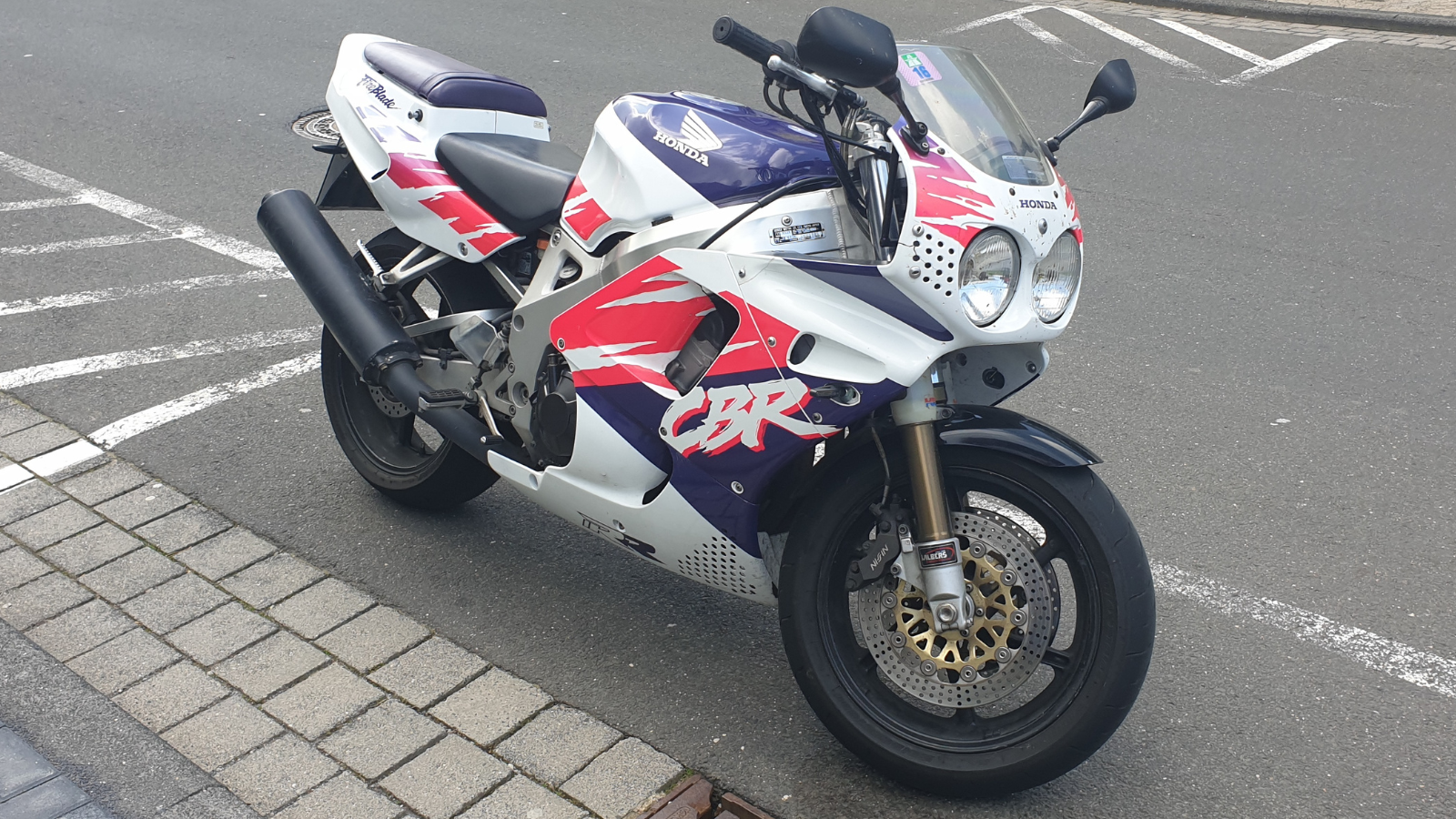
The original 1992 Honda Fireblade redefined what a superbike could be. Designed under the guidance of Tadao Baba, this revolutionary machine combined lightweight agility with blistering power, setting a new benchmark for performance motorcycles. With its aluminum frame, clip-on handlebars, and unmistakable twin round headlights, the Fireblade captured the imagination of enthusiasts and cemented itself as a gamechanger in the world of sportbikes.
The Impact of Aluminum Frames and Clip-On Handlebars
The Fireblade’s aluminum frame was a marvel of engineering. It was designed to provide maximum rigidity while keeping weight to a minimum. Paired with its compact dimensions, the bike offered unmatched handling and responsiveness for its time. The clip-on handlebars contributed to a forward leaning, aggressive riding position that gave riders a sense of being connected to the machine. This combination of precision and control transformed the riding experience, blurring the line between street bikes and full blown race machines.
The Era of Round Twin Headlights
The Fireblade’s dual round headlights are emblematic of an era that still brings a smile to the faces of motorcycle enthusiasts. This design wasn’t just about aesthetics; it drew inspiration from endurance racing bikes, where twin headlights were a necessity for 24-hour events like the Bol d’Or in France and Japan’s Suzuka 8 Hours. These bikes had to tackle grueling conditions, often in complete darkness, so the Fireblade’s headlights were as functional as they were stylish. For many riders, this design evokes nostalgia for a time when motorcycles were raw, mechanical, and uncompromising.
Transforming Motorcycles into Race Replicas
Before the Fireblade, most sportbikes were either heavy touring machines with sporting aspirations or focused race bikes with limited practicality. The Fireblade bridged that gap, bringing race inspired performance to the streets without sacrificing usability. Its compact 893cc engine delivered incredible power, while its lightweight design made it more accessible than other big displacement bikes of the era. Riders could finally experience a machine that felt like a true race replica, giving them a taste of what professional racers enjoyed on the track.
Endurance Racing Influence
Endurance racing in the late 80s and early 90s heavily influenced the Fireblade’s design. The dual headlights weren’t just a styling nod; they were a direct link to Honda’s racing pedigree. Bikes competing in events like the Bol d’Or relied on similar configurations to withstand the demands of continuous, high speed racing. The Fireblade brought this race tested technology and design ethos to everyday riders, making it a machine that was as functional as it was thrilling.
Why the Fireblade Will Always Be Seminal
The 1992 Honda Fireblade didn’t just set new standards—it created a whole new category of motorcycle. It redefined what riders could expect from a sportbike, delivering agility, power, and practicality in a single package. Its innovative design elements, inspired by endurance racing, gave it both form and function. The Fireblade’s legacy lives on in modern superbikes, but few machines have had such a profound impact on the evolution of motorcycling.
Final Thoughts
For those who remember its debut, the 1992 Honda Fireblade represents a golden era of motorcycling. Its combination of cutting edge engineering, racing inspired design, and rider focused performance made it a true game changer. Even today, it remains a beloved icon, and its influence can be felt in every corner of the sportbike world. Whether you’re a collector or a rider, the Fireblade’s timeless appeal ensures it will always hold a special place in motorcycle history.