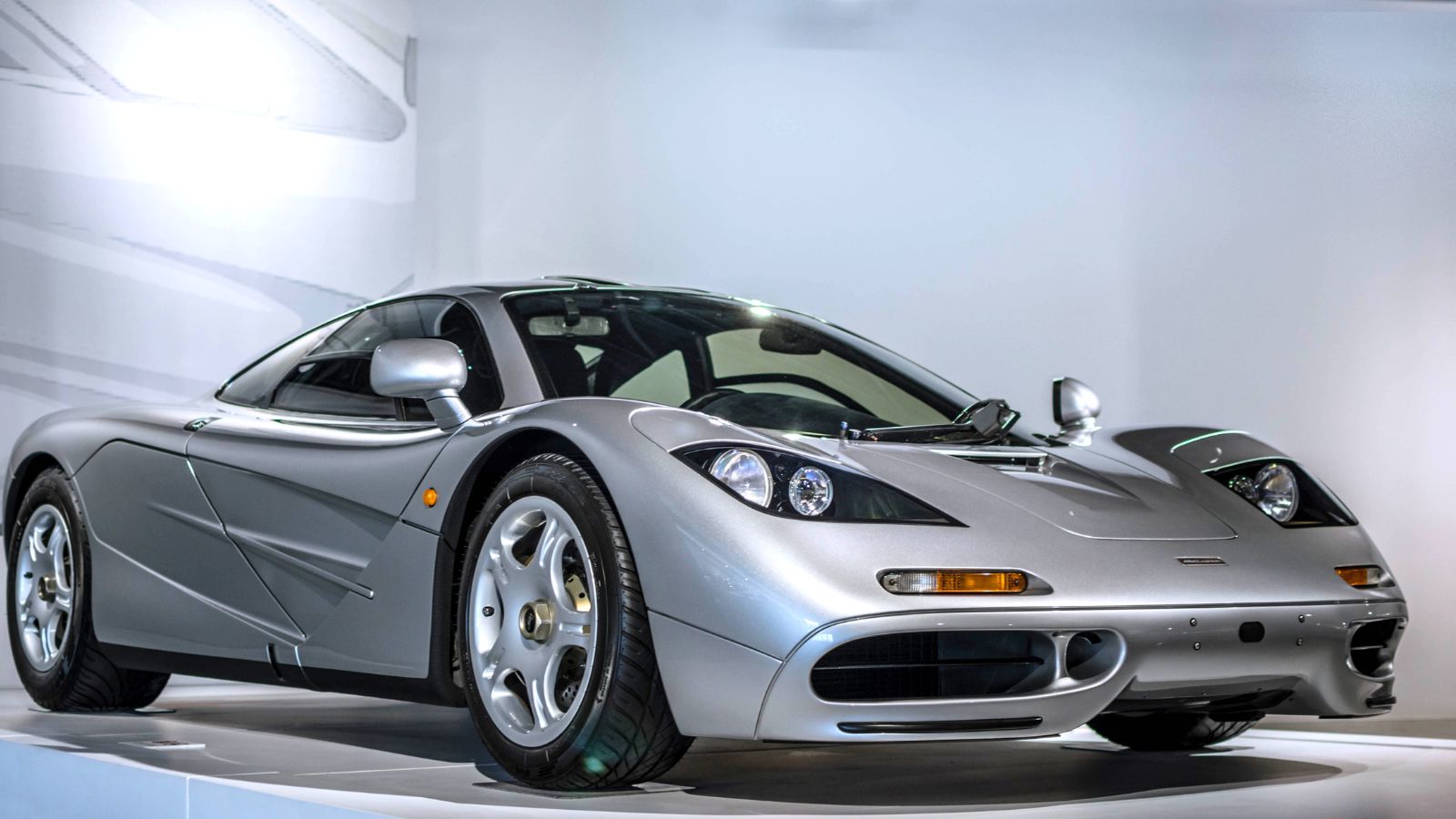
The McLaren F1 is often hailed as the pinnacle of supercar engineering, and for good reason. When it was launched in 1992, there was nothing else like it. It was not created for racing, regulation, or brand image. It was conceived with a singular purpose: to be the greatest road car the world had ever seen. And remarkably, it achieved that and more.
Vision and Philosophy
The F1 was the brainchild of Gordon Murray, one of Formula One’s most successful engineers. After years with Brabham and McLaren’s Formula One team, Murray set out to create a car that would encapsulate purity, balance, and engineering brilliance. He envisioned a car unburdened by compromises, drawing inspiration from motorsport but refined for the road.
His core philosophy was simple yet radical: prioritize the driver above all else. That meant stripping away anything unnecessary and emphasizing lightweight construction, aerodynamic efficiency, and mechanical harmony. From this vision emerged a car unlike anything before it.
Unparalleled Engineering
Every part of the McLaren F1 was engineered with obsessive attention to detail. At its core was a bespoke 6.1 liter naturally aspirated V12 engine developed by BMW’s M Division under the direction of Paul Rosche. This powerhouse produced 618 horsepower and 480 pound feet of torque, all without turbochargers or electronic trickery.
The car weighed just 1,138 kilograms, thanks to the liberal use of carbon fiber for the monocoque chassis and body panels. It was the first production car to feature a full carbon fiber construction. Even the tools included with the car were made of titanium to save weight. The brakes were made of a unique composite metal, while the wheels were magnesium alloy.
The engine bay was lined with gold foil for heat reflection, and every element was designed with performance and precision in mind. The result was a car that could reach 240 miles per hour, making it the fastest production car in the world at the time.
Aerodynamically, the F1 featured a flat underbody and active flaps at the rear to optimize downforce at speed. Its balance was achieved through a mid engine layout and careful weight distribution. The steering was unassisted and delivered crystal clear feedback. The suspension was bespoke and race bred, yet surprisingly compliant on real roads.
A Driver’s Masterpiece
What made the McLaren F1 truly special was its focus on the driving experience. The central driving position, flanked by two passenger seats, gave unmatched visibility and balance. A six speed manual gearbox ensured complete driver involvement, and there were no electronic aids. No traction control, no ABS. Just driver, machine, and the open road.
Its ride quality was surprisingly supple, its visibility excellent, and the ergonomics were thoughtfully laid out. This was a supercar you could genuinely use on the road, not just admire in a garage. From daily commutes to flat out drives on alpine passes, the McLaren F1 delivered unfiltered thrills every time.
From Road to Racing Legend
Though not originally intended for motorsport, the McLaren F1’s capabilities caught the attention of privateers. The F1 GTR variant was developed for endurance racing and immediately stunned the racing world.
In 1995, just a few years after its road debut, the McLaren F1 GTR won the 24 Hours of Le Mans outright, beating purpose built prototypes. It remains one of the only road car based entries to have ever achieved such a feat. The F1 GTR continued to compete successfully in the following years, further cementing its legacy.
This racing pedigree added yet another dimension to the F1’s appeal. A car born for the road, then crowned on the track.
Lasting Impact
The McLaren F1 remains a benchmark even today. Its combination of low weight, high power, analog purity, and brilliant design has never quite been replicated. Modern supercars may be faster or more technologically advanced, but few offer the raw engagement and engineering clarity of the F1.
Prices for the McLaren F1 have skyrocketed, with examples fetching well over 20 million dollars at auction. Collectors and enthusiasts consider it a crown jewel, not just for its performance but for its significance in automotive history.
The influence of the F1 can be seen in every car that tries to prioritize the driver experience over lap times. It has inspired everything from hypercars to track specials, but none have managed to capture the exact same magic.
Some of the original team behind the McLaren F1, including Gordon Murray himself, have since gone on to create what many consider the spiritual successor to the F1: the Gordon Murray Automotive T.50. This car follows many of the same philosophies, including a naturally aspirated V12, a central driving position, lightweight construction, and an obsessive focus on the driving experience.
Conclusion: A Supercar Without Equal
The McLaren F1 was a moonshot, an uncompromised vision executed to perfection. It was built to be the ultimate road car and ended up dominating the racetrack. Its influence continues to ripple through the automotive world, a reminder of what is possible when engineering is driven by passion, not profit.
It remains, to many, the greatest supercar ever built. And perhaps, the greatest we will ever see.