Heel-and-toe downshifting is one of the most rewarding techniques a driver can master. It’s a skill that transforms the driving experience, blending smoothness, control, and mechanical harmony into every shift. While often associated with racing, this technique benefits any spirited driver, making downshifts seamless and preventing drivetrain shock.
Why Racers Use Heel-and-Toe
In racing, every fraction of a second counts. Heel-and-toe downshifting allows drivers to maintain stability while braking hard into a corner, keeping the car balanced and reducing wheel lock-up. Without this technique, shifting down while braking can unsettle the car, disrupting grip and making cornering less predictable. For track driving or even aggressive street driving, heel-and-toe ensures that gear changes are as smooth as possible, allowing a driver to focus on the road ahead.
How Heel-and-Toe is Done
The goal of heel-and-toe is to match engine speed to wheel speed when downshifting. This prevents engine braking from unsettling the car and makes the transition between gears feel natural. Here’s how to do it:
- Approach a corner while braking – As you press the brake pedal with your right foot, prepare to downshift.
- Press the clutch in with your left foot – Keep braking as you disengage the gear.
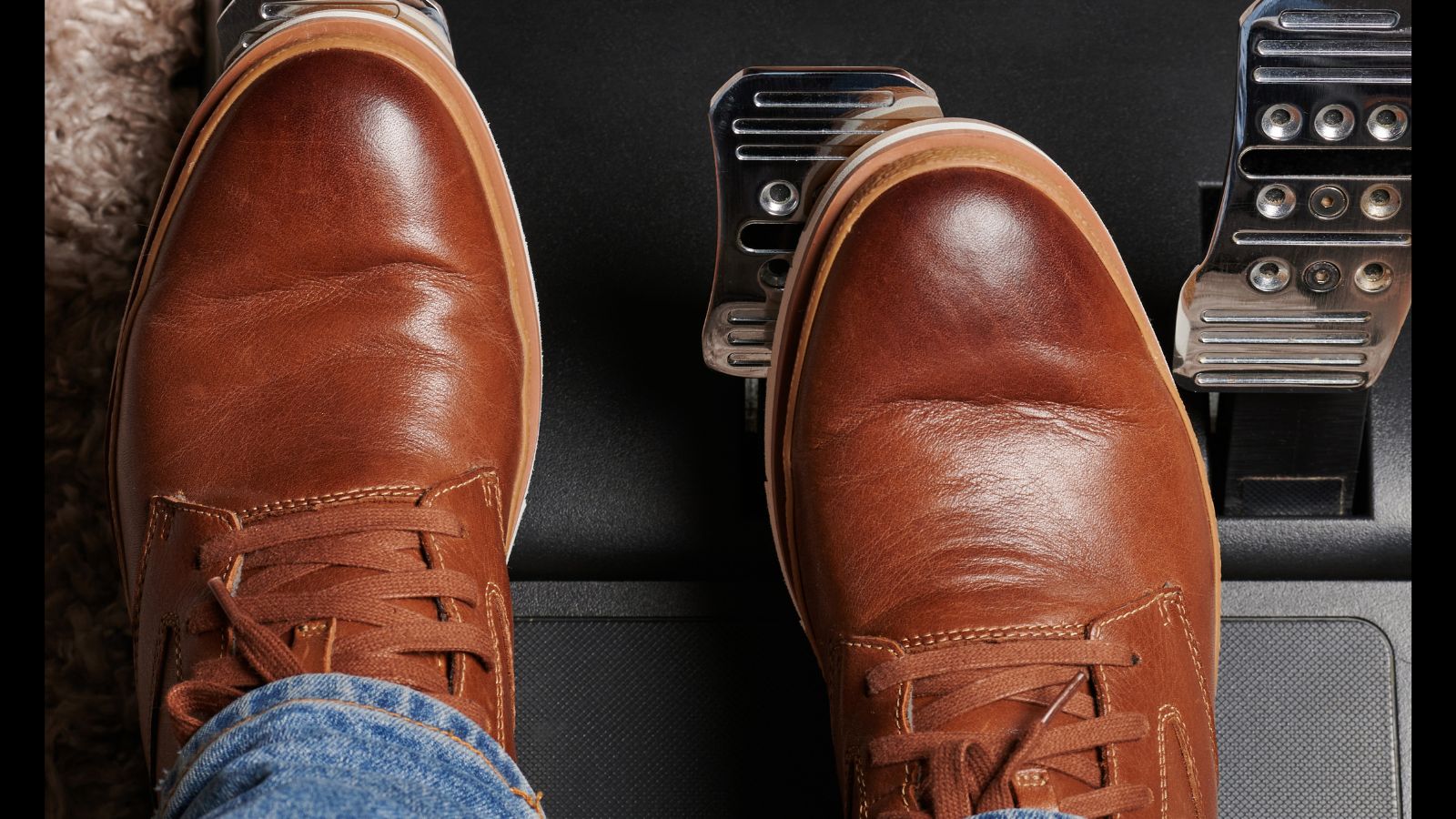
- Blip the throttle with your right foot – While still pressing the brake, use the side of your right foot to quickly press the accelerator. This raises the engine RPM to match the lower gear.
- Shift into the lower gear smoothly – With the RPMs correctly matched, the gear engages without resistance.
- Release the clutch progressively – Let the clutch out smoothly while maintaining steady braking.
With practice, these steps become second nature. A perfectly executed heel-and-toe downshift makes the car feel as if it’s in sync with the driver’s inputs, allowing for a seamless transition through corners.
The Benefits of Heel-and-Toe Downshifting
Beyond making a driver feel like a motorsport hero, heel-and-toe downshifting has real advantages:
- Preserves car balance – Keeping engine speed matched to wheel speed prevents sudden shifts in weight distribution, keeping the car stable.
- Reduces drivetrain wear – Smoother shifts put less stress on the clutch, gearbox, and engine components.
- Improves braking efficiency – The smoother transition prevents the rear wheels from locking under heavy braking.
- Enhances driving engagement – Mastering this technique brings a level of satisfaction that few other driving skills can match.
Why It Feels So Rewarding
There’s something deeply mechanical and satisfying about executing a perfect heel-and-toe downshift. The seamless blip of the throttle, the perfectly matched revs, and the fluid entry into a corner create an unmatched sense of connection between driver and machine. It’s a skill that, once learned, makes every drive more enjoyable.
Final Thoughts
Heel-and-toe downshifting is more than just a racing trick. It’s a technique that improves car control, reduces mechanical stress, and adds another layer of involvement to the driving experience. Whether attacking a back road or simply enjoying a spirited drive, learning this skill is one of the most rewarding things a driver can do. Once mastered, it becomes second nature, elevating every drive into something far more engaging.