The early 1950s saw a booming postwar American economy and an increasing interest in stylish and exciting automobiles. Chevrolet, under the General Motors umbrella, saw a gap in the market. European sports cars like the Jaguar XK120, Porsche 356, and MGs were drawing attention, especially among GIs returning from Europe. Chevrolet needed an answeran American sports car that could match the charisma and performance of its European rivals.
The result was the Chevrolet Corvette, introduced in 1953 as a concept car at the GM Motorama. The response was overwhelmingly positive, prompting GM to push the car into production later that year. The Corvette was not just a marketing tool; it was a bold statement that the U.S. could create a sleek, fast, and stylish roadster. It was designed to invigorate the Chevrolet brand and showcase the engineering prowess of General Motors.
Who It Was Aimed At
The Corvette was intended to appeal to younger, performance-minded buyers. Chevrolet’s marketing aimed the car at affluent professionals, weekend racers, and returning veterans who had developed a taste for nimble European machines. It represented a lifestyle—one of freedom, open roads, and spirited driving. It wasn’t just a car; it was an image-maker, ideal for those seeking something that combined American boldness with European finesse.
While early Corvettes were not as powerful as some of their rivals, they made up for it in flair and innovation. The styling alone turned heads, and the car quickly became a symbol of upward mobility and adventurous spirit.
The Love That Endures
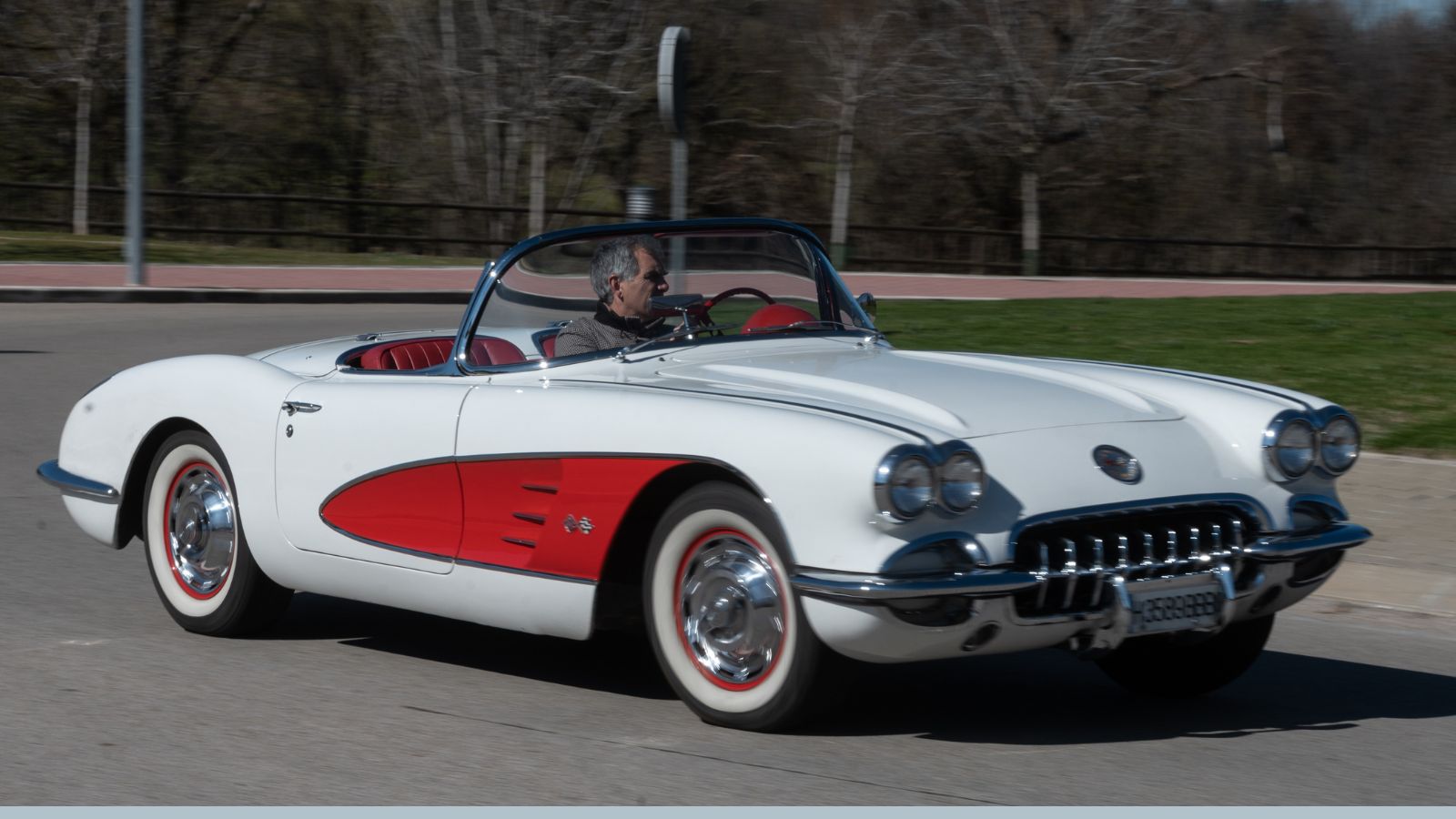
Today, the first generation Corvette, known as the C1, holds a special place in the hearts of car enthusiasts. Produced from 1953 to 1962, it marked the beginning of one of the most iconic nameplates in automotive history. Its sleek fiberglass body, pioneering design, and historical significance make it a favorite at classic car shows, museums, and auctions.
Part of the C1’s charm lies in its evolving character. From the modestly powered Blue Flame inline-six engine of the early years to the introduction of V8 power in 1955, the C1 evolved into a proper performance machine. Its unique styling, distinctive dual headlights (from 1958 onward), and chrome detailing give it a timeless appeal that enthusiasts continue to admire.
Additionally, its limited production numbers in early years, especially the initial 1953 run of only 300 units, add to its rarity and collectibility. Each model year saw improvements, new trim options, and rising horsepower figures, solidifying its reputation.
Mechanical Breakdown: What Lies Beneath
For enthusiasts, the mechanical construction of the first generation Corvette is a treasure trove of innovation and classic engineering.
- Chassis and Frame: The C1 Corvette was built on a steel box-section ladder frame. This structure provided the necessary rigidity while keeping weight relatively low. Unlike most production cars at the time, the body was made of fiberglass, which was not only lighter than steel but also allowed for more daring and aerodynamic shapes.
- Suspension: The front suspension featured independent A-arms with coil springs and telescopic shock absorbers. At the rear, a live axle with semi-elliptic leaf springs provided durability and a sporty, albeit firm, ride. While not race-ready from the factory, it laid the foundation for further performance tuning.
- Brakes: Drum brakes were standard on all four corners for the entirety of the C1’s production run. Though not as advanced as disc brakes, they were adequate for the car’s weight and performance levels during that era. Brake cooling and fade were concerns under track conditions, something racers addressed with modifications.
- Engine and Drivetrain: Early 1953 models came with a 235 cubic inch Blue Flame inline-six engine producing 150 horsepower, paired exclusively with a 2-speed Powerglide automatic transmission. This setup was more about style than speed.
That changed in 1955 when Chevrolet introduced the 265 cubic inch V8, initially rated at 195 horsepower. This engine brought true sports car performance to the Corvette and established the V8 as a Corvette hallmark. By 1962, the final year of the C1, buyers could opt for a 327 cubic inch V8 producing up to 360 horsepower, with solid lifters and fuel injection options.
- Transmission: Manual transmissions became available in 1955, and by the late 50s, most Corvettes were being ordered with 3- or 4-speed manual gearboxes. These transmissions provided better control, quicker acceleration, and greater driving involvement, especially favored by performance-oriented drivers.
- Steering and Handling: Steering was manual and required effort at low speeds, but it provided excellent feedback once underway. The overall balance of the car, with its front-engine and rear-wheel drive layout, offered predictable and engaging dynamics. The low center of gravity and wide stance helped the C1 corner competently, especially in later, more refined models.
- Interior and Controls: The C1 interior was sporty and relatively minimalist, with bucket seats, a prominent tachometer, and toggle-style switches. Over time, features like heaters, radios, and convertible tops improved, making it not just a weekend car but a daily driver for some.
Corvette in Competition: Making a Name on the Track
As performance improved, the Corvette naturally found its way into motorsport. While the factory itself was initially hesitant due to GM’s corporate ban on racing, privateers and dealerships like Yenko Chevrolet and Smokey Yunick stepped in to push the car into competition.
- Domestic Racing: The Corvette saw action in SCCA (Sports Car Club of America) events throughout the late 50s. Its most famous early racing moment came in 1956 and 1957, when drivers like Dr. Dick Thompson and John Fitch piloted Corvettes to victories in production sports car classes. The C1 earned credibility as a serious contender, capable of beating the likes of Jaguar XK120s and Porsche 356s on American tracks.
- International Appearances: In 1960, three specially prepared C1 Corvettes were entered into the 24 Hours of Le Mans by Briggs Cunningham. While one retired, the other two finished, with the best result being an impressive class win and 8th overall finish. This achievement stunned European audiences and helped build the Corvette’s international credibility.
- Rivals on the Track: The C1 often competed against some of the finest sports cars of its era, including the Ferrari 250 GT, Aston Martin DB2, Mercedes 300SL, and the Maserati A6G. While not as refined or lightweight as some European machines, the Corvette impressed with raw power, durability, and affordability.
These racing successes laid the groundwork for Chevrolet’s motorsport commitment and foreshadowed the Corvette’s future dominance in events like the 24 Hours of Daytona and Sebring in later decades.
A Classic That Defined a Genre
The first generation Corvette wasn’t just Chevrolet’s sports car experiment it was the spark that ignited decades of performance innovation. It bridged the gap between style and speed, European influence and American muscle. The C1’s lasting impact on car culture is undeniable. It showed the world that the U.S. could produce a serious sports car, and it laid the foundation for one of the most legendary lineups in automotive history.
For car enthusiasts, the first generation Corvette is more than just a classic it’s a celebration of design, ambition, and automotive evolution. Its blend of unique styling, mechanical simplicity, racing pedigree, and performance evolution makes it a symbol of America’s golden era of motoring. The C1 is not just the start of a story it’s the beginning of a legend.