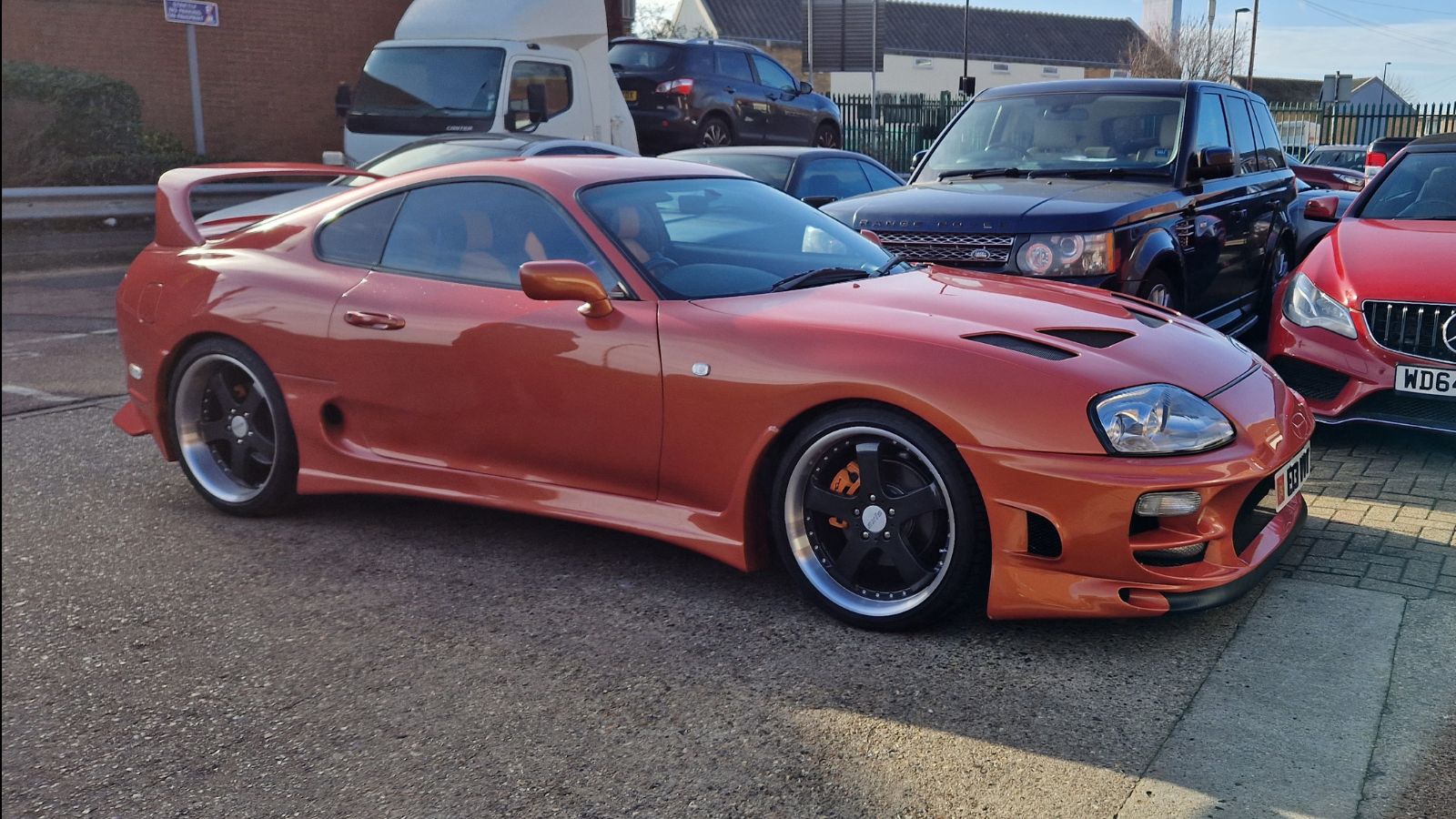
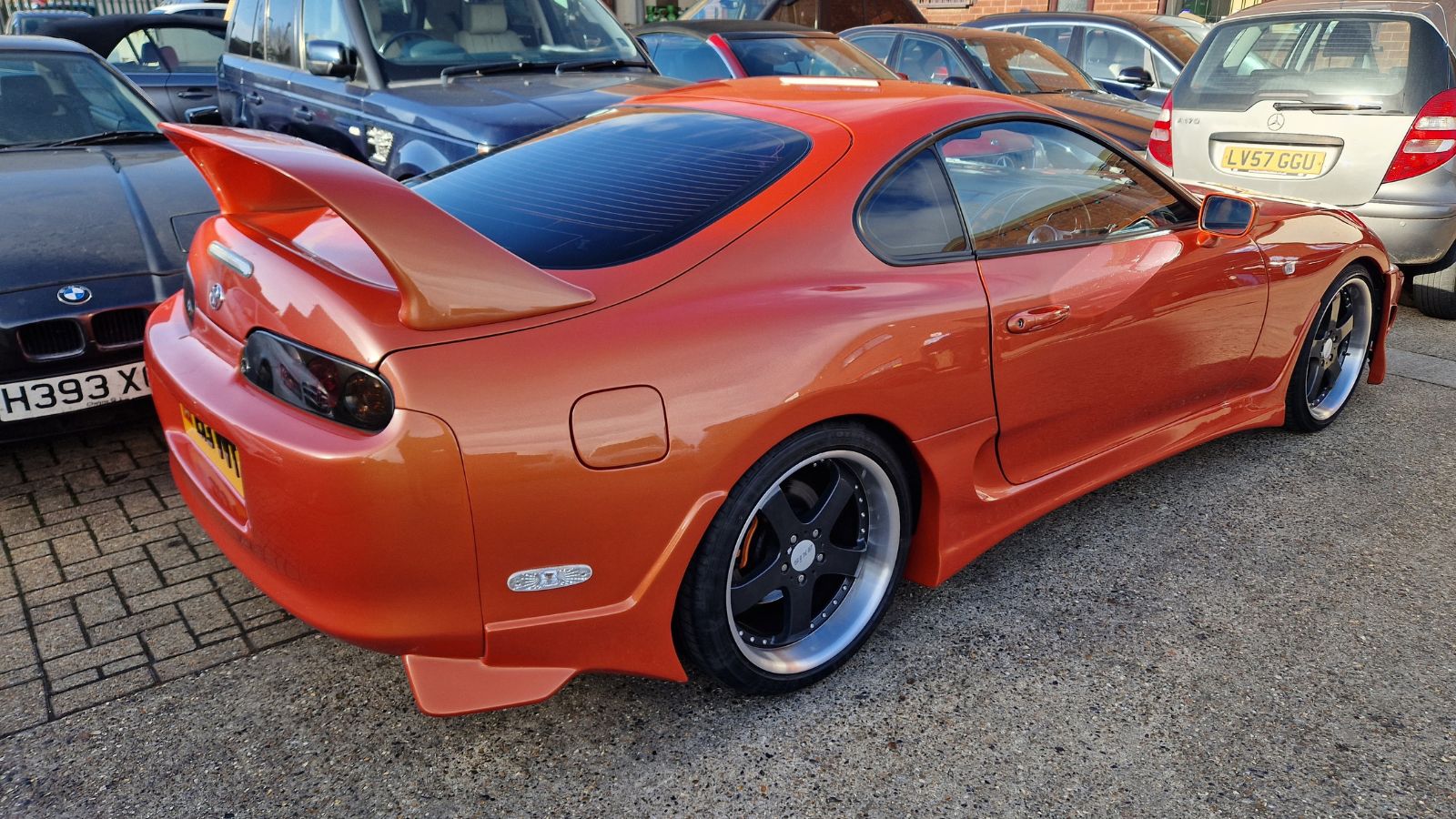
Few cars in automotive history have reached the kind of legendary status earned by the fourth generation Toyota Supra. Launched in 1993 as the A80, this was the moment when Toyota stopped holding back. The A80 Supra was not just a successor to the capable A70. It was a declaration that Japan could build a world class sports car that could stand shoulder to shoulder with the best from Europe and America.
Engineered for Greatness: The Legendary 2JZ-GTE
The heart of the Mk4 Supra is the iconic 3.0-liter inline-six known as the 2JZ-GTE. Twin-turbocharged and built with a cast iron block, forged internals, and massive tuning potential, the engine was a marvel of Japanese engineering. Factory output was rated at 276 horsepower and 318 lb-ft of torque in Japan due to the gentlemen’s agreement, but the US model boasted 320 horsepower and 315 lb-ft. Even more impressive was how this engine could handle two to three times that output with stock internals.
The 2JZ became synonymous with bulletproof reliability and limitless potential. Tuners and racers around the globe pushed these engines well past 1,000 horsepower without touching the bottom end. The power delivery was linear and smooth, with strong pull in every gear and minimal turbo lag. Paired with the Getrag V160 six-speed manual, it made the Mk4 Supra feel like a precision instrument in the hands of an enthusiast.
The naturally aspirated version, the 2JZ-GE, still delivered a potent experience for drivers not chasing boost, offering smooth torque and great reliability.
Balanced, Brutal, and Beautiful to Drive
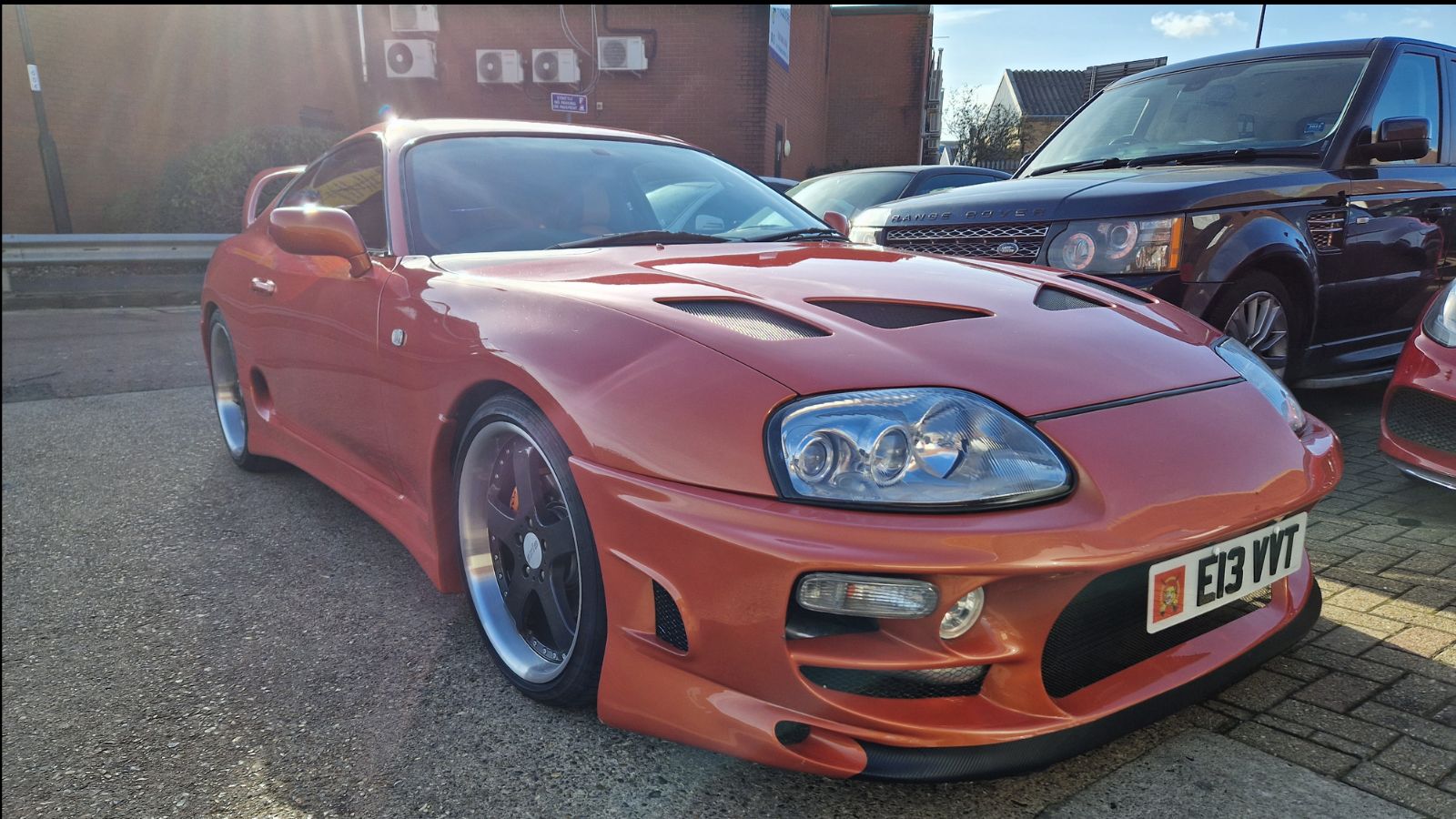
The Mk4 Supra was not just about straight-line speed. With a near 51-49 weight distribution, a double-wishbone suspension on all corners, and carefully tuned chassis dynamics, the A80 offered superb handling for its size and class. It may have been heavier than the A70, but it moved with surprising agility.
Brakes were upgraded significantly with four-piston front calipers and large vented discs, providing strong and consistent stopping power. Steering feel was well weighted and communicative, giving drivers confidence through tight corners or high-speed sweepers.
The car’s rigidity and build quality translated to road composure that many of its rivals lacked. The suspension managed to blend comfort with capability, making it a true grand tourer with track potential.
Rear Wheel Drive and Manual Transmission: The Enthusiast Formula
What continues to make the Mk4 Supra so desirable is how pure its driving formula remains. A front-mounted engine, rear-wheel drive, a six-speed manual gearbox, and a mechanical limited-slip differential. No gimmicks. No driver aids that get in the way. Just a focused machine designed for those who love to drive.
The driver-focused interior put everything within reach, with a sweeping dashboard that wrapped around the pilot like a cockpit. Visibility was excellent, seating was low and supportive, and the whole cabin felt like it belonged in something more exotic.
Cultural Phenomenon: Fast and Furious Fame
The Mk4 Supra exploded into pop culture thanks to its starring role in the Fast and the Furious franchise. When Brian O’Conner’s orange Supra faced off against Dom’s Charger, it was not just a movie moment. It was a cultural pivot. Suddenly, the world saw the Supra not just as a sports car, but as an icon of tuner culture.
This exposure, combined with the car’s tuning capability, catapulted prices and desirability. A car that once sat unsold in showrooms now fetches six-figure sums in pristine condition. The Fast and the Furious made it a movie star, but the community made it a legend.
Tuning Legend: The 2JZ Era
The Supra community transformed the A80 into something much more than a stock performance car. With countless aftermarket upgrades available, the 2JZ engine became the go-to platform for anyone chasing extreme performance.
From drag racing to time attack to street builds, the Supra dominated every corner of car culture. Its presence in video games, forums, and dyno charts cemented its legacy. The A80 became the poster child for what was possible when engineering met aftermarket ingenuity.
Enduring Legacy
Even after production ended in 2002, the A80 Supra continued to grow in stature. Few cars have maintained such relevance so long after their last factory build. Its timeless styling, exceptional engine, and massive performance potential continue to inspire new generations of car enthusiasts.
While Toyota revived the Supra name with the A90, the original magic of the Mk4 remains unmatched in the eyes of many. The new version may be faster on paper, but it lacks the raw connection and heritage baked into the A80.
The Legend Never Bettered
The fourth generation Toyota Supra is not just a great Japanese sports car. It is one of the all-time greats, full stop. With its legendary 2JZ engine, impeccable drivetrain layout, sublime balance, and irreplaceable cultural cachet, it represents everything we love about performance cars.
It is fast, focused, and endlessly modifiable. But above all, it is unforgettable. A high point in automotive history that continues to inspire awe and admiration, even decades after its debut. The Mk4 Supra may never be bettered, and maybe that is exactly how it should stay.