It started, as these things often do, with a conversation over tea. I had heard whispers of old Porsche tractors tucked away on British farms, relics from a time when even Stuttgart saw fit to power ploughs and hay balers. I had always known Porsche made tractors, but I never gave it much thought until a friend in Cornwall casually mentioned one sitting on a local farm, quietly doing duty as a wall.
The Find in Cornwall
The tractor in question was a 1952 Porsche AP17 twin cylinder, painted in a fading orange with time worn patina and rust in all the usual places. It had not plowed a field in decades. Instead, it served a bizarre yet somehow fitting function: a hay bale prop. One side of the farmer’s hay shed was missing, and the old tractor had been pressed into structural service. The bales leaned against it like it was a permanent fixture.
Despite the years of neglect, the AP17 was free rolling. The tires were tired but intact, and the engine block looked surprisingly complete. With a handshake and the exchange of a modest sum, the tractor was mine. We loaded it onto a flatbed and began the long trek back to London. From there, it would travel up to Yorkshire to a friend’s workshop for a planned WD40 style restoration. The goal was simple: keep the character, get it running.
From Workshop Dreams to a Paint Job Nightmare
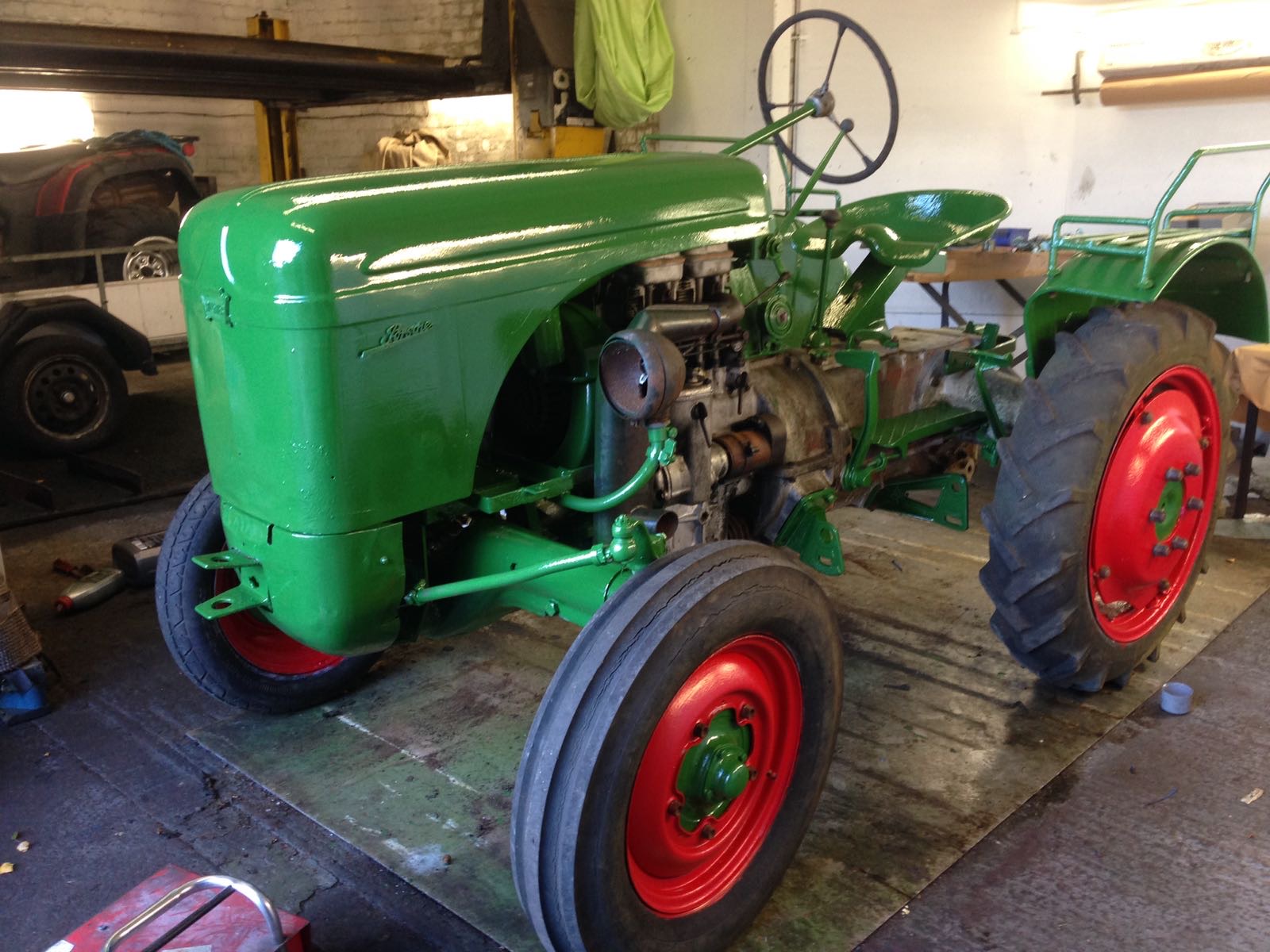
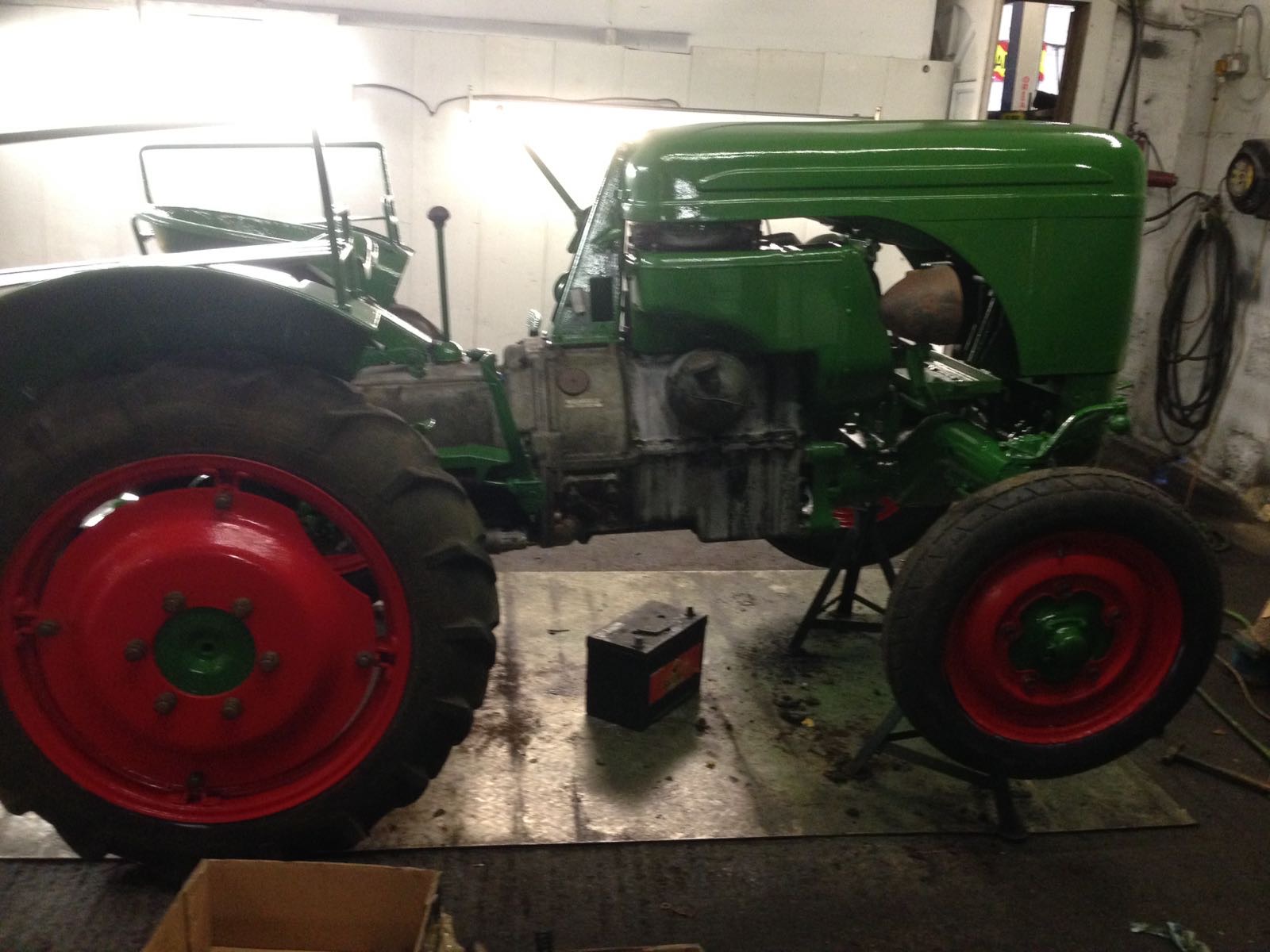
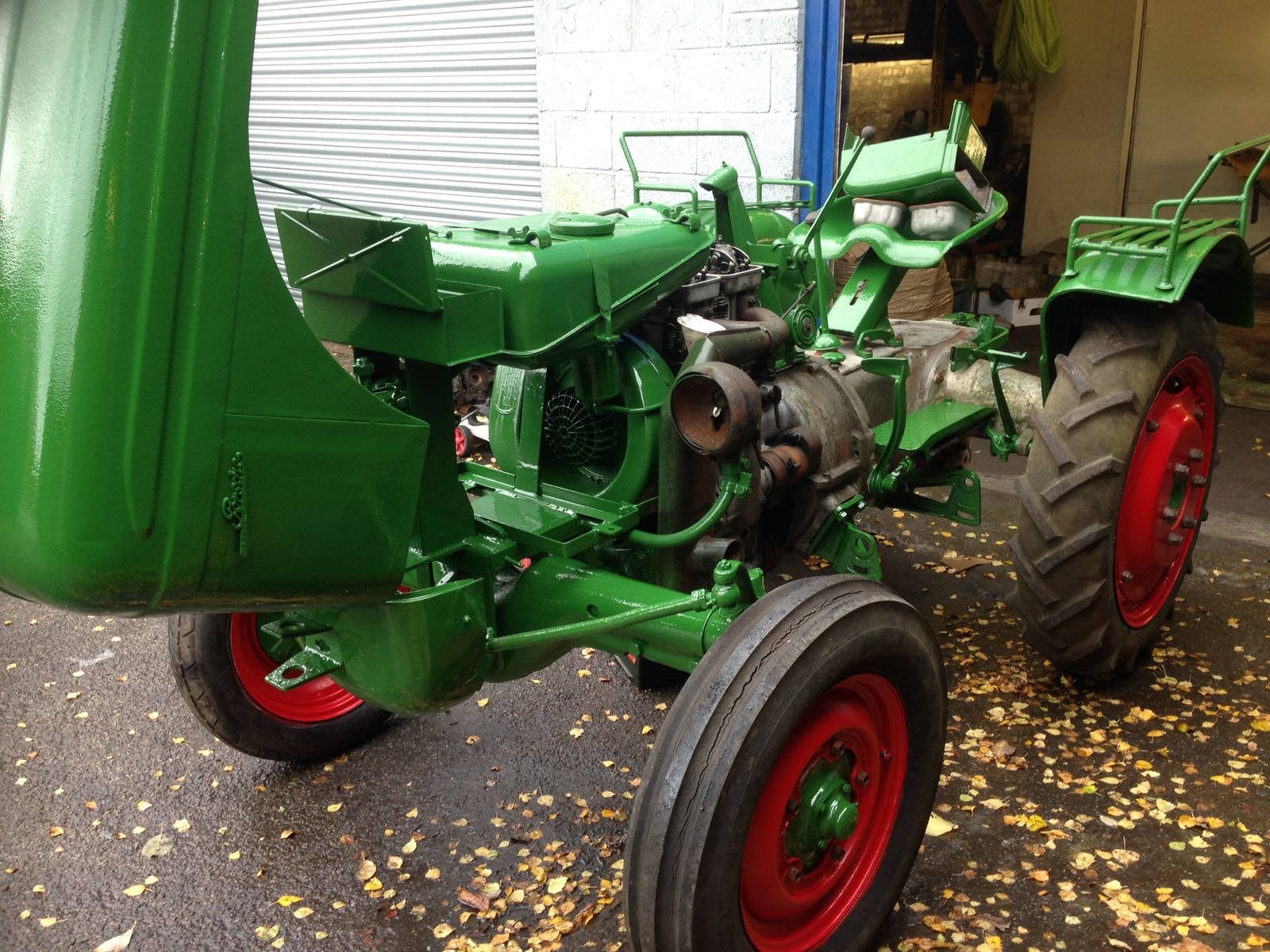
Our goal was never to make it a showpiece. We wanted to keep the rust, the worn metal, the history written across its tired bodywork. Just a mechanical revival. But my friend had other plans. Somewhere between Yorkshire tea breaks and engine tinkering, he decided to paint it. Badly.
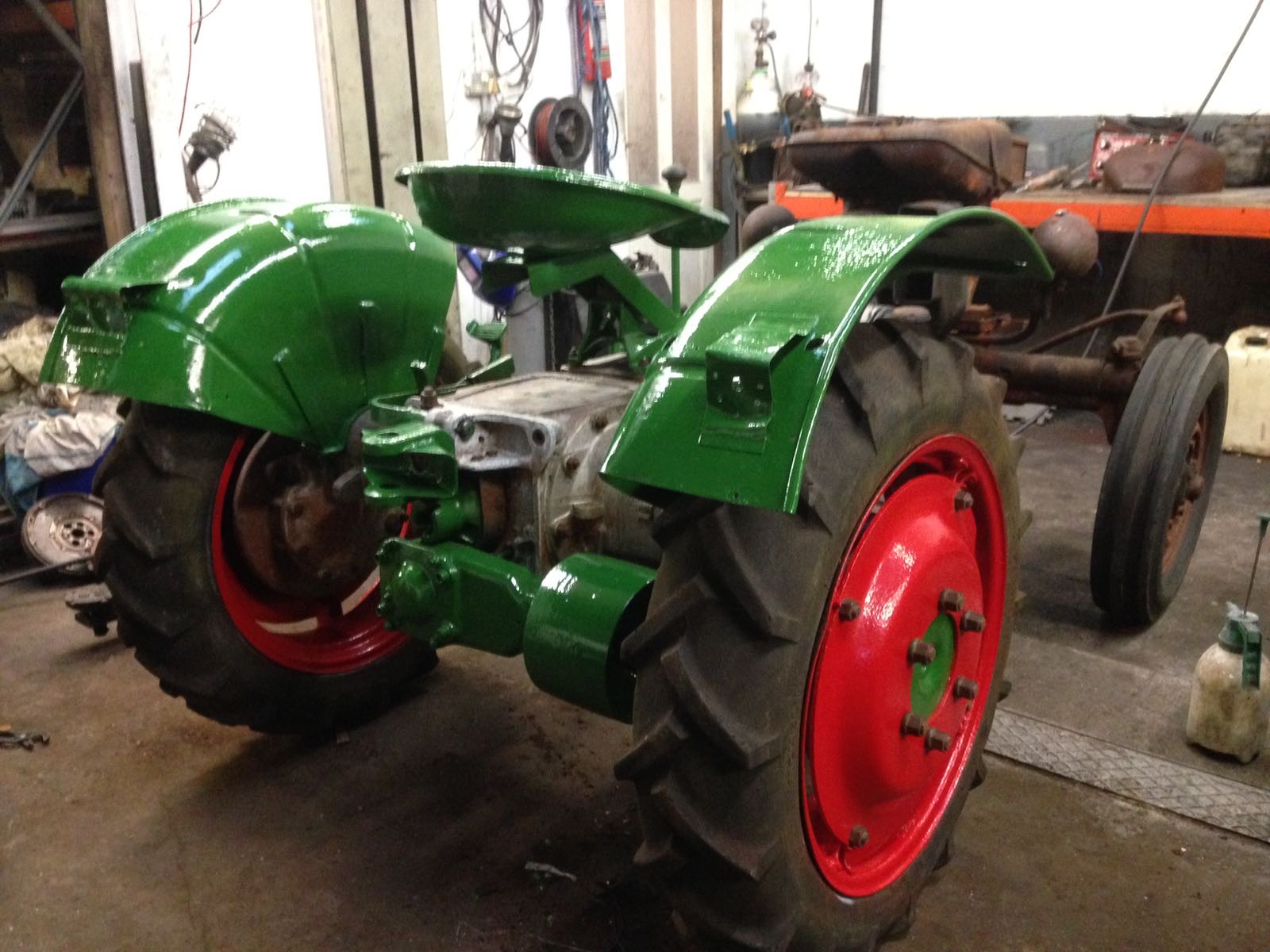
Out came a tin of bright green paint and a roller, and the AP17 was unceremoniously covered in a slapdash layer of gloss. It looked like a toy, like something that had been hastily made for a parade rather than salvaged from a Cornish field. The soul of the machine, at least in my eyes, was buried under that paint.
The Mechanical Marvel Beneath the Rust
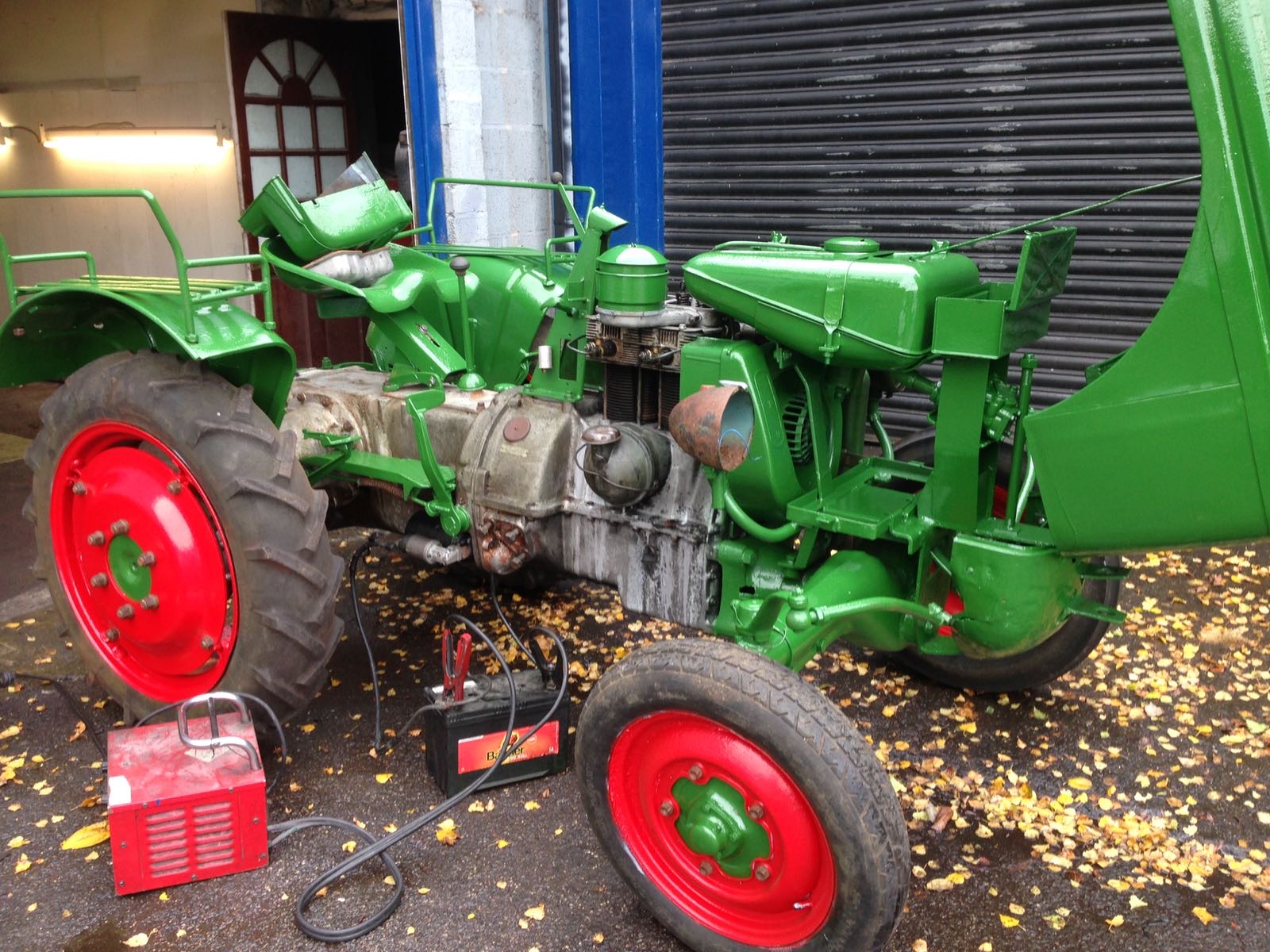
One of the most fascinating aspects of the AP17 was its mechanical setup. The tractor was built with an unusually lightweight aluminum chassis, a rare and forward thinking choice for agricultural equipment of its era. At its heart was a twin cylinder aircooled diesel engine configured in a parallel twin layout. This setup offered simplicity and durability, key traits for the farming communities that relied on these machines day in and day out.
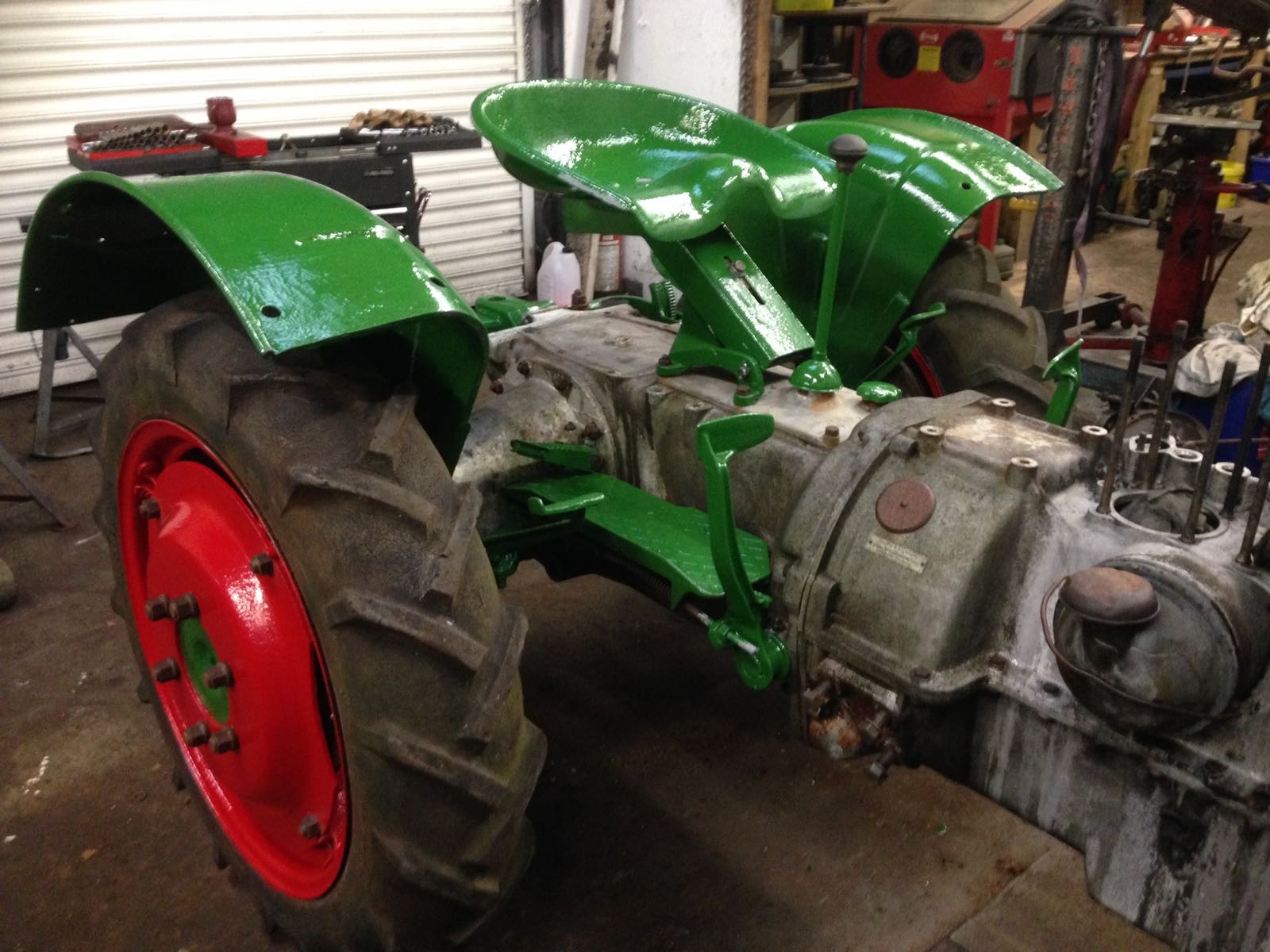
The engine was connected to a four speed manual gearbox with a separate low range, giving the tractor enough flexibility for both field work and light hauling. The air cooling meant there was no need for a radiator, reducing maintenance needs in remote and rugged environments. It also had a mechanically actuated clutch and drum brakes at each rear wheel, which were more than adequate for the modest speeds it achieved.
The rear drive axle was rigid and connected to the chassis via leaf springs, and the front wheels were unpowered but could handle a variety of terrain. Despite its utilitarian design, the AP17 had that unmistakable engineering touch Porsche is known for: clever, purposeful, and precise.
Getting It Running
The mechanical work, at least, was a success. The AP17’s twin cylinder diesel came to life with a roar and a puff of smoke that smelled like history itself. New fuel lines, cleaned injectors, a rebuilt starter, and some electrical tidying brought the machine back from the brink. It drove like a tractor from the 1950s should: slowly, stubbornly, and with immense charm.
Driving it around the farm lanes in Yorkshire was a surreal experience. The clatter of the diesel engine, the smell of old oil, the way the metal creaked and groaned — it was a rolling time capsule. Pedestrians smiled, a few even waved. No one could ignore the strange magnetism of this red, rumbling relic.
An Education in Porsche History
In my journey to resurrect the AP17, I found myself reading more about Porsche’s agricultural past. The AP series was a part of the Porsche Diesel division that produced tractors from the early 1950s into the early 60s. Designed to be reliable, simple, and robust, these machines were vital tools for small European farms rebuilding after the war. They were engineering marvels in their own right, sharing the Porsche ethos of performance, reliability, and quality, albeit in a very different context than a 911 or a Carrera GT.
I became part of a small, niche group of enthusiasts who appreciated these machines not just as farm equipment but as historical objects. It turns out, the Porsche tractor crowd is incredibly passionate, and they were full of stories, advice, and encouragement.
A Rusty Regret, But a Story to Tell
I still own the AP17. It sits now as part of a small collection, its mechanical soul intact but its cosmetic story slightly spoiled. I sometimes wish I had loaded it straight from Cornwall into my own garage and left well enough alone. But in the end, the story remains: the Porsche tractor that once held up a haystack, resurrected and rumbling again, even if dressed in the wrong clothes.
A New Home and a New Chapter
Eventually, as happens with many mechanical romances, the time came to part ways. A local collector with a keen eye and a reverence for originality came to see the tractor. He looked past the ill advised paint and saw the soul of the machine underneath. He listened to its clatter, admired its quirks, and promised a restoration worthy of its heritage — one that would return it to better than new condition while honoring its unique history.
With a handshake and the promise that the AP17 would receive the care it truly deserved, I let it go. Watching it roll away, I felt a mix of sadness and satisfaction. That little tractor had taken me on an unexpected journey filled with learning, laughter, and a touch of regret. But more than anything, it reminded me that even the humblest machines can have the most memorable stories.