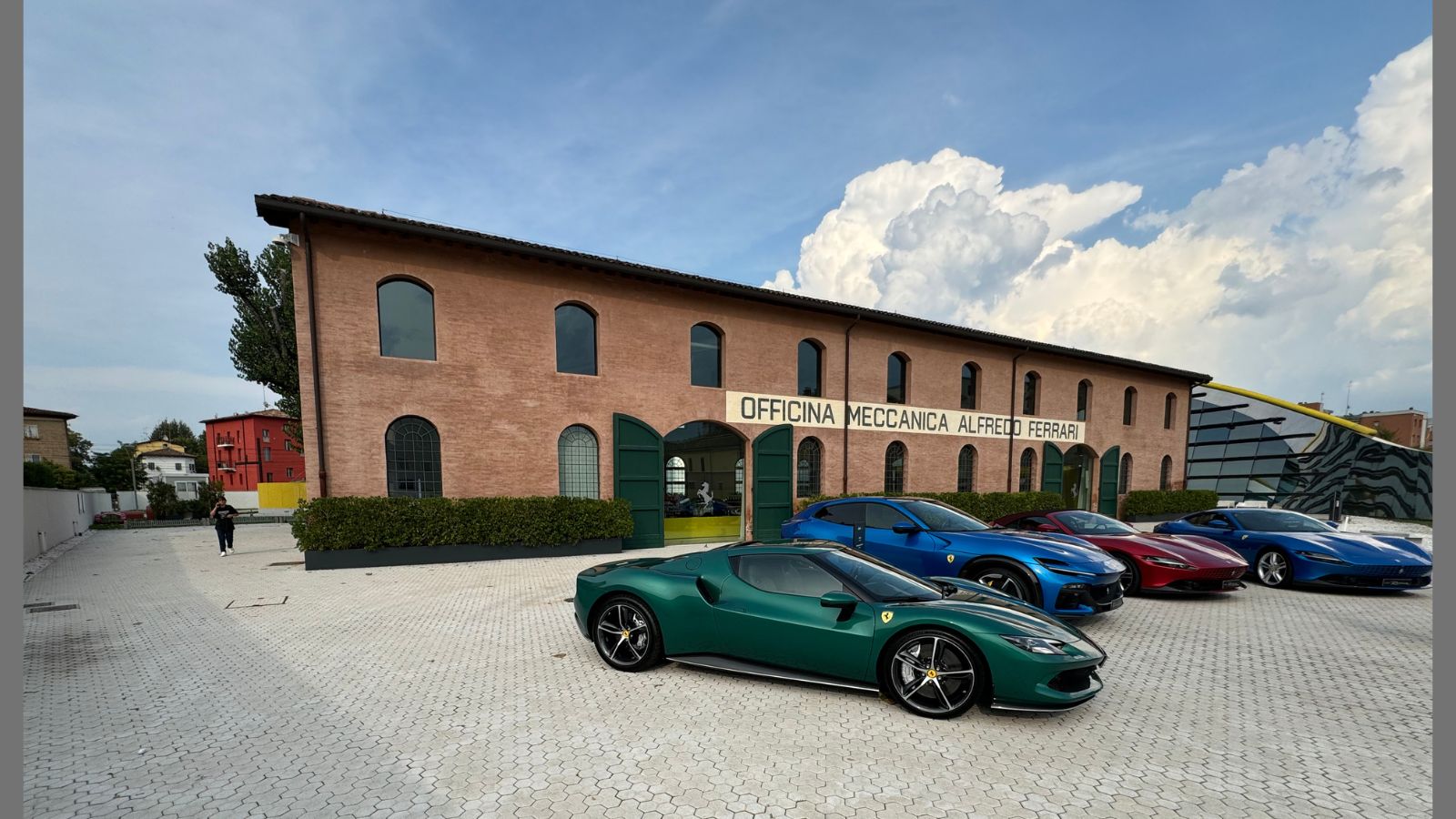
Tucked quietly behind a modest façade in the northern Italian city of Modena lies a place that helped shape the trajectory of global motorsport. The Museo Casa Enzo Ferrari is more than just a museum. It is the actual birthplace of Enzo Ferrari, and one of the most historically significant sites in all of automotive history. While the museum today offers sweeping glass curves and sleek architecture in its newer sections, it is the original red brick workshop that holds the deepest meaning. That humble building, once the domain of blacksmiths and craftsmen, is where the Ferrari story began.
Long before the prancing horse logo found its way onto Formula 1 podiums and the world’s most desirable road cars, Enzo Anselmo Ferrari was born in this very building on February 18, 1898. His father, Alfredo Ferrari, ran a small mechanical workshop at the rear of the family home. It was here, among tools, machinery, and the steady rhythm of hand built precision, that young Enzo first encountered the world of engineering. The workshop produced metal parts for the Italian State Railways, but it did more than feed the family. It sparked something deep inside Enzo. Machinery meant motion, and motion soon meant speed.
As a child, Enzo was captivated by local races and visiting engineers. The nearby Modena racetrack, the rattle of chain driven cars on cobbled streets, the smell of oil and metal. These early impressions formed the emotional blueprint for a lifetime of racing obsession. Though tragedy struck early, with both his father and brother passing away from illness by the time Enzo was just 18, the lessons of mechanical discipline and determination never left him. His early career in racing as a driver and team manager would eventually evolve into the creation of Auto Avio Costruzioni in 1939, the precursor to Ferrari as we know it today.
The old workshop building remained central throughout those years. After the war, as Ferrari began producing racing cars under his own name, this site still represented the origin of the company’s spirit even as larger facilities in nearby Maranello took over production. The red brick, the modest proportions, the heavy wooden beams. All of it remains intact. But the workshop was not just symbolic. In its earliest days, it was where Enzo Ferrari coordinated the preparation and maintenance of race cars that would compete across Europe. The foundation of Ferrari’s competition DNA was laid right here.
Today, that workshop is preserved as part of the museum complex. It now houses a display of Ferrari engines, mechanical sculptures that span decades of innovation, from early inline fours to V12s and turbocharged V8s. This location, which once echoed with the tap of hammers and the hiss of steam, now resonates with the reverence of enthusiasts who understand the gravity of what happened here. Engines are not simply shown as static pieces, but as milestones in the brand’s technical journey. Each one connects directly back to the foundation of this very space. Enzo’s earliest exposure to craftsmanship, metallurgy, and mechanical purpose.
The decision to preserve and build around this historical building was deliberate. Rather than pave over it or create a disconnected experience, the Museo Casa Enzo Ferrari embraces the original workshop as the emotional and literal anchor to the site. The newer exhibition hall, an ultra modern sweeping yellow structure that resembles the hood of a sports car, curves around it like a protective arm. But it is the workshop that breathes authenticity into the museum. You can still see the window from Enzo’s childhood bedroom. The original stone floor remains, and one can imagine Enzo’s footsteps, quiet at first then purposeful, walking the same path more than a century ago.
The location has drawn thousands of visitors not just because of its name, but because it captures the soul of Ferrari in a way no press release or commercial ever could. It is not just a building. It is where engineering met emotion. It is where craftsmanship evolved into art. And it is where one man’s relentless vision took its first steps toward global recognition.
To stand inside the old Ferrari workshop is to stand at the crossroads of history and legacy. It is the space where a father once shaped iron, and a son shaped destiny. And while Maranello may be the beating heart of Ferrari production today, Modena, specifically this very house and workshop, is its soul.