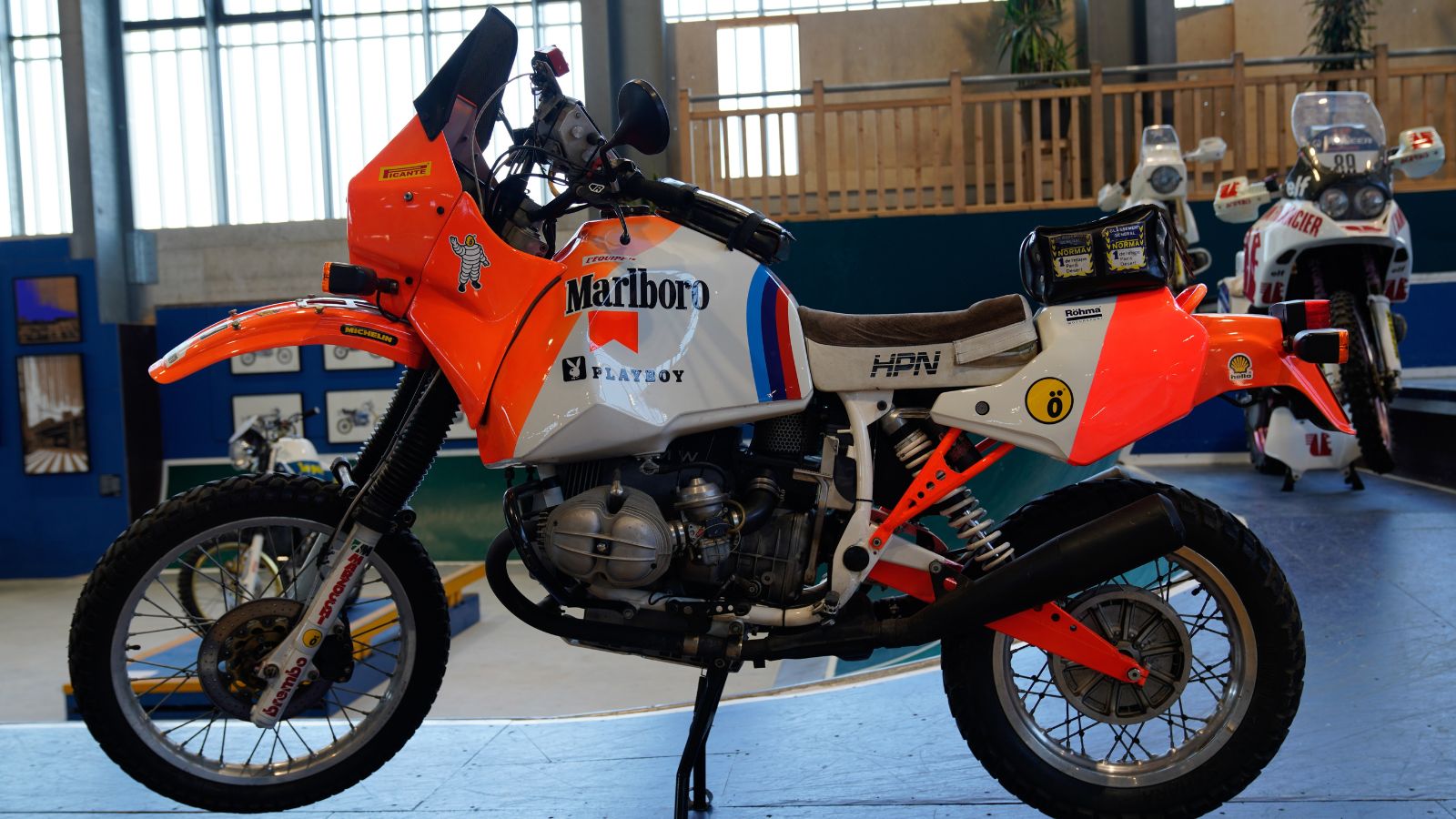
The Paris-Dakar Rally is one of the most punishing endurance races on the planet, where extreme terrain, relentless conditions, and sheer mechanical abuse push machines and riders to their absolute limits. It’s an event where lightweight, high-tech, and purpose-built off-road bikes have traditionally thrived. And yet, in the early 1980s, BMW did the unthinkable—they entered an air-cooled, shaft-driven boxer twin and won. Repeatedly.
The Unlikely Dakar Contender
At a time when single-cylinder thumpers were the go-to choice for desert racing, BMW’s entry into the Dakar Rally with an air-cooled 800cc boxer twin seemed unconventional at best and foolish at worst. The flat-twin, known for powering road-going touring bikes, was not designed with deep sand dunes and brutal off-road conditions in mind. It was heavier and bulkier than its competition, and the shaft drive added complexity where chains were typically preferred. Yet despite these apparent drawbacks, the BMW R80G/S defied expectations and cemented itself as one of the most legendary Dakar bikes of all time.
The Strength of the Boxer Twin
While the idea of taking an air-cooled boxer twin into the Dakar Rally seemed absurd on paper, the engine’s design offered several advantages that made it perfectly suited for the challenge. First and foremost, the opposed-cylinder layout gave the bike a low center of gravity, improving stability in deep sand and rough terrain. The engine’s broad, torquey power delivery made it easier to manage in technical sections, reducing the need for constant gear changes.
Unlike high-strung single-cylinder engines that required constant maintenance, the boxer twin was known for its reliability. The air-cooled design meant fewer components to fail—no radiators to puncture, no coolant to boil over. The shaft-drive system eliminated the need for frequent chain adjustments and lubrication, a significant advantage in the grueling Dakar conditions where bikes are pushed for thousands of miles.
Winning Against the Odds
BMW’s gamble paid off. In 1981, Hubert Auriol rode the BMW R80G/S to victory in the Paris-Dakar Rally, proving that a twin-cylinder machine could not only survive the race but dominate it. Auriol’s win wasn’t a fluke—BMW backed it up with more victories, including three more titles with Gaston Rahier in 1984 and 1985. These wins weren’t just triumphs for BMW; they reshaped the perception of adventure bikes, proving that large-displacement twins could be capable off-road machines.
The Birth of the Adventure Bike
The success of BMW’s Dakar program laid the foundation for an entirely new category of motorcycles: the adventure bike. The R80G/S, originally developed for competition, evolved into a production motorcycle that would inspire the modern BMW GS series—arguably the most successful adventure bike lineup in history. The DNA of those early Dakar-winning machines lives on in today’s GS models, which still carry the signature boxer twin and shaft-drive system that made the original so iconic.
Why the BMW Dakar Wins Still Matter
Even though Dakar has moved on, and modern rally bikes have become ultra-light, single-cylinder machines again, BMW’s victories in the 1980s remain legendary. No other manufacturer has managed to make a heavyweight, air-cooled, twin-cylinder bike work at that level of competition. The sheer improbability of the R80G/S’s success only adds to its myth.
While the Paris-Dakar Rally continues to evolve, BMW’s achievements stand as proof that innovation, unconventional thinking, and mechanical durability can triumph over conventional wisdom. The air-cooled boxer twin may have seemed like an underdog, but it rewrote the rules of what an adventure bike could be—and in doing so, changed motorcycling forever.
Final Thoughts
BMW’s dominance in the early days of the Dakar Rally remains one of the most fascinating stories in motorcycle racing history. Against all odds, an air-cooled, shaft-driven boxer twin became the machine to beat, proving that outright speed isn’t the only path to victory. The legacy of those wins is still felt today in every BMW GS that rolls off the production line—a reminder that sometimes, the most unlikely machines can achieve the greatest success.