Few rally cars look as outrageous as the Renault 5 Turbo. With massive rear arches, a mid engine layout, and a stance that looked more race car than hatchback, it was one of the most radical machines ever produced by a mainstream manufacturer. Built during rallying’s golden age, the Renault 5 Turbo was designed with one clear goal: to dominate competition through clever engineering and aggressive design.
Why Renault Built the Turbo
During the late 1970s, manufacturers competing in international rally championships were required to produce road going versions of their race cars. These homologation rules forced companies to sell a certain number of street legal vehicles in order to qualify their competition machines.
Renault decided to turn its small front wheel drive hatchback into something completely different. Engineers removed the rear seats, relocated the engine behind the driver, and created a mid engine rear wheel drive layout. The transformation turned the humble Renault 5 into a rally focused weapon.
The result was introduced in 1980 as the Renault 5 Turbo, a car that shared its basic silhouette with the regular hatchback but very little else underneath.
Radical Engineering Beneath the Body
The Renault 5 Turbo’s mechanical layout was unlike almost anything else in its class. Instead of the original front engine configuration, Renault installed a turbocharged four cylinder engine in the middle of the car, directly behind the driver.
Power came from a 1.4 liter turbocharged engine producing around 160 horsepower in road going form. That may not seem extraordinary today, but in a lightweight car weighing roughly 970 kilograms, it delivered serious performance for its time.
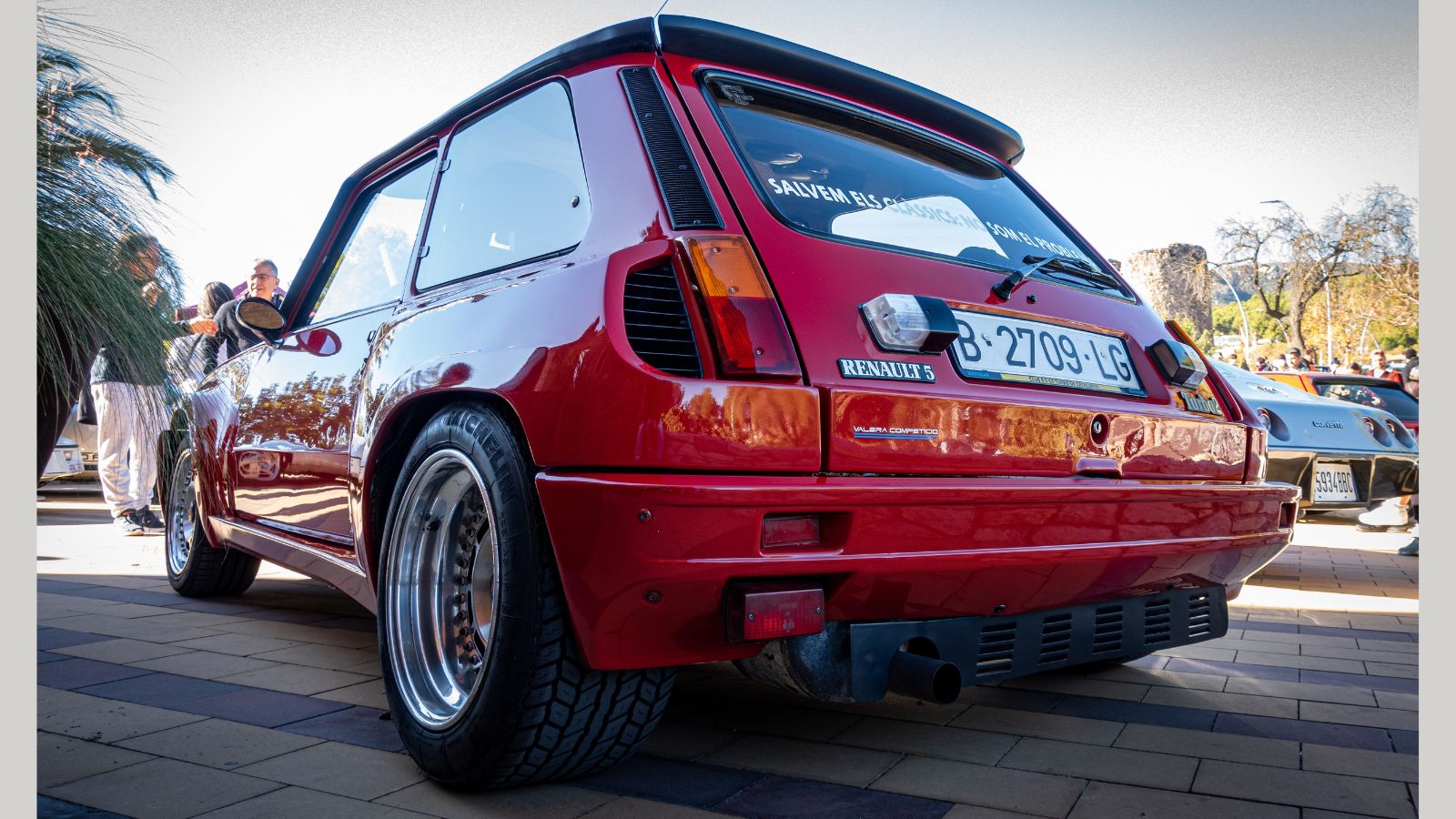
The chassis was heavily modified with wider track dimensions, reinforced suspension components, and large ventilated brakes. The massive rear wheel arches were necessary to house wide performance tires that helped the car put its power down effectively.
Turbo 1: The Original Homologation Model
The first version, known today as the Renault 5 Turbo 1, was built specifically to meet homologation requirements. These early cars featured aluminum body panels, unique interior designs, and extensive hand assembly.
Inside, the cabin looked more like a concept car than a production vehicle. Bright colors, unusual dashboard layouts, and racing inspired seats gave the Turbo 1 a distinctive character. Because of its limited production and unique features, the Turbo 1 remains the most collectible version today.
Performance was impressive for the era. The Turbo 1 could accelerate from zero to 100 km/h in roughly 6.6 seconds and reach a top speed of around 200 km/h.
Turbo 2: A More Practical Evolution
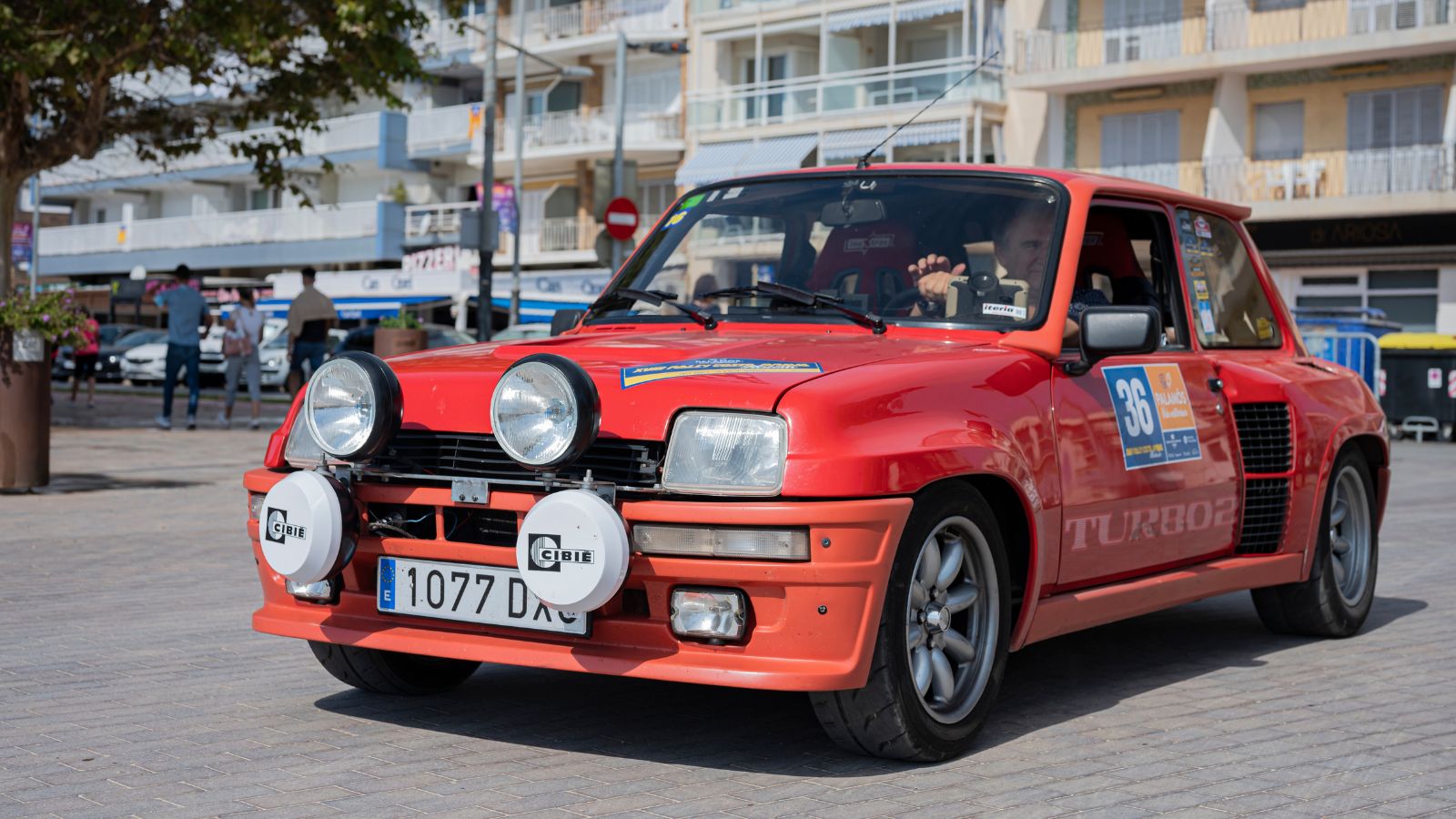
As demand grew, Renault introduced the Renault 5 Turbo 2. Mechanically it remained very similar to the original Turbo 1 but was built using more conventional production methods.
The Turbo 2 used more standard steel panels instead of lightweight aluminum and a simplified interior that shared more components with the regular Renault 5. These changes reduced manufacturing costs and allowed Renault to produce more cars.
Despite the differences, the performance remained nearly identical. The Turbo 2 retained the same turbocharged engine and dramatic mid engine layout that made the original car so exciting.
Rally Success and Motorsport Legacy
The Renault 5 Turbo quickly proved its capabilities in international rally competition. Its mid engine configuration gave it excellent traction and balance, while the turbocharged engine provided strong acceleration on tight rally stages.
The car achieved significant success during the early 1980s, including victories in prestigious events such as the Monte Carlo Rally. On narrow mountain roads and slippery rally surfaces, the Renault’s agility allowed it to compete against larger and more powerful rivals.
These achievements helped cement the Renault 5 Turbo’s reputation as one of the most exciting rally cars of its era.
A Design That Still Looks Wild Today
Even decades later, the Renault 5 Turbo still looks extraordinary. The swollen rear arches, aggressive stance, and wide track give it an almost cartoonish presence that perfectly captures the bold experimentation of early 1980s motorsport.
Unlike many homologation specials that subtly adapted road cars for racing, the Renault 5 Turbo embraced its radical nature. It turned a small economy hatchback into a mid engine performance machine that looked and behaved like nothing else on the road.
Why the Renault 5 Turbo Became a Legend
The Renault 5 Turbo stands out because of how daring its engineering was. Renault could have developed a faster front wheel drive hatchback or a more conventional rally car. Instead, it created something completely unique.
That willingness to experiment produced one of the most memorable performance cars of the 1980s. Today the Renault 5 Turbo remains a symbol of a time when manufacturers pushed boundaries and built machines designed first and foremost for motorsport glory.