Why the Chevrolet Chevelle SS Is One of the Purest Muscle Cars of the 1970s
The muscle car era produced plenty of loud, fast, and memorable machines, but very few captured the formula as cleanly as the Chevrolet Chevelle SS. It did not rely on gimmicks, wild styling experiments, or luxury distractions. It was built around a simple idea that defined American performance in the early 1970s. Big engine, rear wheel drive, usable body, and a price that put real power within reach. That clarity is why the Chevelle SS still stands as one of the purest muscle cars of its time.
Chevrolet Chevelle SS Was Built Around the Engine
Everything about the Chevelle SS started with what sat under the hood. The legendary 454 big block, especially in LS5 and LS6 form, defined the car’s personality. Torque came on early and hard, delivering brutal acceleration without needing high revs or finesse. Even as emissions rules tightened after 1970, the Chevelle SS remained an engine first car, refusing to soften its character.
Styling That Served the Mission
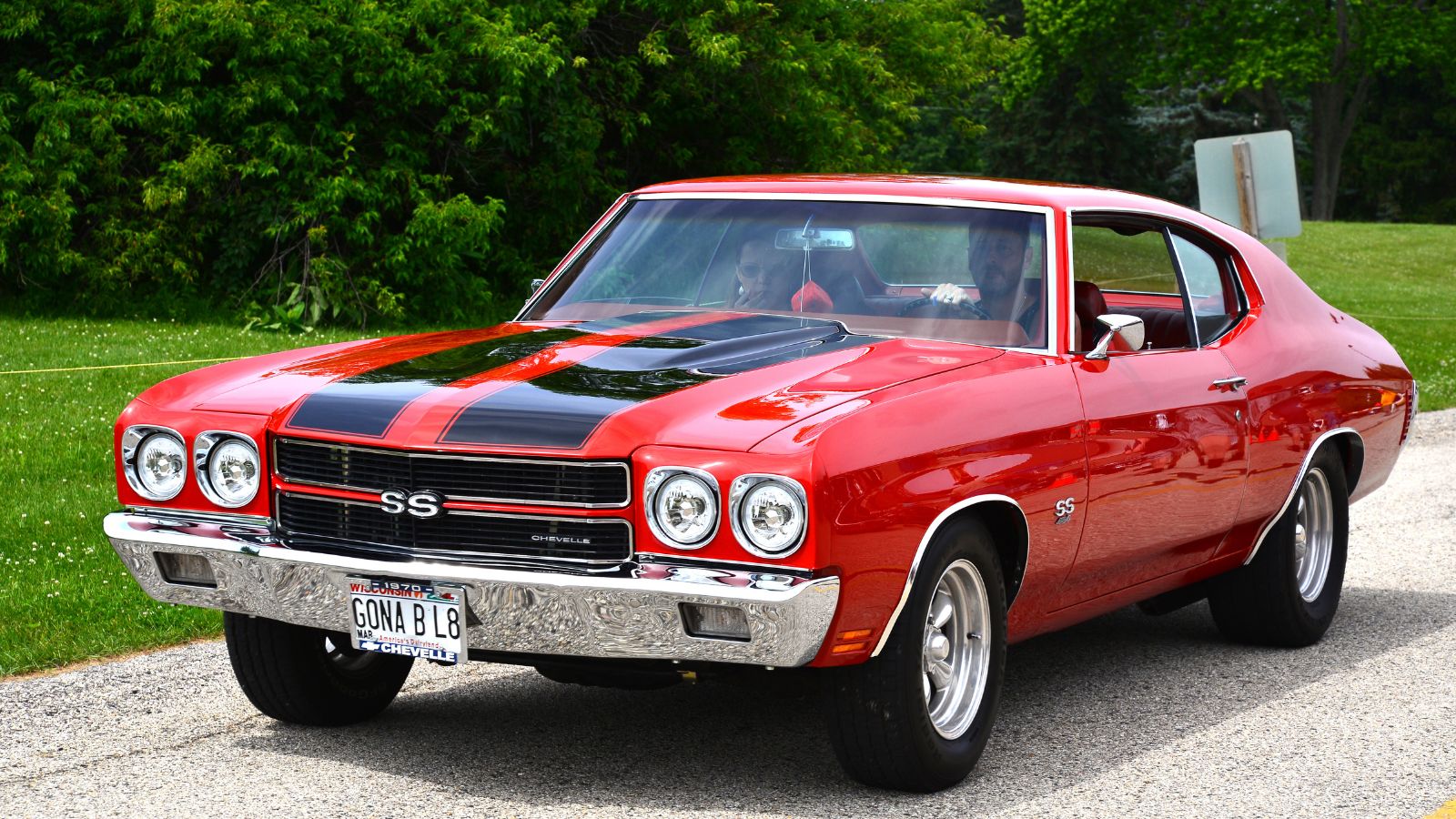
The Chevelle SS looked muscular without being cartoonish. Long hood, short deck, wide stance, and minimal ornamentation gave it presence without distraction. Unlike some rivals that chased extreme graphics or exaggerated bodywork, the Chevelle SS looked purposeful. It communicated power through proportion rather than decoration, which is why it has aged so well.
Real World Performance You Could Use
This was not a fragile strip only machine. The Chevelle SS could be driven daily, loaded with passengers, and still dominate when the throttle was opened. It handled better than its size suggested and rode well enough for long highway trips. That balance between performance and usability is a big reason it resonated so strongly with buyers in the seventies.
The Peak Year Was Perfectly Timed
The 1970 model year hit the sweet spot. Horsepower ratings were still honest, compression ratios were high, and regulations had not yet strangled output. The Chevelle SS 454 LS6 emerged as one of the most powerful factory muscle cars ever sold. It represented the absolute peak before the industry changed direction almost overnight.
No Pretense About What It Was
The Chevelle SS did not pretend to be refined or sophisticated. It was loud, heavy, thirsty, and proud of it. There was no attempt to hide its intent behind luxury features or European influence. That honesty is what makes it feel so authentic today. You knew exactly what you were buying.
A Platform That Encouraged Abuse
The Chevelle SS was built on a strong A body platform that could handle serious power. Rear differentials, transmissions, and suspension components were designed with torque in mind. Owners raced them, modified them, and punished them without immediately breaking them. That durability reinforced its reputation as a real muscle car rather than a delicate showpiece.
It Was Attainable When New
Part of what defines a true muscle car is accessibility. The Chevelle SS was expensive enough to feel special but affordable enough to be realistic. It was not an exotic or a limited run curiosity. It was something a working enthusiast could aspire to own, which is central to muscle car culture.
It Survived the Decline Better Than Most
As horsepower fell through the early 1970s, many muscle cars lost their identity. The Chevelle SS softened, but it never fully abandoned its roots. Even in later low compression years, the shape, sound, and stance still felt right. That continuity preserved its image when others faded into confusion.
Motorsport and Street Credibility
The Chevelle name carried weight both on the street and at the track. Drag racing success and street dominance fed into each other. The SS badge meant something because it was backed up by real performance, not marketing hype.
Why It Still Defines the Genre
Today, the Chevelle SS stands as a reference point. When people talk about what a muscle car should be, they describe something very close to it. Big displacement, simple layout, honest design, and an emphasis on torque over technology. It represents the muscle car formula in its purest form.
The Chevrolet Chevelle SS was not trying to be the future. It was the moment. That is why it still matters, and why it remains one of the clearest expressions of what a 1970s muscle car was meant to be.