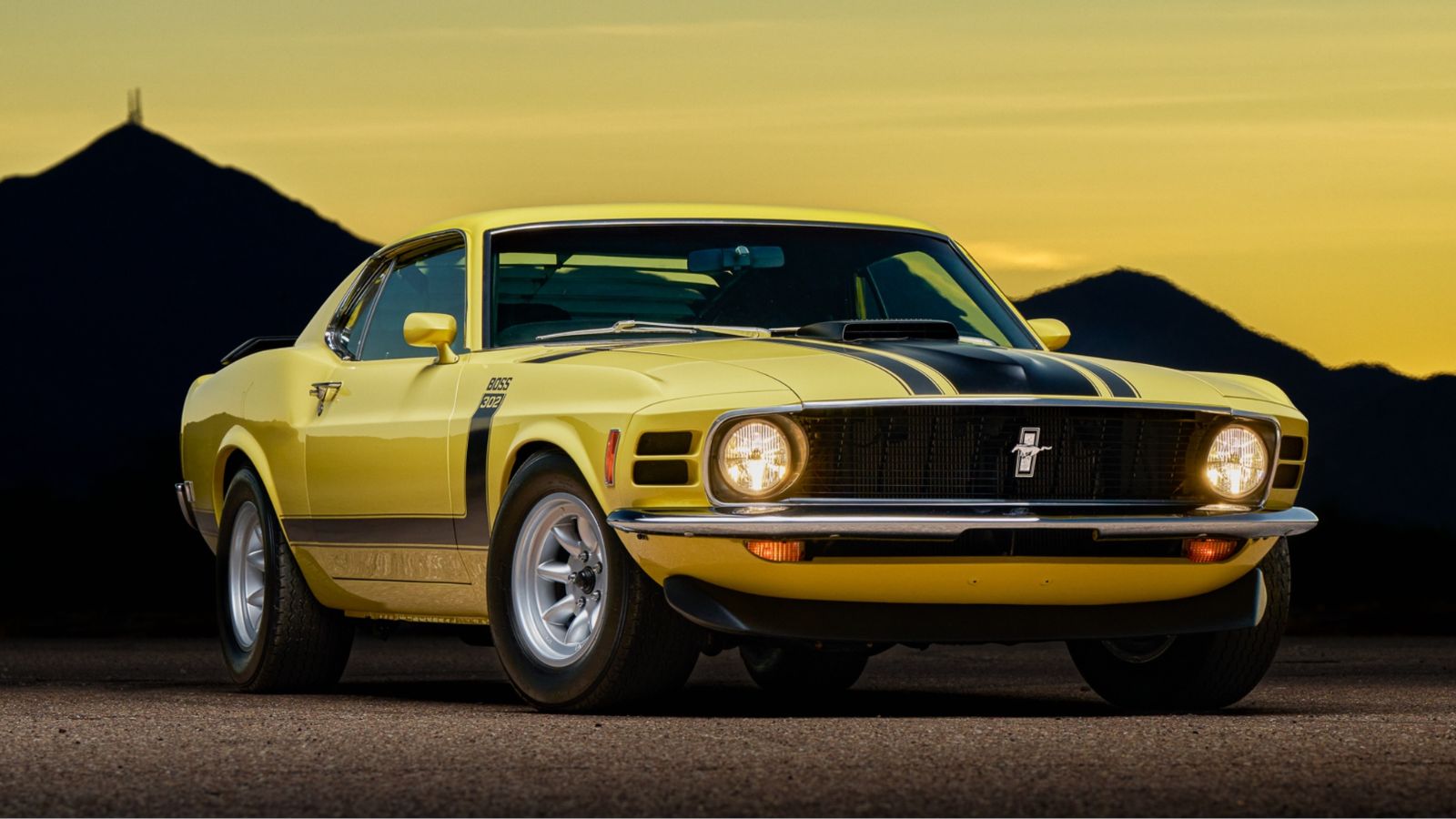
The 1969 Ford Mustang Boss 302 was not just another pony car. It was a purpose built performance machine born from the heat of competition and designed to dominate the SCCA Trans Am racing series. Built to homologate the 302 cubic inch engine for racing, the Boss 302 was a thoroughbred muscle car with real track credentials. Here are 20 key ways in which it stood apart from the 1967 and 1968 Mustang models that came before it:
- Unique Engine The Boss 302 featured a high revving 302 cubic inch V8 specially built using a Windsor block and Cleveland cylinder heads for improved breathing.
- Solid Lifter Camshaft – Unlike the standard 302 engines, the Boss 302 used a solid lifter cam for more aggressive valve timing and higher RPM capability.
- High Compression Ratio – It came with an 11.0:1 compression ratio, delivering an official 290 horsepower though real output was likely higher.
- 4 Bolt Main Block – The engine was strengthened with a 4 bolt main bearing design, enhancing durability for racing use.
- Rev Limiter Installed – A factory rev limiter was installed to protect the high revving engine during hard driving.
- Wide Ratio Toploader 4 Speed – The Boss 302 used a close ratio Toploader transmission ideal for aggressive driving.
- Competition Suspension – Special heavy duty suspension components were included, such as staggered rear shocks and reinforced front control arms.
- Front Spoiler and Rear Deck Wing – Aerodynamic additions improved high speed stability and gave the Boss 302 a distinctive race ready look.
- Larger Sway Bars – Front and rear sway bars were larger than standard Mustangs to reduce body roll in corners.
- Unique Shaker Hood Option – A functional shaker hood scoop fed cold air to the engine, improving performance and adding to its aggressive stance.
- Special Boss Graphics – The Boss 302 received bold side stripes and callouts, differentiating it visually from other Mustangs.
- Magnum 500 Wheels – Fitted with wide performance tires, these wheels enhanced grip and completed the muscle car look.
- Quick Ratio Steering Box – Improved steering responsiveness for better road and track feel.
- Power Front Disc Brakes – Offered as standard for improved stopping performance, a rarity on earlier models.
- Functional Rear Window Louvers – Optional rear window slats provided sun protection and enhanced rear visibility.
- Engine Oil Cooler – To maintain performance under stress, the Boss 302 came with an oil cooler, essential for racing longevity.
- Improved Interior Trim – Though still focused on performance, the Boss featured upgraded materials and optional tachometers and gauges.
- Shorter Final Drive Ratio – A performance oriented rear axle ratio helped the car launch harder and stay in the power band.
- Flatter Rear Wheel Arches – Styling tweaks to the body made room for wider rubber and added to the car’s aggressive profile.
- SCCA Trans Am Legacy – The Boss 302 wasn’t just a street car. It was Ford’s weapon against the likes of Camaro Z28s on the track, and its DNA was all about winning.
The 1969 Boss 302 marked a turning point in Mustang history. It proved that muscle could be smart, balanced, and engineered for more than straight line speed. With sharp handling, racing credibility, and one of the most distinctive V8s ever built, the Boss 302 remains a legend in the world of American performance cars.
Racing Pedigree and Trans Am Triumph
The true legacy of the Boss 302 was cemented not just on the street, but on the racetrack. Ford developed this car specifically to meet the homologation requirements of the SCCA Trans Am racing series, which featured intense competition from Chevrolet, AMC, and Dodge. The goal was simple: build a street car that could translate directly into a track weapon.
Ford’s factory team, managed by racing legend Bud Moore and piloted by top tier drivers like Parnelli Jones and George Follmer, campaigned the Boss 302 against Chevrolet’s Camaro Z28 in the 1969 and 1970 Trans Am seasons. Though it narrowly missed the championship in 1969, the development paid off. In 1970, Parnelli Jones stormed to victory, securing the Trans Am title for Ford and the Boss 302.
The racing version of the Boss 302 was stripped of unnecessary weight, fitted with race tuned suspension, reinforced bodywork, and featured more powerful versions of the already potent 302 engine. These cars were not only fast but durable, capable of enduring grueling race distances against formidable rivals.
The triumph in Trans Am showcased the car’s balance and competitiveness. Unlike traditional muscle cars that focused solely on straight line power, the Boss 302 proved that American manufacturers could build performance machines that handled just as well as they accelerated. Its racing exploits became the stuff of legend, cementing the Boss 302’s place in motorsport history.
The track wins translated into street cred, helping Ford enthusiasts rally behind a Mustang that wasn’t just for show. This unique blend of form and function has made the 1969 Boss 302 a highly sought after classic and a symbol of Ford’s commitment to performance engineering.