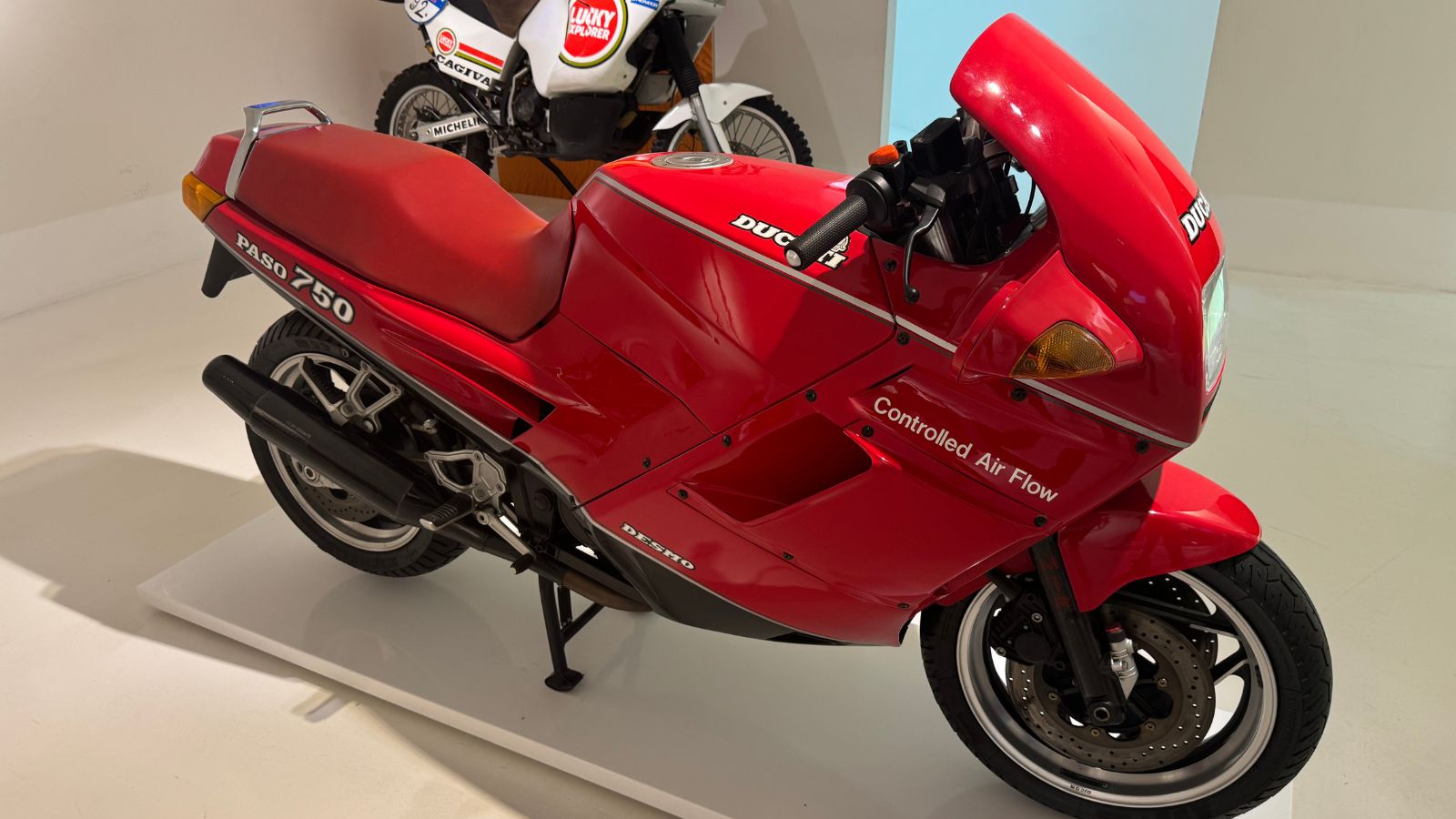
In 1986, Ducati made a bold and unexpected move with the release of the 750 Paso, a fully faired sports touring motorcycle that marked a dramatic departure from the company’s traditional design language. Named in honor of Ducati rider Renzo “Paso” Pasolini, the 750 Paso was conceived to appeal to a wider market and to bring Ducati into a more modern, global competitive space. At a time when Japanese motorcycles dominated with their sharp looks and advanced tech, Ducati needed to shake things up and the Paso did exactly that.
Radical Styling for the Era
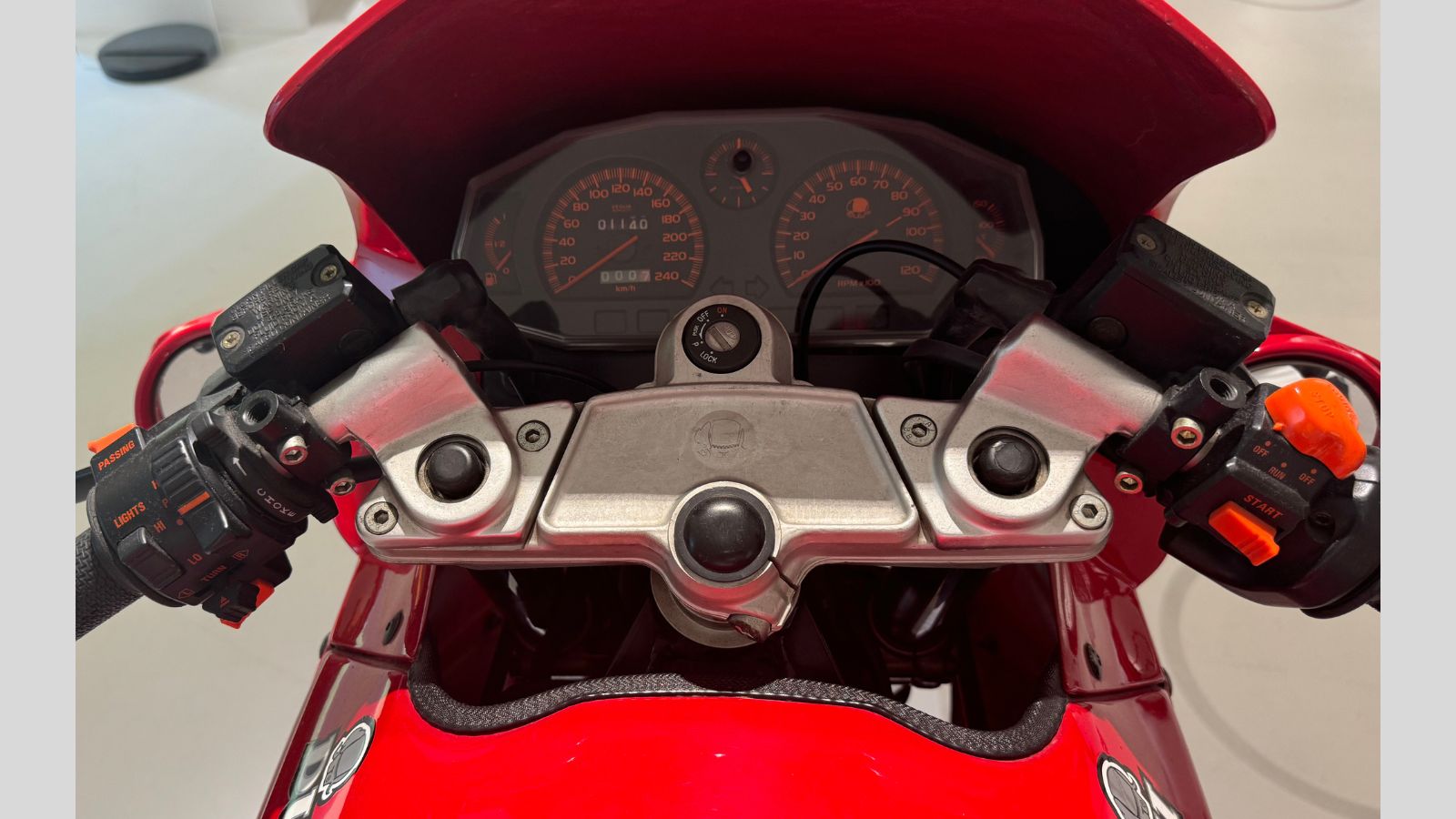
The most striking feature of the 750 Paso was its bodywork. Unlike anything else on the market, the Paso was fully enclosed from tip to tail, featuring seamless, flowing panels that hid nearly every mechanical component. The fairing and windscreen were integrated into the body itself, creating a solid, monolithic appearance that was sleek, aerodynamic, and ahead of its time. There was no separate clear windscreen as seen on most other sport tourers. Instead, the entire front section flowed as a single sculpted form.
This aesthetic shocked traditionalists but also signaled Ducati’s desire to innovate. Designed by Massimo Tamburini, who would later create the legendary Ducati 916, the Paso’s bodywork was inspired by automotive principles more than traditional motorcycle styling. Its visual presence was futuristic, clean, and unlike anything Ducati had produced before.
Under the Skin: Still a Ducati
Beneath the avant garde styling, however, the 750 Paso retained the essential DNA of a Ducati. It was powered by an air-cooled 748cc L twin engine with the characteristic desmodromic valve train, mounted in a tubular steel trellis frame. The L twin engine layout provided strong low end torque and a distinct power pulse, contributing to the engaging riding experience Ducati was known for.
While the engine had been carried over from previous Ducati models, it was fitted with a Weber carburetor and tuned to deliver smoother midrange performance. The Paso was also among the first Ducati road bikes to utilize 16 inch wheels, giving it quick steering but also limiting tire choices.
Ride and Handling
The 750 Paso handled well for its day, with stable and neutral manners on twisty roads. The trellis frame provided excellent rigidity, and the bike’s compact dimensions made it agile enough for spirited riding. Braking came courtesy of Brembo calipers, adding to the Paso’s sporting credentials.
However, the Paso wasn’t without flaws. The enclosed bodywork made heat management a challenge, and the single Weber carburetor could be finicky, leading to occasional rough running or tuning difficulties. The 16 inch wheels, while innovative, also limited tire availability over time.
Impact and Legacy
Despite its polarizing looks and mechanical quirks, the 750 Paso marked an important turning point for Ducati. It was the first step in modernizing the brand, showing that Ducati could design a motorcycle that was as much about style and innovation as it was about mechanical tradition. The Paso laid the groundwork for future models that would blend form and function more seamlessly.
In retrospect, the Paso’s influence is clear. It foreshadowed the design led approach Ducati would fully embrace in the 1990s, culminating in Tamburini’s own 916. Though not a commercial success at the time, the Paso has since gained a cult following, appreciated for its daring styling and its role in Ducati’s evolution.
Conclusion: A Risk That Paid Off
The Ducati 750 Paso may not have been perfect, but it was important. It showed that Ducati was willing to break from convention, take risks, and look to the future. It kept the soul of a Ducati an L twin engine, a steel trellis frame, desmodromic valves while dressing it in a skin unlike anything the company had produced before.
Today, the Paso stands as a testament to Ducati’s courage to innovate. It was a motorcycle that dared to be different, and in doing so, it helped shape the brand’s identity for decades to come.