A Brand Built on Character
Laverda is one of those names that evokes emotion among true motorcycle enthusiasts. Born in Italy, Laverda was never just about machines. It was about passion, individuality, and engineering that leaned into toughness as much as it did performance. In the golden age of European motorcycling, Laverda earned its place alongside Ducati, Moto Guzzi, and MV Agusta, offering an alternative flavor that felt raw, mechanical, and deeply engaging.
Laverda never aimed to mass-produce motorcycles in the way the Japanese giants did. Each bike felt purpose-built, designed with input from real riders, and often tested under the most grueling conditions. Reliability was a badge of honor, but so was personality. That combination set Laverda apart, especially in the hands of enthusiasts who appreciated more than just spec sheets.
The Iconic Three Cylinders of the 70s
In the 1970s, Laverda introduced its iconic three-cylinder motorcycles, beginning with the 1000 3C and later the more refined Jota. These were bikes with real presence. The Jota in particular became legendary for its unique sound, incredible torque, and performance that rivaled and often beat its Japanese and British rivals. With a 981cc inline triple and a thumping, mechanical soundtrack, the Jota was the kind of motorcycle that made every ride feel significant. It was built tough, often referred to as overengineered, with a reputation for endurance and high-speed stability.
These triples had a feel and a rhythm that set them apart from the competition. While inline fours from Japan were all about high-revving performance, Laverda’s triple had grunt and soul. The weight gave it a planted feel, ideal for covering big miles at speed, and riders swore by their dependability over long stretches. The bikes were loud, bold, and not for the faint of heart.
The Laverda triples offered something visceral. They felt like they had weight and authority. The long tank, the low bars, the booming engine note – it was the kind of riding experience that stayed with you, even after you shut the bike off. These motorcycles were not for everyone. They required effort, but they gave back more than they took. They were bikes you rode with both hands and both feet fully engaged.
Riding the Unexpected: Phil’s Laverda 650 Sport (1994 to 1995)
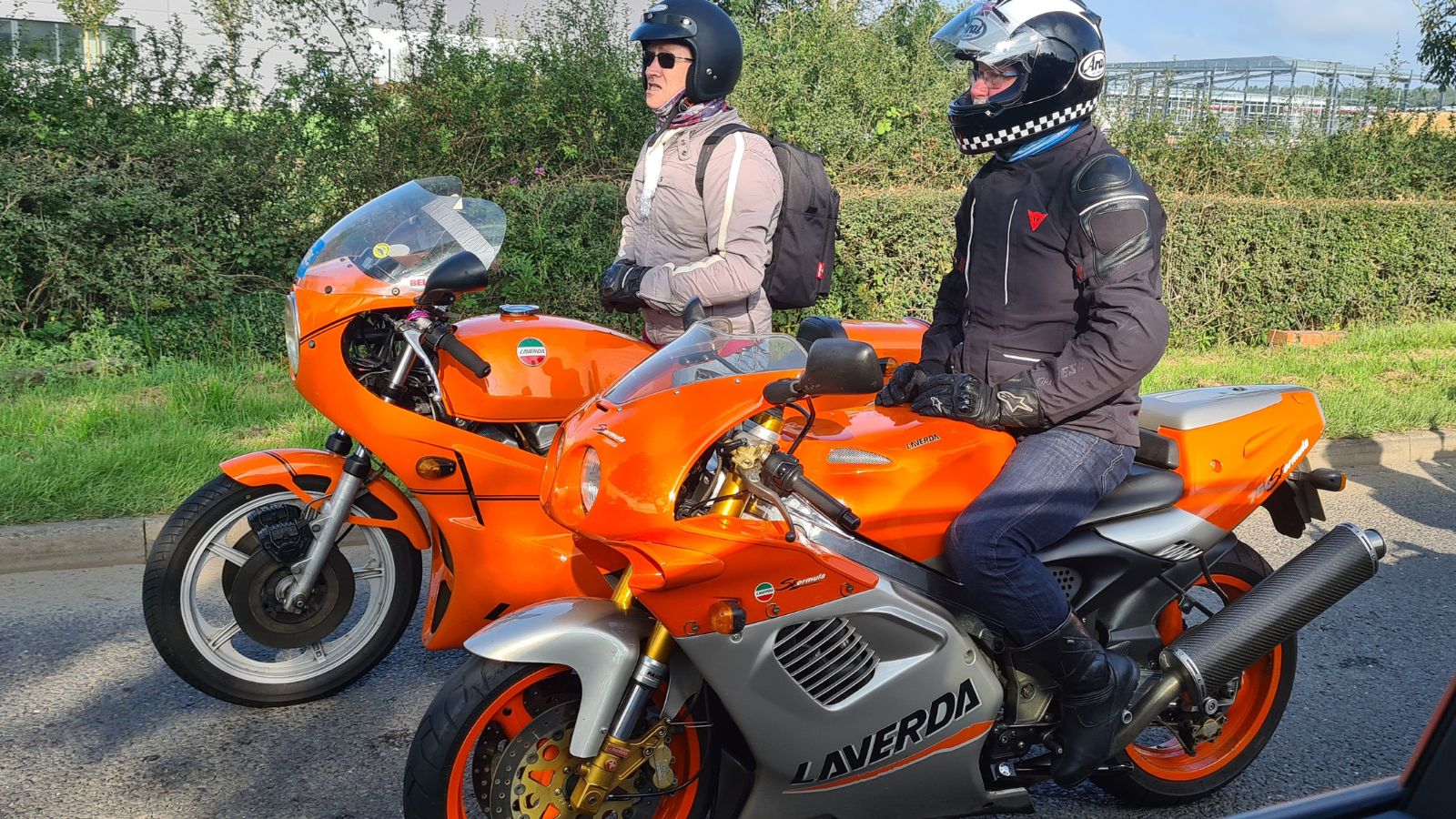
More recently, I had the opportunity to be introduced to something very different but still unmistakably Laverda – my friend Phil’s Laverda 650 Sport from the mid 90s. Built during a revival period for the brand, the 650 Sport carried forward that sense of individuality but reimagined it for a different era.
At first glance, the bike surprises with its size. For a 650, it looks and feels substantial. The riding position is committed, the bodywork aggressive, and the bike carries a sense of mass that makes it feel like something bigger. This is not a lightweight middleweight. It has presence, it has shape, and it commands attention. From the side profile, it looks every bit as bold as its larger capacity rivals.
Under the tank sits a 668cc parallel twin that makes around 70 horsepower. On paper, that is not earth-shattering, but the delivery is what makes it work. There is real character in the engine. It sounds purposeful, revs freely, and has a broad midrange that gives the bike usable performance. The 5 speed gearbox is solid and mechanical, in keeping with the bike’s overall feel.
Throttle response is sharp without being twitchy, and the engine pulls cleanly through the rev range. It rewards being ridden with purpose. The vibes, the induction sound, the gearbox engagement – all contribute to the machine’s charisma. It never feels sterile. It always feels involved.
The handling is direct and confident. With fully adjustable Paioli suspension and Brembo brakes, the Laverda feels planted and secure. It does not flick around like a supersport, but it holds a line well and feels predictable. It rewards smooth inputs and committed riding. You get out what you put in, and that gives the bike a very analog, rider-focused character.
More Than the Spec Sheet
The real magic of Phil’s 650 Sport is that the whole machine feels more than the sum of its parts. It is not trying to be a Ducati or a Japanese sportbike. It is its own thing – soulful, slightly quirky, and full of charm. The build quality is better than many expect, and the ride has an honesty that modern bikes sometimes lack. You feel what the bike is doing, and you appreciate its mechanical honesty.
The ergonomics are unique. The bike feels wide and long, with a riding triangle that is more committed than most middleweight bikes. It makes you feel like you’re on something special, and in a way, you are. It reminds you of a time when not every bike had to be built for everyone.
For anyone who appreciates motorcycles with character, the 650 Sport delivers something hard to define but easy to enjoy. It is not about outright numbers. It is about feeling connected, about riding something unique, and about appreciating a motorcycle made with a different philosophy. It stands as a reminder that sometimes, charm and feel outweigh peak performance.
Why Laverda Still Matters
Laverda’s legacy is built on character and individuality. Whether it is the rumbling three cylinders of the 70s or the surprisingly engaging 650 Sport of the 90s, these bikes offer something special. They ask something of the rider, but they give something back. In an age where motorcycles are increasingly digital and filtered, Laverda reminds us what it is like to ride something mechanical, soulful, and distinctly human.
And that is why they still matter.